How to Choose a Sunscreen for Hyperpigmentation
If you are treating dark spots, melasma or post-acne marks, sunscreen is not optional — it is the treatment. UV and visible light drive pigment production, so without daily protection even the best brightening actives are fighting a losing battle, and existing marks deepen. Not all sunscreens are equal here: hyperpigmentation demands strong UVA cover and, for melasma especially, protection against visible light. This guide describes the filters, tints and supporting ingredients that make a sunscreen genuinely useful against uneven tone, so your efforts to fade spots are not undone every time you step outside.
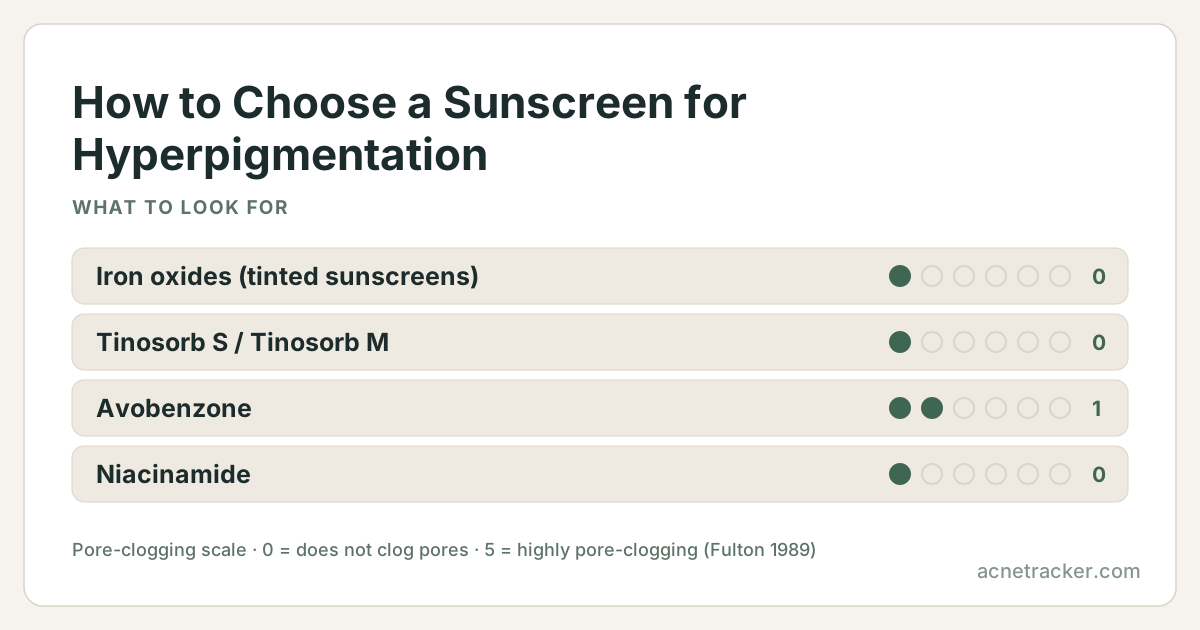
Ingredients to look for
| Ingredient | Why it matters |
|---|---|
| Iron oxides (tinted sunscreens) | The key ingredient for pigmentation: iron oxides block visible light, which drives melasma and dark spots that UV filters alone miss. |
| Tinosorb S / Tinosorb M | Strong, photostable broad-spectrum filters that give the high UVA cover pigment-prone skin needs. |
| Avobenzone | A widely available UVA filter; effective when photostabilised, so it keeps protecting rather than degrading in sun. |
| Niacinamide | Interrupts pigment transfer to skin cells and helps fade existing marks, a strong supporting active under SPF. |
| Zinc oxide | Broad UVA-UVB mineral protection; tinted versions add the visible-light cover that pigmentation needs. |
Ingredients to avoid
| Ingredient | Why it matters |
|---|---|
| UVB-focused formulas with weak UVA cover | A high SPF number alone does not stop pigmentation; UVA drives it, so low UVA protection lets spots persist. |
| Untinted sunscreens for melasma | Visible light worsens melasma, and clear formulas do not block it — a tint with iron oxides is needed for real control. |
| Irritating formulas (fragrance, high alcohol) | Irritation and inflammation can trigger more pigment, so a harsh sunscreen can worsen the very problem you are treating. |
| Under-applying or skipping reapplication | Pigment control depends on consistent, full protection; thin or lapsed coverage lets UV and light drive spots again. |
How to choose
For hyperpigmentation, judge a sunscreen on the quality of its UVA protection, not just the SPF number, since UVA and visible light drive pigment while SPF mainly measures UVB. Look for strong, photostable UVA filters — Tinosorb, Uvinul, well-stabilised avobenzone, or high mineral content. For melasma in particular, choose a tinted sunscreen: the iron oxides that provide colour also block visible light, which clear formulas cannot. Supporting actives like niacinamide add pigment-fading benefit under daily SPF. Avoid irritating formulas, because inflammation itself can trigger more pigment. Aim for at least SPF 30, ideally higher, with clear broad-spectrum or UVA marking. Consistency is everything: the best sunscreen for pigmentation is the one you will apply fully and reapply, every single day, because a single unprotected outing can undo weeks of fading.
How to apply
Apply a full two fingers' length every morning, year-round and indoors near windows, since UVA passes through glass and visible light reaches you on cloudy days. For melasma, a tinted formula does double duty as coverage and visible-light protection. Reapply every two hours outdoors without fail — a tinted stick or cushion keeps this realistic over makeup. Pair SPF with shade and a hat during peak sun for pigment-prone skin. Consistency beats intensity: daily, generous, reapplied protection fades spots far more reliably than an occasional high-SPF application.
Frequently asked questions
Why is sunscreen the most important step for hyperpigmentation?
UV and visible light directly drive pigment production. Without daily sunscreen, brightening actives cannot keep up and existing spots deepen. SPF protects your progress, making it the foundation of any pigmentation routine.
Do I need a tinted sunscreen for melasma?
For melasma, yes, ideally. Visible light worsens melasma and clear sunscreens do not block it, but the iron oxides in tinted formulas do. A tint therefore adds protection that an untinted product cannot provide.
Does a high SPF number fade dark spots faster?
Not on its own. SPF mainly measures UVB, while UVA and visible light drive pigment. Strong UVA protection and, for melasma, a tint matter more than a very high SPF number for controlling dark spots.
Can I fade pigmentation without sunscreen if I use actives?
Realistically, no. Sun exposure re-triggers pigment faster than actives can fade it, so skipping SPF undermines the treatment. Daily broad-spectrum sunscreen is what lets brightening ingredients actually work.
Sources & further reading
There is no single study of this exact question. The guidance here is reasoned from the ingredient profiles below, each of which carries its own references:
- Iron Oxides2 refs
- Tinosorb S2 refs
- Avobenzone3 refs
- Niacinamide2 refs
- Zinc Oxide2 refs
Show every reference behind this page (8)
- European Commission CosIng — Iron Oxides (CI 77491, 77492, 77499)cited by Iron Oxides, Tinosorb S, Avobenzone, Niacinamide
- Lyons AB et al. Photoprotection beyond ultraviolet radiation: A review of tinted sunscreens. J Am Acad Dermatol 2021 May (PubMed)cited by Iron Oxides
- SCCS opinions on organic UV filterscited by Tinosorb S
- FDA — Sunscreen: How to Help Protect Your Skin from the Suncited by Avobenzone
- Matta et al., JAMA 2019 — Sunscreen active ingredient plasma concentrationcited by Avobenzone
- Niacinamide: mechanisms of action and its topical use in dermatology (PubMed)cited by Niacinamide
- FDA — Sunscreen: How to Read a Label and drug factscited by Zinc Oxide
- PubChem — Zinc Oxide compound summarycited by Zinc Oxide
Medical disclaimer
Ingredients mentioned on this page
Find your personal acne triggers
Our free Acne Tracker lets you log breakouts, sleep, stress and diet, and shows you which factors correlate with your flare-ups.