How to Choose a Spot Treatment for Sensitive Skin
Sensitive skin needs a different logic for spot treatment: the strongest gel is rarely the right one, because the actives that clear a blemish fastest are also the most likely to trigger stinging, redness and a flare that outlasts the pimple itself. The aim is to calm the spot while keeping the surrounding skin settled, which means lower strengths, soothing partners and a patch test before anything goes on the face. Reactive skin also punishes the classic mistakes hardest — the drying hacks and layered acids that other skin merely tolerates can set off days of irritation here. This guide covers the gentler actives that treat a blemish without provoking the skin, what to steer clear of, and how to introduce anything new safely.
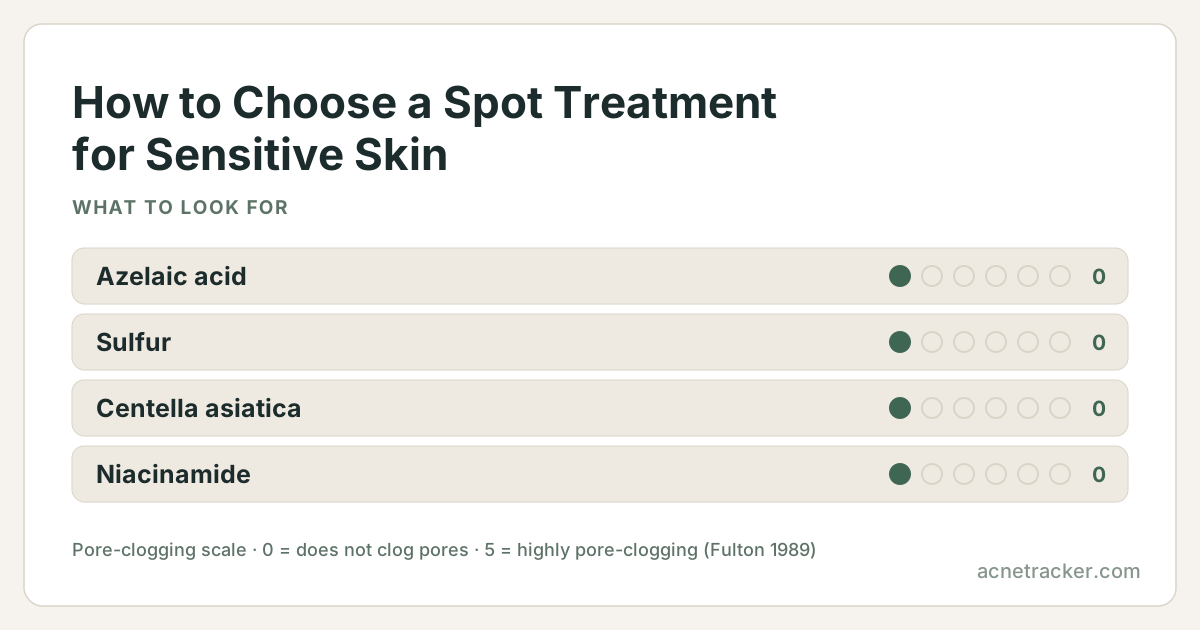
Ingredients to look for
| Ingredient | Why it matters |
|---|---|
| Azelaic acid | One of the best actives for reactive skin: it calms inflammation and clears blemishes while being well tolerated and low in irritation. |
| Sulfur | A traditional, gentle antibacterial that helps dry down a pustule without the sting stronger actives can cause on sensitive skin. |
| Centella asiatica | Soothes redness and supports the barrier, making a spot treatment more tolerable and helping reactive skin recover. |
| Niacinamide | Calms redness and strengthens the barrier, so blemishes settle without the surrounding skin flaring up. |
| Zinc PCA | A mild sebum-regulating and soothing ingredient that suits sensitive, blemish-prone skin looking for gentle support. |
Ingredients to avoid
| Ingredient | Why it matters |
|---|---|
| High-strength benzoyl peroxide (10%) | The strongest versions frequently over-dry and irritate reactive skin; if used at all, a low strength on the spot only is the sensitive-skin approach. |
| Undiluted essential oils like neat tea tree | Applied neat, they are a common trigger of stinging and contact reactions on sensitive skin, and offer no benefit over a diluted version. |
| Alcohol-heavy drying spot gels | They burn the surface and compromise the barrier, which reactive skin depends on, prolonging redness rather than settling the spot. |
| Layering several actives on one spot | Stacking acids and antibacterials overwhelms sensitive skin and turns a small blemish into a patch of lasting irritation. |
How to choose
Choose for tolerance first and potency second. On sensitive skin, azelaic acid is often the ideal spot treatment because it clears blemishes and calms inflammation while rarely stinging, and it suits all skin tones. For a pustule, gentle sulfur helps it dry down without the harshness of stronger drying agents. Build in soothing support — centella, niacinamide, zinc PCA — that keeps the surrounding skin from flaring while the active works. If you consider benzoyl peroxide, use a low strength dabbed only on the spot, never the 10% versions that reactive skin struggles with, and avoid neat essential oils entirely. Choose fragrance-free, simple formulas, and crucially, patch test anything new on a small area for a couple of days before applying it to a visible blemish. With sensitive skin, a slower, gentler approach that avoids a flare almost always beats a strong product that clears the spot but leaves days of redness behind.
How to apply
Always patch test a new product first: apply a small amount to an inconspicuous area for two or three days and check for stinging or redness before using it on your face. When treating a spot, dab a thin layer of a gentle active onto the blemish only, keeping it off the calm skin around it, then follow with a soothing, fragrance-free moisturiser to support the barrier. Use once a day to start, and stop if you notice increasing redness or burning. Never layer several actives on one spot, and skip the drying hacks entirely — sensitive skin reacts to force with more inflammation, not less.
Frequently asked questions
What is the gentlest spot treatment for sensitive skin?
Azelaic acid is one of the most tolerable options, calming blemishes and inflammation while rarely stinging. Soothing partners like centella, niacinamide and zinc PCA help too, and gentle sulfur suits a pustule better than harsh drying gels.
Can I use benzoyl peroxide on sensitive skin?
Sometimes, but only at a low strength dabbed on the spot itself, never the 10% products, which tend to over-dry and irritate reactive skin. Patch test first, and if it stings or reddens the surrounding skin, switch to azelaic acid or sulfur.
Why does tea tree oil sting my skin?
Applied neat, essential oils like tea tree are a common trigger of stinging and contact reactions, especially on sensitive skin. A properly diluted version is gentler, and azelaic acid is a lower-risk alternative for a single blemish.
How do I patch test a spot treatment?
Apply a small amount to a discreet area, such as near the jaw or inner forearm, once a day for two or three days, and watch for redness, itching or stinging. If the skin stays calm, it is reasonable to use it on a visible blemish.
Sources & further reading
There is no single study of this exact question. The guidance here is reasoned from the ingredient profiles below, each of which carries its own references:
- Azelaic Acid3 refs
- Sulfur2 refs
- Centella Asiatica2 refs
- Niacinamide2 refs
- Zinc PCA3 refs
Show every reference behind this page (9)
- PubChem — Azelaic acid compound summarycited by Azelaic Acid
- DermNet — Azelaic acidcited by Azelaic Acid
- European Commission CosIng database — Azelaic Acidcited by Azelaic Acid, Centella Asiatica, Niacinamide, Zinc PCA
- FDA OTC monograph — acne drug products (sulfur 3–10%)cited by Sulfur
- PubChem — Sulfur (CID 5362487)cited by Sulfur
- Bylka W et al. Centella asiatica in dermatology: an overview. Phytother Res 2014 Aug (PubMed)cited by Centella Asiatica
- Niacinamide: mechanisms of action and its topical use in dermatology (PubMed)cited by Niacinamide
- PubChem — Zinc PCA (zinc pyrrolidone carboxylate)cited by Zinc PCA
- Zinc l-pyrrolidone carboxylate inhibits the UVA-induced production of matrix metalloproteinase-1 by in vitro cultured skin fibroblasts, whereas it enhances their collagen synthesis (PubMed)cited by Zinc PCA
Medical disclaimer
Ingredients mentioned on this page
Find your personal acne triggers
Our free Acne Tracker lets you log breakouts, sleep, stress and diet, and shows you which factors correlate with your flare-ups.