Can You Mix Retinol and Vitamin C?
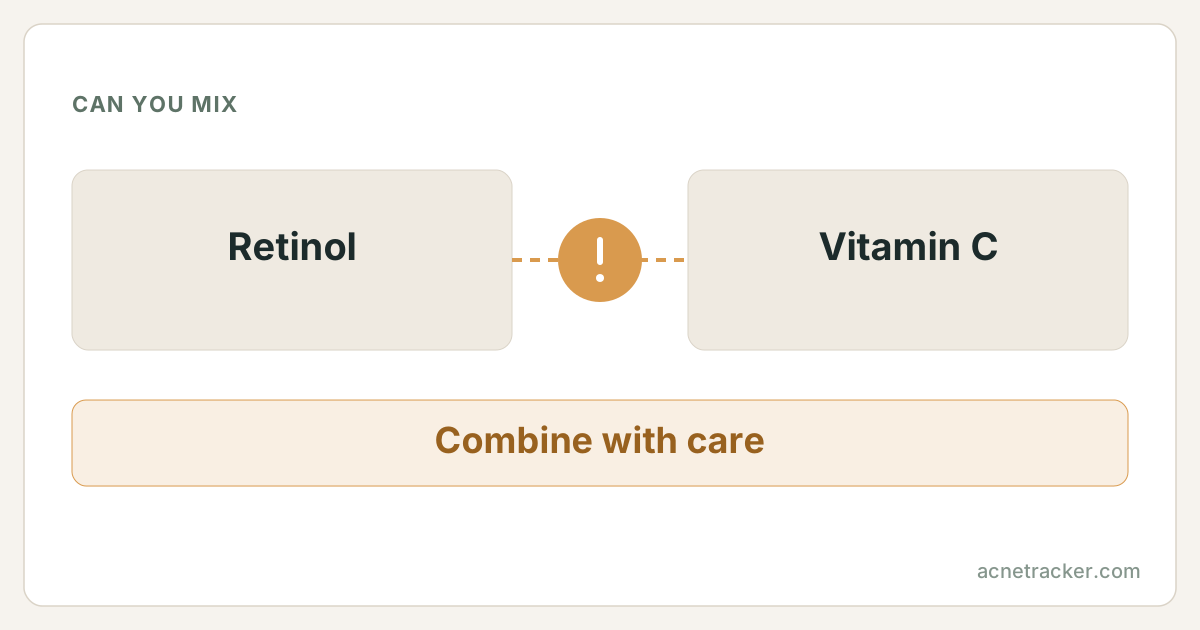
Yes, you can use retinol and vitamin C — but not stacked in the same layer at the same time. The standard, dermatologist-endorsed approach is to split them: vitamin C in the morning under sunscreen, retinol at night. Used this way they are complementary, covering antioxidant protection by day and repair by night. Layering them directly multiplies irritation and pushes both outside their ideal pH range.
How this pairing resolves
The two ingredients, their published numbers, and where they land together.
The numbers beside each ingredient are its published comedogenic rating and effective pH window, taken from its own profile page.
Show the numbers
| Ingredients | Metric | 0–5 |
|---|---|---|
| Retinol | Comedogenic rating | 1/5 |
| Retinol | Effective pH | 5.0–6.0 |
| Vitamin C | Comedogenic rating | 0/5 |
| Vitamin C | Effective pH | 2.5–3.5 |
Why
The conflict is partly chemistry, partly tolerance. L-ascorbic acid (the classic vitamin C form) is formulated at pH 2.5–3.5 to stay stable and penetrate; retinol performs best near pH 5.5–6. Applied together, each pulls the other away from its working range, so you get less out of both. The bigger practical issue is irritation: both actives are among the most sensitizing in skincare, and their side effects — redness, peeling, stinging — stack. There is also a timing logic to the split: vitamin C is an antioxidant that neutralizes the free radicals generated by daytime UV and pollution, while retinol is degraded by sunlight and works with the skin's overnight repair cycle. Splitting them isn't a compromise; it puts each ingredient where it performs best. Gentler vitamin C derivatives (sodium ascorbyl phosphate, THD ascorbate) are less pH-sensitive and easier to combine, which matters if you only tolerate one routine per day.
How to combine them
Morning: cleanse, apply your vitamin C serum to dry skin, wait five minutes, moisturize, finish with broad-spectrum SPF 30+ — non-negotiable, since retinol makes skin photosensitive. Evening: cleanse, apply retinol to dry skin two to three nights per week to start, then moisturizer. On the other evenings, use only moisturizer or a soothing serum. If your skin is already adjusted to both ingredients separately and you want them in one evening routine, apply vitamin C first, wait 15–20 minutes, then retinol — but treat this as an advanced routine and drop back to the AM/PM split at the first sign of stinging or flaking. Never introduce both ingredients to your routine in the same month; add one, stabilize for four weeks, then add the other.
Example routine
| When | Steps |
|---|---|
| Morning | Cleanser → Vitamin C serum → Moisturizer → SPF 30+ |
| Evening (Mon/Wed/Fri) | Cleanser → Retinol → Moisturizer |
| Evening (other days) | Cleanser → Moisturizer (recovery night) |
| Adjustment period | Introduce one ingredient at a time, 4 weeks apart |
Warning signs
Frequently asked questions
Can I layer vitamin C directly under retinol at night?
Only if your skin is fully adjusted to each ingredient on its own. Apply vitamin C first, wait 15–20 minutes, then retinol. Most people get the same results with less irritation from the morning/evening split.
Do retinol and vitamin C cancel each other out?
No — they don't neutralize each other like an acid and a base. The issue is that each works best at a different pH and both are irritating, so simultaneous layering reduces efficiency and doubles side effects.
Which should I start with first, retinol or vitamin C?
If acne and clogged pores are your priority, start with retinol. If dullness and dark marks bother you most, start with vitamin C. Stabilize on one for about four weeks before adding the other.
Can I use vitamin C at night and retinol in the morning instead?
Vitamin C at night is fine. Retinol in the morning is not recommended: it degrades in UV light and increases sun sensitivity precisely when exposure is highest.
What if my vitamin C is a derivative, not L-ascorbic acid?
Derivatives like sodium ascorbyl phosphate or THD ascorbate are less acidic and gentler, so combining them with retinol in the same routine is much better tolerated. The AM/PM split is still the simplest optimum.
Sources & further reading
There is no single study of this exact question. The guidance here is reasoned from the ingredient profiles below, each of which carries its own references:
Show every reference behind this page (5)
- Improvement of naturally aged skin with vitamin A (retinol) (PubMed)cited by Retinol
- European Commission SCCS opinion on vitamin A in cosmeticscited by Retinol
- PubChem — Ascorbic Acid compound summarycited by Vitamin C
- DermNet — Topical vitamin Ccited by Vitamin C
- European Commission CosIng database — Ascorbic Acidcited by Vitamin C
Medical disclaimer
Ingredients mentioned on this page
Find your personal acne triggers
Our free Acne Tracker lets you log breakouts, sleep, stress and diet, and shows you which factors correlate with your flare-ups.