How to Choose a Night Cream for Fine Lines and Wrinkles
Fine lines come from two things a night cream can address and one it cannot: surface dehydration and slowed renewal, which respond to skincare, and deep structural folds, which do not. Overnight is when cell turnover peaks and when the most useful anti-wrinkle actives — retinoids especially — belong, since they degrade in sunlight. A good night cream plumps lines by hydrating, and supports firmness over months through retinoids, peptides and antioxidants. This guide separates what actually softens lines from the 'wrinkles gone by morning' marketing, so you can build a realistic overnight routine and judge results on the right timescale.
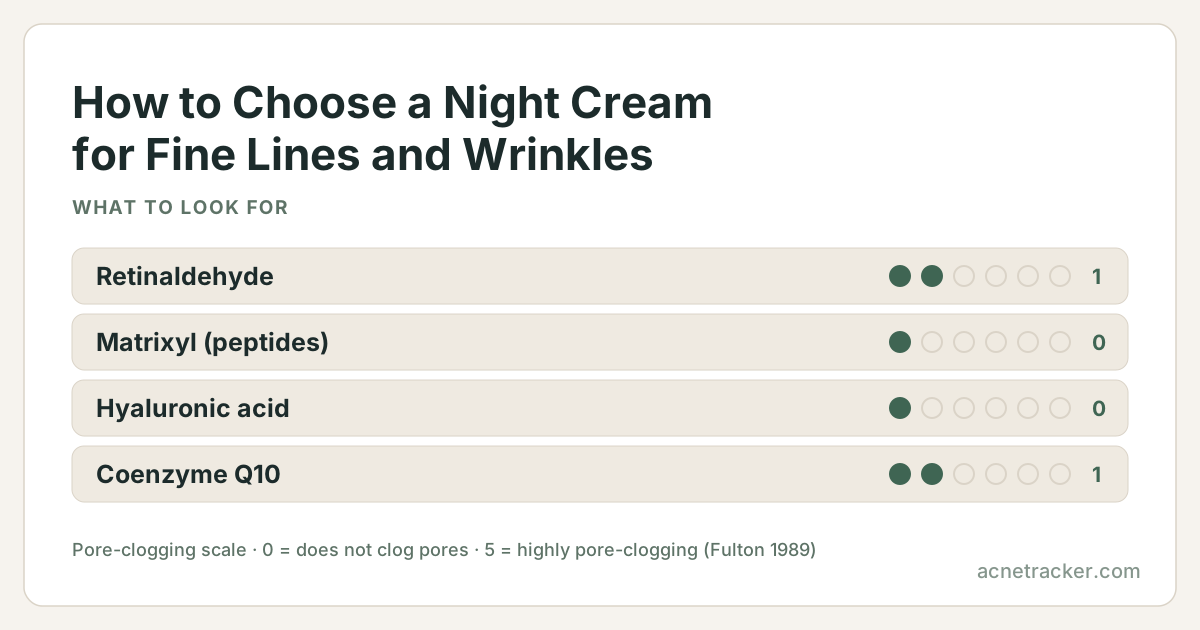
Ingredients to look for
| Ingredient | Why it matters |
|---|---|
| Retinaldehyde | A well-tolerated retinoid with strong evidence for softening fine lines over months; night is the right time to use it. |
| Matrixyl (peptides) | Signal peptides that support collagen with reasonable evidence, a gentler complement or alternative to retinoids. |
| Hyaluronic acid | Plumps fine lines quickly by holding water in the surface, the fastest visible effect a night cream offers. |
| Coenzyme Q10 | An antioxidant that helps defend against the oxidative stress that contributes to skin ageing over time. |
| Ceramides | Support the barrier so retinoids are tolerated and the surface stays smooth rather than dry and crepey. |
Ingredients to avoid
| Ingredient | Why it matters |
|---|---|
| Creams promising to 'erase wrinkles overnight' | No leave-on cream does this; such claims rely on temporary film-forming optical effects that flake off and reverse. |
| Stacking multiple retinoids at once | Doubling a retinol serum under a retinoid cream irritates skin without extra benefit, and irritation ages the surface. |
| Very high fragrance in 'luxury anti-ageing' jars | Cost and scent do not equal efficacy; fragrance adds irritation risk to skin you want calm and repairing. |
| Ignoring the neck and hands | Not an ingredient, but a common mistake: treating only the face leaves ageing obvious where skin is thinnest. |
How to choose
Anchor the choice on evidence. A retinoid is the most proven anti-wrinkle active and belongs at night, so a night cream that features one — or that you layer a separate retinoid under — is the highest-value option; peptides and antioxidants are worthwhile supporting players. Add a humectant like hyaluronic acid for the quick plumping effect on fine lines. Texture should suit your skin: richer if dry, lighter if oily, but always emollient enough to keep the surface smooth. Read claims through a realistic lens — 'reduces the look of fine lines' with consistent use is honest; 'erases wrinkles overnight' is not. A dedicated night cream makes sense given retinoids belong in the evening. And remember the timescale: meaningful change takes two to three months, and daily sunscreen prevents more wrinkles than any cream reverses.
How to apply
After cleansing, apply a retinoid to dry skin, wait a moment, then layer the night cream over it — or apply the cream first as a buffer if you are new to retinoids or prone to irritation. Use enough to keep the surface comfortable, and extend everything down the neck and onto the backs of the hands. Introduce retinoids gradually, two nights a week to start, building up as tolerated. Be consistent and patient; fine lines soften over months, not nights. Because retinoids increase sun sensitivity, broad-spectrum sunscreen every morning is the essential partner step and the best anti-wrinkle measure of all.
Frequently asked questions
Can a night cream really reduce fine lines and wrinkles?
It can soften fine lines and improve texture, especially with a retinoid, peptides and hydration used consistently over months. It cannot erase deep, established wrinkles — those need in-office procedures. Judge results over eight to twelve weeks, not overnight.
Should I use retinol for wrinkles at night or in the morning?
At night. Retinoids break down in sunlight and increase sun sensitivity, so evening is the correct time. Apply it before your night cream, start slowly to build tolerance, and always wear sunscreen the following morning.
What is the fastest-acting night cream ingredient for fine lines?
Humectants like hyaluronic acid, which plump fine lines by holding water in the surface within a night or two. The effect is real but temporary; lasting change comes from retinoids and peptides used over months.
Do I need a separate eye cream for fine lines if I use a night cream?
Not necessarily. Many face night creams are safe around the eyes if they are gentle and fragrance-free; apply carefully and avoid the lash line. A dedicated eye cream mainly helps if you want a milder texture for that thin skin.
Sources & further reading
There is no single study of this exact question. The guidance here is reasoned from the ingredient profiles below, each of which carries its own references:
- Retinal3 refs
- Matrixyl2 refs
- Hyaluronic Acid3 refs
- Coenzyme Q103 refslimited evidence
- Ceramides3 refs
The ingredients below are described here on the basis of laboratory, systemic or traditional-use sources rather than trials of topical use. Advice on this page that depends on them is correspondingly less certain.
- Coenzyme Q10 — CoQ10's antioxidant chemistry and its role in cellular energy production are established biochemistry. The cited assessment evaluates CoQ10 as a supplement, however, and does not measure what a cosmetic concentration does when applied to skin. Read the anti-aging description as a proposed mechanism rather than a demonstrated outcome.
Show every reference behind this page (10)
- European Commission CosIng database — Retinalcited by Retinal, Matrixyl, Hyaluronic Acid, Coenzyme Q10, Ceramides
- PubChem — Retinaldehydecited by Retinal
- Kwon HS et al. Efficacy and safety of retinaldehyde 0.1% and 0.05% creams used to treat photoaged skin: A randomized double-blind controlled trial. J Cosmet Dermatol 2018 Jun (PubMed)cited by Retinal
- PubMed — Peptides: Emerging Candidates for the Prevention and Treatment of Skin Senescence: A Review (Biomolecules, 2025)cited by Matrixyl
- PubChem — Hyaluronic acid compound summarycited by Hyaluronic Acid
- DermNet — Moisturisers and humectantscited by Hyaluronic Acid
- PubChem — Coenzyme Q10 / Ubiquinone (CID 5281915)cited by Coenzyme Q10
- Safety assessment of coenzyme Q10 (CoQ10) (PubMed)cited by Coenzyme Q10
- DermNet — Skin barrier functioncited by Ceramides
- PubChem — Ceramide compound summarycited by Ceramides
Medical disclaimer
Ingredients mentioned on this page
Find your personal acne triggers
Our free Acne Tracker lets you log breakouts, sleep, stress and diet, and shows you which factors correlate with your flare-ups.