Coenzyme Q10: Comedogenic Rating & Ingredient Analysis
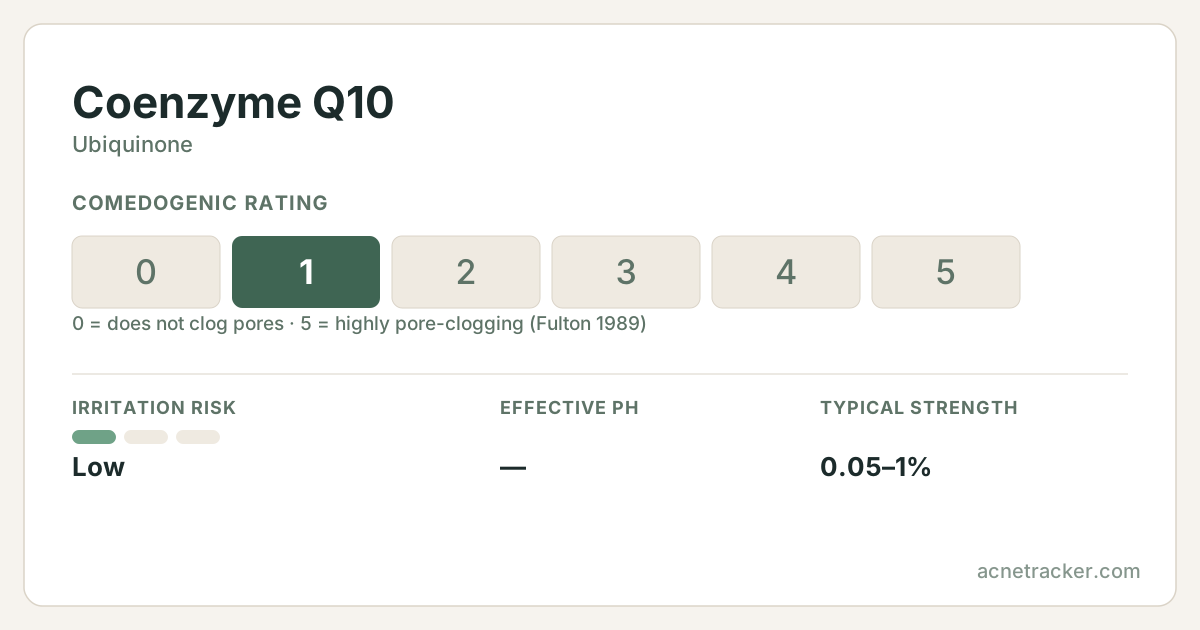
Coenzyme Q10, listed on labels as ubiquinone, is an antioxidant your body already makes and uses in every cell to help produce energy. Its natural levels decline with age, which is part of the rationale for applying it topically. In skincare it is a well-tolerated antioxidant used to defend the skin against environmental oxidative stress and to support a healthier-looking, more resilient complexion. It has a low comedogenic rating and low irritation risk, making it a gentle addition to anti-aging and daytime protective routines, where it complements other antioxidants rather than replacing the essentials.
Quick facts
- Comedogenic rating
- our estimate — not measured
- Irritation risk
- Low
- Effective pH
- —
- Typical strength
- 0.05–1%
- Pregnancy
- Considered safe
- Suits skin types
- drycombinationnormalsensitivemature
Where this number comes from
No one has published a comedogenic rating for this ingredient. Fulton's 1989 table tested about 250 raw materials and this was not among them, and we found no later study measuring it. The figure shown is our own reasoning from the ingredient's chemistry and how it is used — treat it as an estimate, not a measurement.
Fulton read his own scale as 0-1 not significant, 2-3 borderline, 4-5 positive. The assay is the rabbit ear at 10% dilution, which the paper itself calls extremely sensitive and not fully predictive of human skin. Ratings describe the raw ingredient; concentration and formulation change real-world behaviour.
Caution profile
The four published fields on this page, on one 0–5 scale. Further from the centre means more care is needed — never that the ingredient is worse.
Derived, not measured: pore-clogging is the published comedogenic rating; irritation maps low/moderate/high to 1/3/5; pregnancy maps safe/caution/avoid to 0/3/5; skin-type limits is how many of the seven skin types this entry does NOT list. Every input is printed in words in the quick-facts card above.
Show the numbers
| Metric | 0–5 | Published field |
|---|---|---|
| Pore-clogging | 1 | 1/5 |
| Irritation | 1 | Low |
| Skin-type limits | 1.4 | 5/7 |
| Pregnancy | 0 | Considered safe |
Working pH and typical strength
Where this ingredient is formulated to sit, and at what concentration.
Both bars come from the fields above: the pH window and the typical strength range published for this ingredient. The tinted column is healthy skin's surface pH (about 4.7–5.75).
Show the numbers
| Metric | 0–5 |
|---|---|
| Typical strength | 0.05–1% |
What is it?
Ubiquinone is a fat-soluble compound found in the mitochondria of cells, where it plays a central role in the process that generates cellular energy. It doubles as an antioxidant, helping neutralize the free radicals produced both by normal metabolism and by external stressors like UV and pollution. Because it is naturally present in skin and declines over time, topical CoQ10 aims to top up that antioxidant defense. Its yellow-orange color and fat solubility influence how it is formulated. Like most antioxidants, it works best as part of a blend and in support of sunscreen, which remains the single most important defense against oxidative skin aging.
Benefits
Antioxidant protection
CoQ10 helps neutralize free radicals from UV, pollution and metabolism, defending the skin surface from the oxidative stress that drives visible aging.
Supports skin energy processes
As a molecule central to cellular energy production, it is used with the aim of supporting the skin's own vitality and resilience.
Complements other antioxidants
It works synergistically with vitamins C and E, and blends of antioxidants generally provide broader protection than any single ingredient alone.
Gentle anti-aging support
With low irritation risk, it adds environmental defense to an anti-aging routine without the sensitivity that stronger actives can cause.
How to use
Coenzyme Q10 is found in serums and moisturizers and is especially well suited to daytime use, where its antioxidant action complements sunscreen against environmental stress. Apply after cleansing, layered with hydrators, and it pairs particularly well with other antioxidants such as vitamin C and vitamin E. It works morning and night and is compatible with most actives, including retinol and niacinamide. As with all antioxidants, it supports rather than replaces sunscreen, which does the heavy lifting of protecting skin from UV damage.
Side effects
Coenzyme Q10 is well tolerated and side effects are rare. It has a low irritation profile and does not increase sun sensitivity. Its oil-soluble nature means it is usually in richer bases, so on very oily skin the overall formula, rather than the ubiquinone itself, is the more likely cause of any heaviness. True allergic reactions are uncommon.
Who should avoid it
There is essentially no group that needs to avoid topical coenzyme Q10. Those with very oily skin who prefer lightweight textures should choose a lighter formula, since CoQ10 is often carried in richer bases. Otherwise it suits all skin types, including sensitive and mature skin looking for gentle antioxidant support.
Pairs well with
Frequently asked questions
What does coenzyme Q10 do for skin?
It acts as an antioxidant, helping neutralize free radicals from UV, pollution and metabolism, which supports a healthier-looking, more resilient complexion and defends against visible aging.
Can I use CoQ10 with vitamin C?
Yes, and they work well together. CoQ10, vitamin C and vitamin E form a classic antioxidant combination that provides broader environmental protection than any one alone.
Does coenzyme Q10 clog pores?
It has a low comedogenic rating (1). Because it is oil-soluble and often used in richer bases, choose a lighter formula if your skin is very oily or easily congested.
When should I apply coenzyme Q10?
It is particularly useful in the morning, where its antioxidant action complements sunscreen against daytime environmental stress, though it can also be used at night.
Is coenzyme Q10 safe during pregnancy?
Yes. Topical coenzyme Q10 is a gentle antioxidant with no systemic concern and is generally considered safe during pregnancy and breastfeeding.
Where this ingredient shows up here
Counted across this database, not the web — these are the pages on this site that reason about this ingredient.
Sources & further reading
CoQ10's antioxidant chemistry and its role in cellular energy production are established biochemistry. The cited assessment evaluates CoQ10 as a supplement, however, and does not measure what a cosmetic concentration does when applied to skin. Read the anti-aging description as a proposed mechanism rather than a demonstrated outcome.
Medical disclaimer
Find your personal acne triggers
Our free Acne Tracker lets you log breakouts, sleep, stress and diet, and shows you which factors correlate with your flare-ups.