How to Choose a Serum for Combination Skin
Combination skin is oily in some areas — usually the T-zone of forehead, nose and chin — and normal to dry in others, most often the cheeks. The challenge is that a serum aimed at oiliness can leave the dry areas tight, while a rich serum for dryness can congest the oily zones. The answer is either a balanced formula that suits both or, better still, targeted application to different areas. This guide describes the versatile ingredients to look for on any label, the extremes to avoid, and the multi-zone approach that treats combination skin as the two-in-one situation it really is.
Ingredients to look for
| Ingredient | Why it matters |
|---|---|
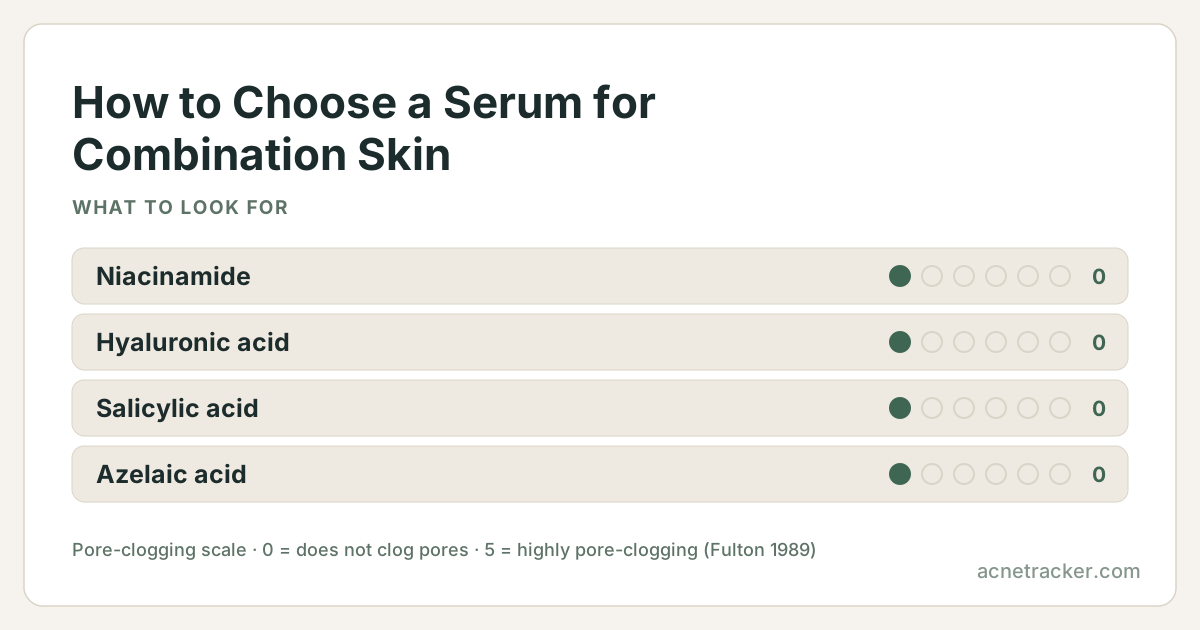
| Niacinamide | The ideal combination-skin active: it regulates oil in the T-zone and supports the barrier on drier cheeks at the same time. |
| Hyaluronic acid | Lightweight hydration that comforts dry areas without adding oil to the T-zone, so it suits the whole face. |
| Salicylic acid | Applied just to the oily, congested T-zone, it clears pores where you need it without drying the cheeks. |
| Azelaic acid | A balanced active that helps congestion and tone across mixed skin while staying gentle enough for drier areas. |
| Panthenol | Soothes and hydrates the drier zones, keeping the barrier comfortable while you treat oil elsewhere. |
Ingredients to avoid
| Ingredient | Why it matters |
|---|---|
| Strong all-over oil-stripping serums | They may suit the T-zone but leave the cheeks tight and irritated, worsening the imbalance. |
| Rich, heavy formulas across the whole face | They comfort dry cheeks but congest the oily T-zone, feeding breakouts where skin is already oilier. |
| Denatured alcohol high on the list | It over-dries the cheeks and triggers rebound oil in the T-zone — the wrong outcome on both counts. |
| Aggressive exfoliation everywhere | The dry areas cannot tolerate what the oily zones might; uniform strong acids irritate the cheeks. |
How to choose
Approach combination skin as two areas that sometimes need different things. A single balanced serum works well if it centres on versatile ingredients — niacinamide is the standout, since it regulates oil and supports the barrier at once, and hyaluronic acid hydrates without heaviness. Choose lightweight, water-based textures that hydrate the cheeks without congesting the T-zone. Where zones diverge, treat them separately: a salicylic acid serum on just the oily, congested T-zone, and a richer hydrating layer where the cheeks feel tight. Avoid products at either extreme — neither harsh oil-stripping nor heavy occlusive serums suit mixed skin all over. Read 'balancing' and 'mattifying' as marketing and check the actual ingredients. The most reliable approach is a gentle, versatile base serum for the whole face plus targeted actives only where a specific area needs them.
How to apply
Apply a versatile serum like niacinamide across the whole face, then, if needed, add a targeted active such as salicylic acid to just the oily T-zone. Layer a little extra hydration on dry cheeks. Follow with a lightweight moisturiser everywhere, using slightly more on drier areas. Use sunscreen every morning. Adjust with the seasons, since combination skin often shifts oilier in summer and drier in winter, and treating each zone for what it actually needs beats forcing one product across the whole face.
Frequently asked questions
Can I use one serum for combination skin?
Yes, if it is built around balanced, versatile ingredients like niacinamide and hyaluronic acid that suit both oily and dry areas. For bigger differences between zones, applying targeted actives only where needed works better than one compromise product.
Should I use different products on my T-zone and cheeks?
It often helps. A pore-clearing active like salicylic acid on the oily T-zone plus extra hydration on drier cheeks treats each area for what it needs, rather than forcing a single product to do two opposite jobs.
What is the best ingredient for combination skin?
Niacinamide is the standout, because it regulates oil in the T-zone while supporting the barrier on drier areas at the same time. Paired with lightweight hyaluronic acid, it covers most combination-skin needs in one step.
Why does my skin get oilier in summer?
Heat and humidity increase oil production, so combination skin often skews oilier in summer and drier in winter. Adjusting your serum and moisturiser with the seasons keeps both zones balanced through the year.
Sources & further reading
There is no single study of this exact question. The guidance here is reasoned from the ingredient profiles below, each of which carries its own references:
- Niacinamide2 refs
- Hyaluronic Acid3 refs
- Salicylic Acid2 refs
- Azelaic Acid3 refs
- Panthenol3 refs
Show every reference behind this page (10)
- Niacinamide: mechanisms of action and its topical use in dermatology (PubMed)cited by Niacinamide
- European Commission CosIng database — Niacinamidecited by Niacinamide, Hyaluronic Acid, Azelaic Acid, Panthenol
- PubChem — Hyaluronic acid compound summarycited by Hyaluronic Acid
- DermNet — Moisturisers and humectantscited by Hyaluronic Acid
- Salicylic acid as a peeling agent: a comprehensive review (PubMed)cited by Salicylic Acid
- FDA OTC monograph — acne drug products (salicylic acid 0.5–2%)cited by Salicylic Acid
- PubChem — Azelaic acid compound summarycited by Azelaic Acid
- DermNet — Azelaic acidcited by Azelaic Acid
- PubChem — Panthenol compound summarycited by Panthenol
- Safety Assessment of Panthenol, Pantothenic Acid, and Derivatives as Used in Cosmetics (PubMed)cited by Panthenol
Medical disclaimer
Ingredients mentioned on this page
Find your personal acne triggers
Our free Acne Tracker lets you log breakouts, sleep, stress and diet, and shows you which factors correlate with your flare-ups.