How to Choose a Moisturizer for Oily Skin
Oily skin still needs a moisturizer, and skipping it is one of the most common skincare mistakes: surface left dry simply signals the skin to make more oil to compensate. The trick is matching the formula to the skin type. A good moisturizer for oily skin hydrates the water layer without piling on the heavy oils and butters that leave a greasy film and clog pores, which means leaning on humectants and light, fast-absorbing textures rather than rich occlusives. This page describes the profile to look for so shine stays down and the barrier stays calm, whatever the brand on the tube.
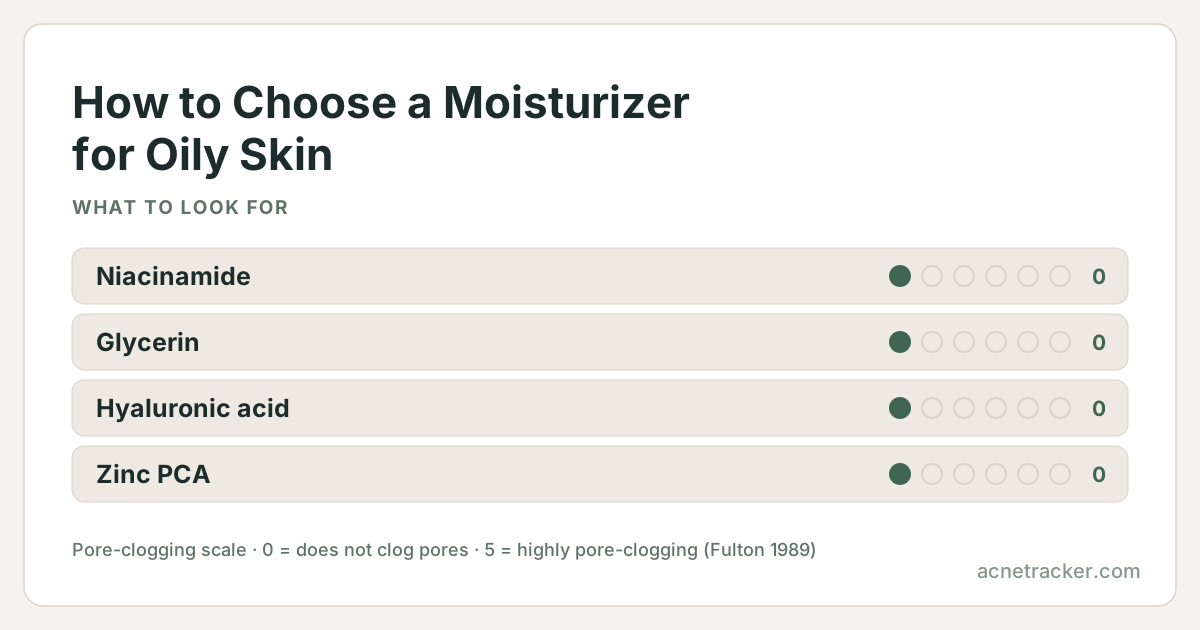
Ingredients to look for
| Ingredient | Why it matters |
|---|---|
| Niacinamide | Helps regulate sebum over several weeks and refines the look of enlarged pores, making it the single most useful leave-on active for oily skin. |
| Glycerin | A lightweight humectant that hydrates the water layer with no greasy residue, so skin feels comfortable rather than tight. |
| Hyaluronic acid | Draws water into the upper skin, giving a light gel or gel-cream real staying power without adding any oil. |
| Zinc PCA | A mild sebum-balancing and soothing ingredient well suited to shiny, congestion-prone skin. |
| Dimethicone | A silicone that leaves a smooth, matte, non-greasy finish and a light breathable seal instead of a heavy oily one. |
Ingredients to avoid
| Ingredient | Why it matters |
|---|---|
| Heavy occlusive butters (cocoa, shea) high on the list | Their rich texture sits on oily skin as a greasy film and can worsen congestion in pore-prone areas. |
| Coconut oil and other highly comedogenic oils | Coconut oil rates near the top of comedogenicity scales and is a frequent trigger of clogged pores and breakouts on oily skin. |
| Denatured alcohol high on the ingredient list | The instant matte feel comes from dissolving surface oil, which prompts rebound shine and irritation with repeated use. |
| Thick, heavily fragranced night creams | Rich formulas built for dry skin overload oily skin, and the fragrance adds needless irritation risk. |
How to choose
Start with texture, because on oily skin it decides everything. A gel or gel-cream that absorbs in seconds and leaves no shine is the target; if a sample still feels slick fifteen minutes after applying, it is too rich for you. Next scan the opening third of the ingredient list, where the bulk of the formula sits: you want water, glycerin and light emollients or silicones rather than heavy butters and tropical oils. Treat 'non-comedogenic' and 'oil-free' as rough starting signals, not guarantees — the full list is the real check. A little niacinamide is a genuine bonus in a daily cream, keeping oil balanced week over week. Ignore 'mattifying' as a marketing word; lasting oil control comes from not stripping the skin in the first place, so a comfortable light cream beats an aggressive one that leaves you tight and shinier by afternoon.
How to apply
Apply a small amount to slightly damp skin morning and evening after cleansing — oily skin needs less product than it thinks. A pea-sized dot spread thinly over the whole face is usually enough; layering too much is what creates the greasy look. In the morning, follow with sunscreen once the cream has absorbed. If your T-zone is far oilier than your cheeks, apply a lighter layer there and a slightly richer one on drier areas rather than treating the whole face the same.
Frequently asked questions
Does oily skin really need a moisturizer?
Yes. Leaving oily skin dry on the surface pushes it to make more oil, not less. A light, oil-free moisturizer keeps the barrier hydrated so sebum production stays steadier.
Gel or cream for oily skin?
A gel or gel-cream usually suits oily skin best because it hydrates without a heavy residue. A thicker cream is only worth it on drier patches or in very cold, dry weather.
Will a moisturizer make my skin oilier?
The right one will not. Greasiness comes from heavy oils and butters, not from hydration itself. A water-based, oil-free formula adds moisture without adding shine.
Can I skip moisturizer and just use sunscreen?
Often yes in the morning, since many sunscreens are moisturizing enough. But at night a light moisturizer still helps keep the barrier balanced, especially if you use acne actives.
Which ingredient helps most with oil control?
Niacinamide is the most evidence-backed leave-on ingredient for helping to regulate sebum and pore appearance over several weeks, and it is gentle enough for daily use.
Sources & further reading
There is no single study of this exact question. The guidance here is reasoned from the ingredient profiles below, each of which carries its own references:
- Niacinamide2 refs
- Glycerin3 refs
- Hyaluronic Acid3 refs
- Zinc PCA3 refs
- Dimethicone3 refs
Show every reference behind this page (9)
- Niacinamide: mechanisms of action and its topical use in dermatology (PubMed)cited by Niacinamide
- European Commission CosIng database — Niacinamidecited by Niacinamide, Glycerin, Hyaluronic Acid, Zinc PCA, Dimethicone
- PubChem — Glycerol compound summarycited by Glycerin
- DermNet — Moisturiserscited by Glycerin, Hyaluronic Acid
- PubChem — Hyaluronic acid compound summarycited by Hyaluronic Acid
- PubChem — Zinc PCA (zinc pyrrolidone carboxylate)cited by Zinc PCA
- Zinc l-pyrrolidone carboxylate inhibits the UVA-induced production of matrix metalloproteinase-1 by in vitro cultured skin fibroblasts, whereas it enhances their collagen synthesis (PubMed)cited by Zinc PCA
- PubChem — Dimethicone (polydimethylsiloxane)cited by Dimethicone
- Final report on the safety assessment of stearoxy dimethicone, dimethicone, methicone, amino bispropyl dimethicone, aminopropyl dimethicone, amodimethicone, amodimethicone hydroxystearate, behenoxy dimethicone, C24-28 alkyl methicone, C30-45 alkyl methicone, C30-45 alkyl dimethicone, cetearyl methicone, cetyl dimethicone, dimethoxysilyl ethylenediaminopropyl dimethicone, hexyl methicone, hydroxypropyldimethicone, stearamidopropyl dimethicone, stearyl dimethicone, stearyl methicone, and vinyldimethicone (PubMed)cited by Dimethicone
Medical disclaimer
Ingredients mentioned on this page
Find your personal acne triggers
Our free Acne Tracker lets you log breakouts, sleep, stress and diet, and shows you which factors correlate with your flare-ups.