How to Choose a Cleanser for Oily Skin
The right cleanser for oily skin does something counterintuitive: it cleans thoroughly without stripping. Squeaky-clean tightness feels effective, but stripping the skin of all its oil triggers rebound sebum production and low-grade irritation — the classic cycle where skin gets shinier the harder you wash it. This guide describes the ingredient profile, texture and pH to look for on any label, so you can evaluate products yourself instead of relying on marketing claims. We deliberately review ingredient profiles rather than ranking brands: formulas change, but the criteria below do not.
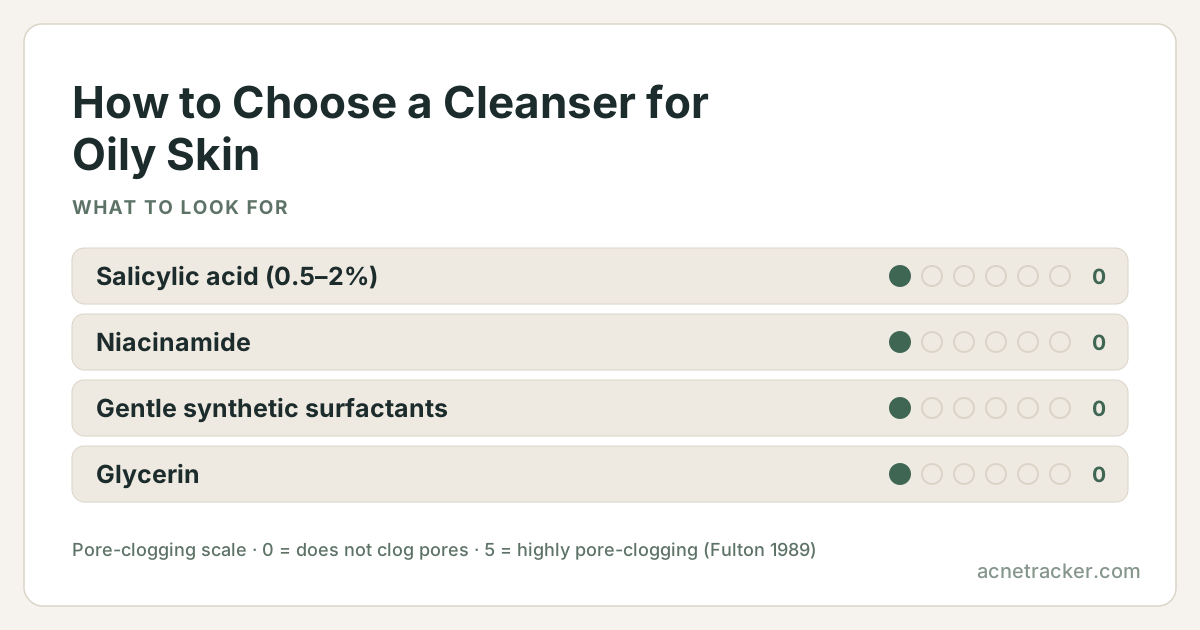
Ingredients to look for
| Ingredient | Why it matters |
|---|---|
| Salicylic acid (0.5–2%) | The one active worth having in a wash-off product for oily skin: oil-soluble, so it starts loosening pore congestion even in short contact time. |
| Niacinamide | In a cleanser it is a bonus rather than a treatment (contact time is short), but it signals a formula designed to respect the barrier. |
| Gentle synthetic surfactants (coco-glucoside, cocamidopropyl betaine, sodium cocoyl isethionate) | These clean effectively at skin-friendly pH without dissolving the barrier lipids the way traditional soap does. |
| Glycerin | A humectant that keeps the wash from dehydrating the skin — dehydrated oily skin overproduces oil to compensate. |
| Zinc PCA | A mild sebum-regulating and soothing addition that suits shiny, congestion-prone skin. |
Ingredients to avoid
| Ingredient | Why it matters |
|---|---|
| Soap and high-pH cleansers (sodium tallowate, 'pH 9+' bar soaps) | Alkaline washing disrupts the acid mantle for hours, dries the surface and paradoxically increases oiliness. |
| Denatured alcohol high on the list | Gives an instant matte feeling by dissolving surface oil, then triggers rebound shine and stinging on repeated use. |
| Harsh scrubbing particles | Physical abrasion inflames skin that is already prone to congestion, and does nothing for the oil inside the pore. |
| Heavy oils and rich butters in the formula | Cleansing balms have their place for makeup removal, but a daily cleanser for oily skin should rinse clean without residue. |
How to choose
Read the label in this order. First, format: gel and foaming textures suit oily skin; milks and balms are better reserved for makeup removal as a first step. Second, the ingredient list: a short surfactant system from the gentle families above, glycerin somewhere in the top half, no denatured alcohol in the top five, and optionally salicylic acid if congestion is part of your picture. Third, pH: anything advertised between 4.5 and 5.5 preserves the acid mantle; 'soap-free' and 'pH-balanced' are the useful claims, while 'deep-cleansing', 'purifying' and 'oil-free' are marketing terms with no regulated meaning. Finally, the feel test after rinsing: your face should feel clean but not tight. Tightness within ten minutes of washing is the clearest everyday sign that a cleanser is too harsh, whatever its label promises.
How to apply
Wash twice daily, morning and evening — more often strips the barrier and worsens oil production. Use lukewarm water; hot water dilates vessels and dries the surface. Massage the cleanser for a genuine 30–60 seconds so surfactants and any salicylic acid get working time, then rinse thoroughly. If you wear sunscreen or makeup, an oil or balm first step in the evening does the dissolving, letting your gel cleanser finish gently — this 'double cleanse' beats washing twice with a stronger product.
Frequently asked questions
Should oily skin use a foaming cleanser?
Foam is fine — the surfactant system matters more than the foam itself. A modern gentle foaming gel cleans oily skin well; an old-school high-pH foaming soap strips it. Check the ingredient list, not the lather.
Is salicylic acid cleanser enough to treat blackheads?
It helps, but contact time is short, so a wash-off product is maintenance rather than treatment. Established congestion responds far better to a leave-on salicylic acid product a few evenings per week.
How often should oily skin be cleansed?
Twice a day, plus after heavy sweating. Washing three or more times daily strips the barrier, and the skin compensates with more oil — the opposite of the goal.
Do I still need moisturizer if my skin is oily?
Yes. Oily skin can still be dehydrated, and dehydration drives more oil production. A light gel moisturizer keeps the barrier calm without adding shine.
What does 'non-comedogenic' actually mean on a cleanser?
It is an unregulated claim meaning the brand believes the formula is unlikely to clog pores. It is a reasonable signal but not a guarantee — the full ingredient list is the better check.
Sources & further reading
There is no single study of this exact question. The guidance here is reasoned from the ingredient profiles below, each of which carries its own references:
- Salicylic Acid2 refs
- Niacinamide2 refs
- Cocamidopropyl Betaine2 refs
- Glycerin3 refs
- Zinc PCA3 refs
Show every reference behind this page (9)
- Salicylic acid as a peeling agent: a comprehensive review (PubMed)cited by Salicylic Acid
- FDA OTC monograph — acne drug products (salicylic acid 0.5–2%)cited by Salicylic Acid
- Niacinamide: mechanisms of action and its topical use in dermatology (PubMed)cited by Niacinamide
- European Commission CosIng database — Niacinamidecited by Niacinamide, Cocamidopropyl Betaine, Glycerin, Zinc PCA
- Cosmetic Ingredient Review — safety assessment of Cocamidopropyl Betainecited by Cocamidopropyl Betaine
- PubChem — Glycerol compound summarycited by Glycerin
- DermNet — Moisturiserscited by Glycerin
- PubChem — Zinc PCA (zinc pyrrolidone carboxylate)cited by Zinc PCA
- Zinc l-pyrrolidone carboxylate inhibits the UVA-induced production of matrix metalloproteinase-1 by in vitro cultured skin fibroblasts, whereas it enhances their collagen synthesis (PubMed)cited by Zinc PCA
Medical disclaimer
Ingredients mentioned on this page
Find your personal acne triggers
Our free Acne Tracker lets you log breakouts, sleep, stress and diet, and shows you which factors correlate with your flare-ups.