How to Choose a Face Mask for Oily Skin
This is the concern the mask aisle was built for, and it is worth being precise about what you are buying. Sebaceous glands secrete continuously; the oil on your face at four in the afternoon was not there at noon. An absorbent mask removes what is currently on the surface. It does not tell the gland to stop, so the oil comes back, and it comes back on the gland's schedule rather than the mask's. That is not a failure of the product — it is the product working exactly as chemistry allows. Once you accept that, a clay mask becomes a useful cosmetic tool with a clear ceiling, instead of a permanent solution that keeps disappointing you.
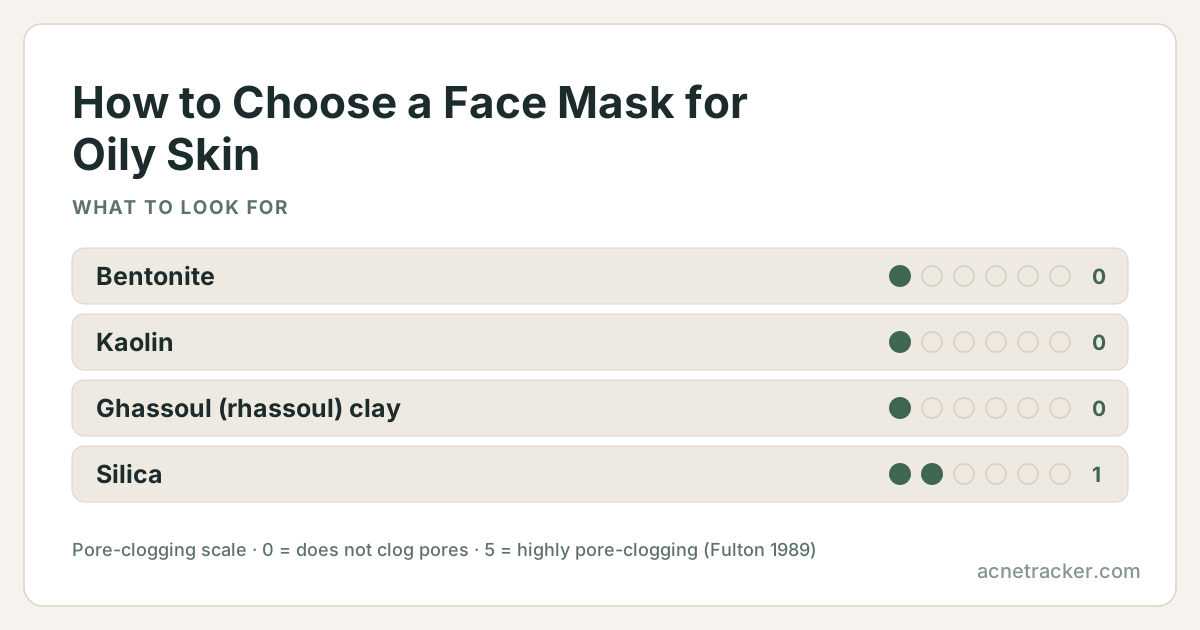
Ingredients to look for
| Ingredient | Why it matters |
|---|---|
| Bentonite | A swelling smectite clay with high absorbency and a slight negative surface charge. The strongest common oil-absorber, and the one most likely to overshoot into tightness. Fulton rates it 0. |
| Kaolin | Gentler and less thirsty than bentonite. If bentonite leaves your face squeaky and stiff, a kaolin-led formula is the same idea with the dial turned down. |
| Ghassoul (rhassoul) clay | A Moroccan stevensite clay, traditionally used as a wash. Absorbent and mild; there is no published comedogenic rating for it in Fulton's table. |
| Silica | Porous mineral particles that mop up oil and blur shine optically. Frequently the reason a mask leaves a smooth matte finish rather than a chalky one. |
| Niacinamide | The only ingredient in this list with published data on reducing sebum output — but from daily leave-on use, not from a weekly mask. Treat its presence as a bonus. |
Ingredients to avoid
| Ingredient | Why it matters |
|---|---|
| Denatured alcohol high in the list | Dissolves surface oil for an instant matte payoff, then leaves the barrier drier and the skin shinier a few hours later. |
| Masking more than twice a week | The most common self-inflicted problem in this category: absorbent masks used daily produce tight, flaky, reactive skin that still looks oily. |
| Letting the mask dry to cracking | Once the surface oil is gone, the clay starts taking water from the stratum corneum. The dramatic cracked finish is the visual signal you have gone too far. |
| Menthol, peppermint and camphor 'cooling' finishes | The cold tingle is a nerve receptor being triggered, not oil being controlled. It reads as efficacy and delivers irritation. |
How to choose
Pick the clay first and everything else second. Bentonite absorbs hard and fast, kaolin absorbs gently, ghassoul sits between them; if a label lists several, the first one is doing most of the work. Then look at the base: a clay suspended in glycerin and humectants rinses off leaving skin matte but comfortable, while a clay in a thin water base tends to overdry. Ignore two claims entirely. 'Detoxifying' means nothing, because there is nothing in a pore that qualifies as a toxin — sebum, keratin and bacteria are the actual contents, and none of them are drawn out by clay. 'Pore-minimising' means the mask is temporarily removing the oil that makes a pore's opening look wet and dark, and that is a photograph-scale change lasting hours. What you should look for instead is a formula you can rinse off before it cracks, at a frequency of once or twice a week, in a routine that also includes a moisturiser. Oily skin that is also dehydrated produces more oil, and stripping it harder is how people stay stuck.
How to apply
Cleanse, pat dry, and spread a thin layer over the oily zones only — there is no rule that a mask must cover the whole face, and the dry areas around your mouth will not thank you for it. Set a timer for the shorter end of the label's range. Rinse while the mask is still slightly tacky rather than fully dry, using lukewarm water and fingertips, not a cloth. Follow with a light gel moisturiser while the skin is still damp. If your face feels tight thirty minutes later, the mask is too strong or the sitting was too long — shorten it before you conclude the product failed.
Frequently asked questions
How long do clay masks control oil for?
Hours, not days. The mask removes what is on the surface, and your sebaceous glands refill it at their own rate. That rate is set by hormones and genetics, and a mask has no access to either.
Which clay is strongest for oily skin?
Bentonite, generally — it swells and absorbs more aggressively than kaolin. Strongest is not automatically best: if bentonite leaves your skin stiff and tight, kaolin achieves a similar look without the rebound dryness.
Does a clay mask shrink pores?
It does not. A pore's opening looks smaller when it is not full of oil, which is why skin photographs better after masking. The structure itself is unchanged, and it fills again as sebum is secreted.
Can you use a clay mask every day?
You can, and it is a bad idea. Daily absorption strips barrier lipids along with the sebum, and the result is skin that is tight, reactive and often oilier. Once or twice weekly is the sustainable range.
Should oily skin moisturise after a mask?
Yes, and skipping it is the reason many people find masks make their oiliness worse. Dehydrated skin compensates, so the moisturiser is not undoing the mask — it is what makes the mask survivable.
Sources & further reading
There is no single study of this exact question. The guidance here is reasoned from the ingredient profiles below, each of which carries its own references:
- Bentonite3 refs
- Kaolin3 refs
- Ghassoul Clay3 refs
- Silica3 refs
- Niacinamide2 refs
Show every reference behind this page (7)
- European Commission CosIng database — Bentonitecited by Bentonite, Kaolin, Ghassoul Clay, Silica, Niacinamide
- PubChem — Bentonitecited by Bentonite
- Fulton JE. Comedogenicity and irritancy of commonly used ingredients in skin care products. J Soc Cosmet Chem 40:321–333 (1989) — Table I, pp. 324–326 (source of the comedogenic rating)cited by Bentonite, Kaolin, Ghassoul Clay, Silica
- PubChem — Kaolincited by Kaolin
- PubChem — Montmorillonitecited by Ghassoul Clay
- PubChem — Silicon dioxidecited by Silica
- Niacinamide: mechanisms of action and its topical use in dermatology (PubMed)cited by Niacinamide
Medical disclaimer
Ingredients mentioned on this page
Find your personal acne triggers
Our free Acne Tracker lets you log breakouts, sleep, stress and diet, and shows you which factors correlate with your flare-ups.