Dimethicone: Comedogenic Rating & Ingredient Analysis
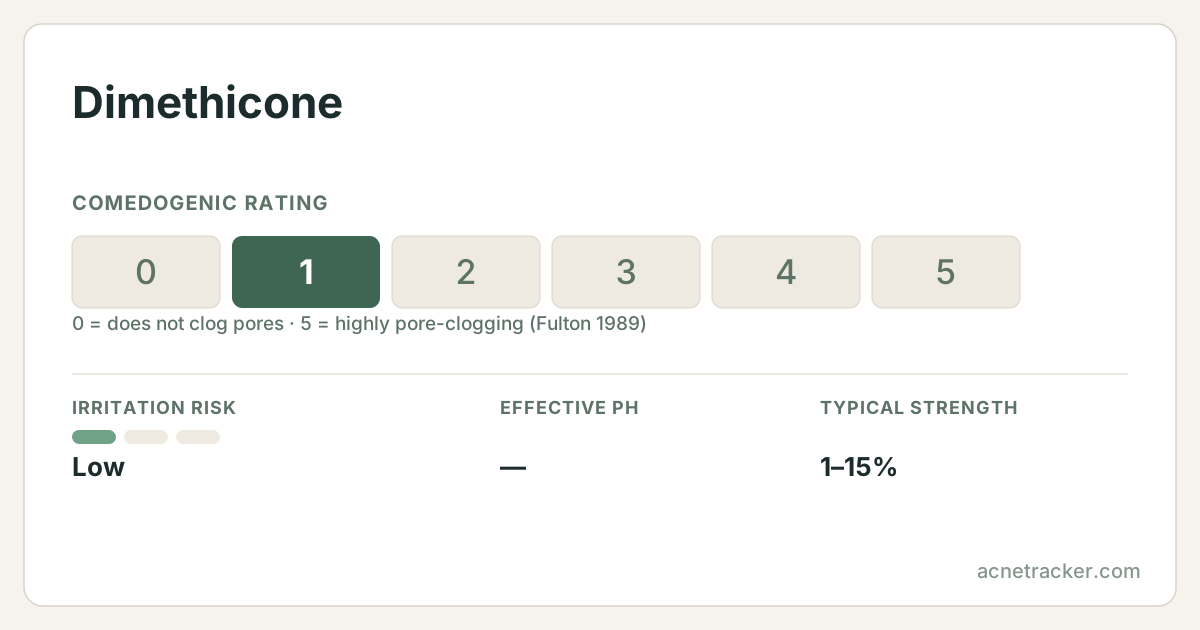
Dimethicone is a silicone, one of the most common and most misunderstood ingredients in modern skincare and makeup. It is the material behind that instantly smooth, silky, blurred finish primers and moisturisers give, filling in fine lines and rough texture so skin looks and feels even. Beyond cosmetics, it forms a breathable, protective film that reduces water loss and shields the skin, which is why dermatologists use it in barrier creams and products for sensitive, compromised skin. Despite persistent internet myths, it is non-comedogenic in practice, inert and very well tolerated, making it a workhorse rather than a villain.
Quick facts
- Comedogenic rating
- measured (Fulton 1989)
- Irritation risk
- Low
- Effective pH
- —
- Typical strength
- 1–15%
- Pregnancy
- Considered safe
- Suits skin types
- oilydrycombinationsensitivenormalacne-prone
Where this number comes from
Read directly from Table I of Fulton's 1989 paper — the primary source, not one of the copied tables that circulate online.
Fulton read his own scale as 0-1 not significant, 2-3 borderline, 4-5 positive. The assay is the rabbit ear at 10% dilution, which the paper itself calls extremely sensitive and not fully predictive of human skin. Ratings describe the raw ingredient; concentration and formulation change real-world behaviour.
Caution profile
The four published fields on this page, on one 0–5 scale. Further from the centre means more care is needed — never that the ingredient is worse.
Derived, not measured: pore-clogging is the published comedogenic rating; irritation maps low/moderate/high to 1/3/5; pregnancy maps safe/caution/avoid to 0/3/5; skin-type limits is how many of the seven skin types this entry does NOT list. Every input is printed in words in the quick-facts card above.
Show the numbers
| Metric | 0–5 | Published field |
|---|---|---|
| Pore-clogging | 1 | 1/5 |
| Irritation | 1 | Low |
| Skin-type limits | 0.7 | 6/7 |
| Pregnancy | 0 | Considered safe |
Working pH and typical strength
Where this ingredient is formulated to sit, and at what concentration.
Both bars come from the fields above: the pH window and the typical strength range published for this ingredient. The tinted column is healthy skin's surface pH (about 4.7–5.75).
Show the numbers
| Metric | 0–5 |
|---|---|
| Typical strength | 1–15% |
What is it?
Dimethicone, or polydimethylsiloxane, is a synthetic silicone polymer made of repeating silicon-oxygen units. On skin it spreads into a thin, flexible, breathable film that is occlusive enough to slow trans-epidermal water loss but porous enough not to suffocate the skin, unlike a heavy grease. This film gives the characteristic silky slip and optically blurs imperfections. It is chemically inert, meaning it does not react with skin or other ingredients, and it does not penetrate into the skin. These properties make it valuable both cosmetically, for smoothing and improving product feel, and functionally, for protecting and supporting a healthy barrier.
Benefits
Instantly smooths texture
Dimethicone fills in fine lines and uneven texture with a flexible film, giving skin a soft, silky, blurred finish that also helps makeup glide on and sit evenly.
Reduces water loss
Its breathable occlusive film slows trans-epidermal water loss, helping skin stay hydrated and supporting recovery in dry or barrier-compromised skin without a heavy feel.
Protects sensitive skin
Being inert and non-reactive, it forms a shielding layer used in barrier creams and gentle products, making it a reliable choice for sensitive and easily irritated skin.
Improves product feel
It gives creams, primers and serums their pleasant slip and fast, non-greasy application, which is a big part of why silicones are so widely used in formulation.
How to use
Dimethicone appears in moisturisers, primers, serums and sunscreens, so you usually just apply the product as directed rather than using it alone. It layers well over water-based hydrators to seal them in and under makeup to smooth the surface. It is compatible with virtually all actives and skin types. If you prefer a thorough evening cleanse, a standard gentle cleanser removes silicone-containing products perfectly well; there is no need for harsh scrubbing, and the old claim that silicones require special removal is unfounded.
Side effects
Dimethicone is among the best-tolerated cosmetic ingredients, and irritation or allergy is very rare because it is inert and does not penetrate the skin. Its comedogenic rating is low, and the widespread belief that it traps debris and causes breakouts is not supported by evidence, provided you cleanse normally. Some people simply dislike the silky texture, which is a preference rather than a safety issue.
Who should avoid it
There is little reason for anyone to avoid dimethicone; it is suitable for oily, dry, sensitive and acne-prone skin alike and is regarded as safe in pregnancy. The main reasons to skip it are personal preference for the feel, or a choice to avoid synthetic silicones for environmental or formulation reasons rather than skin-health ones.
Pairs well with
Frequently asked questions
Does dimethicone clog pores?
No, not in practice. It has a low comedogenic rating and is a breathable, inert film rather than a heavy grease. The belief that it traps debris and causes acne is not supported by evidence when you cleanse normally.
Is dimethicone bad for your skin?
No. It is inert, non-reactive and does not penetrate the skin, and it is widely used in barrier and sensitive-skin products. It smooths texture, reduces water loss and is very well tolerated.
Is dimethicone safe for acne-prone skin?
Yes. Its low comedogenic rating and breathable film make it suitable for acne-prone skin, and it is often present in oil-free moisturisers and primers designed for such skin.
Do I need special cleanser to remove dimethicone?
No. A standard gentle cleanser removes silicone-containing products perfectly well. The claim that silicones require harsh or special removal is a myth; normal cleansing is enough.
Where this ingredient shows up here
Counted across this database, not the web — these are the pages on this site that reason about this ingredient.
Sources & further reading
- European Commission CosIng database — Dimethicone
- PubChem — Dimethicone (polydimethylsiloxane)
- Final report on the safety assessment of stearoxy dimethicone, dimethicone, methicone, amino bispropyl dimethicone, aminopropyl dimethicone, amodimethicone, amodimethicone hydroxystearate, behenoxy dimethicone, C24-28 alkyl methicone, C30-45 alkyl methicone, C30-45 alkyl dimethicone, cetearyl methicone, cetyl dimethicone, dimethoxysilyl ethylenediaminopropyl dimethicone, hexyl methicone, hydroxypropyldimethicone, stearamidopropyl dimethicone, stearyl dimethicone, stearyl methicone, and vinyldimethicone (PubMed)
Medical disclaimer
Find your personal acne triggers
Our free Acne Tracker lets you log breakouts, sleep, stress and diet, and shows you which factors correlate with your flare-ups.