How to Choose a Chemical Exfoliant for Oily Skin
Oily skin usually does best with an oil-soluble acid, because that is where its problem lives — inside the pore, in a mix of sebum and dead cells that a surface-only exfoliant cannot reach. This guide explains the difference between AHA, BHA and PHA, and why the choice matters more for oily skin than any brand name. It also sets a hard limit: exfoliating acids are treatments, not daily washes, and shiny skin is not tougher skin. Over-doing acids breaks the barrier and drives the rebound oil you were trying to control. We describe ingredient profiles so you can judge any label yourself.
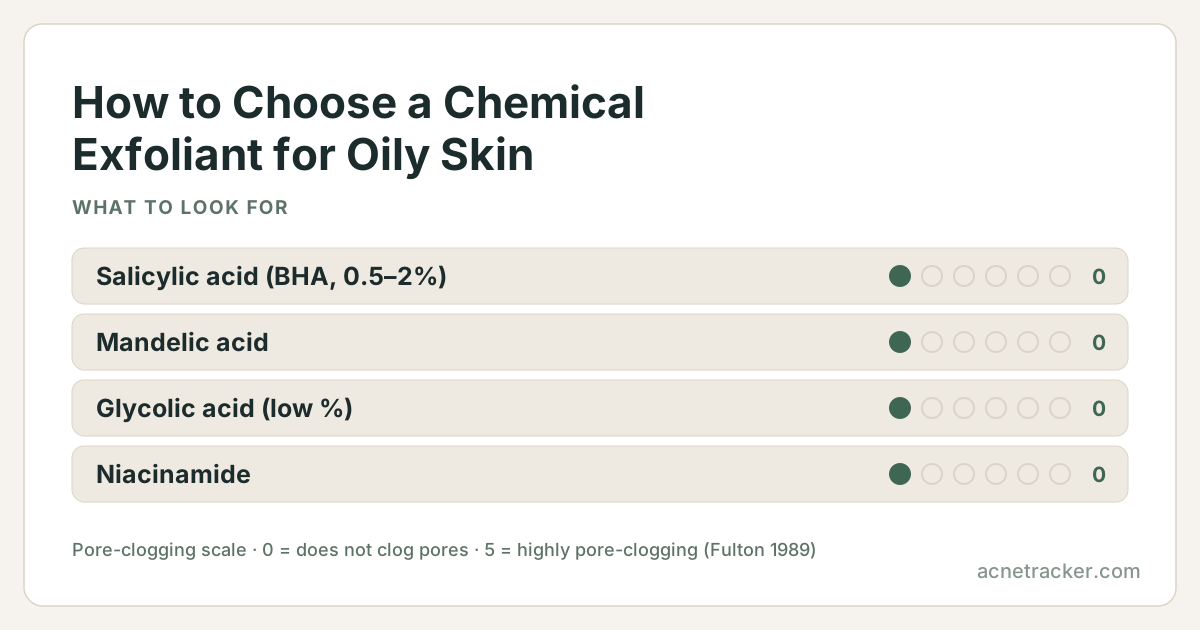
Ingredients to look for
| Ingredient | Why it matters |
|---|---|
| Salicylic acid (BHA, 0.5–2%) | Oil-soluble, so it penetrates sebum and works inside the pore — the single most useful exfoliating active for genuinely oily, congestion-prone skin. |
| Mandelic acid | A large-molecule AHA that exfoliates the surface gently and has mild antibacterial behaviour, useful when straight salicylic acid feels too drying. |
| Glycolic acid (low %) | A small, fast AHA that refines surface texture and dullness; keep the percentage modest so it complements, rather than competes with, a BHA. |
| Niacinamide | Not an acid, but a common supporting ingredient that helps regulate sebum and steadies the barrier between exfoliation days. |
Ingredients to avoid
| Ingredient | Why it matters |
|---|---|
| Grainy physical scrubs used alongside acids | Layering abrasion on top of chemical exfoliation is the fastest route to a stripped, over-exfoliated barrier and rebound shine. |
| High-percentage glycolic used daily | Daily strong AHA on oily skin looks controlled for a week, then the barrier fails and oil production climbs to compensate. |
| Denatured alcohol as a top ingredient | It gives a matte hit but dehydrates the surface, which oily skin answers with more sebum — the opposite of the goal. |
| Exfoliating toners used morning and night | Twice-daily acids leave no recovery window; congestion needs the barrier intact to heal, not constant resurfacing. |
How to choose
Start with the acid family. Oily and congested skin is the clearest case for a BHA (salicylic acid), because oil solubility lets it work inside the pore where blackheads and closed comedones form. If your skin is oily but sensitive, a large-molecule AHA like mandelic acid is a gentler entry point. Reserve strong glycolic acid for occasional resurfacing rather than routine use. Next, read the percentage and pH: salicylic acid works at 0.5–2%, and useful AHA leave-ons sit around pH 3.5–4. Decode the claims — 'pore-purifying' and 'deep-clean' mean nothing regulated, whereas a stated acid and percentage do. Finally, match frequency to format: a leave-on exfoliant two or three evenings a week suits most oily skin, while daily low-strength options exist but demand you watch for tightness, flaking or stinging as early over-exfoliation signals.
How to apply
Use in the evening, on clean dry skin, two to three times a week to begin, building up only if your skin stays calm. Apply the acid first, wait until it absorbs, then follow with a light moisturizer to keep the barrier supported. Do not scrub on the same days. Because all exfoliating acids increase sun sensitivity, a broad-spectrum SPF the next morning is non-negotiable. If you notice tightness, redness or unexpected flaking, stop for several days and let the skin recover before resuming at a lower frequency.
Frequently asked questions
Is BHA or AHA better for oily skin?
BHA (salicylic acid) usually wins for oily skin because it is oil-soluble and works inside the pore, where oily skin's congestion sits. AHAs like glycolic or mandelic acid resurface the top layer and are a good complement, but they cannot reach into sebum the way BHA does.
Can I use a chemical exfoliant every day if my skin is very oily?
Oily does not mean tough. Daily acids strip the barrier and often trigger more oil, not less. Two or three evenings a week is plenty for most people; increase slowly and only if the skin stays comfortable.
Will exfoliating make my skin less oily?
It keeps pores clearer and skin smoother, but it does not shrink oil glands. Over-exfoliating can actually raise oiliness by damaging the barrier, so the aim is regular, moderate use, not aggressive stripping.
Do I still need moisturizer after an acid if my skin is oily?
Yes. A light, non-comedogenic moisturizer after exfoliating supports the barrier and reduces rebound oil. Skipping it because skin feels oily is a common mistake that makes shine and irritation worse over time.
Sources & further reading
There is no single study of this exact question. The guidance here is reasoned from the ingredient profiles below, each of which carries its own references:
- Salicylic Acid2 refs
- Mandelic Acid2 refs
- Glycolic Acid3 refs
- Niacinamide2 refs
Show every reference behind this page (7)
- Salicylic acid as a peeling agent: a comprehensive review (PubMed)cited by Salicylic Acid
- FDA OTC monograph — acne drug products (salicylic acid 0.5–2%)cited by Salicylic Acid
- Mandelic acid — PubChem compound summarycited by Mandelic Acid
- DermNet — Alpha hydroxy acidscited by Mandelic Acid, Glycolic Acid
- PubChem — Glycolic acid compound summarycited by Glycolic Acid
- European Commission CosIng database — Glycolic Acidcited by Glycolic Acid, Niacinamide
- Niacinamide: mechanisms of action and its topical use in dermatology (PubMed)cited by Niacinamide
Medical disclaimer
Ingredients mentioned on this page
Find your personal acne triggers
Our free Acne Tracker lets you log breakouts, sleep, stress and diet, and shows you which factors correlate with your flare-ups.