How to Choose a Moisturizer for Mature Skin
Mature skin tends to be thinner, drier and slower to repair, because oil production, ceramide levels and cell turnover all decline with age. A moisturizer for mature skin therefore has two honest jobs: replace the lipids and water the skin no longer holds well, and provide a comfortable base for any anti-ageing actives you use in separate steps. It will not erase deep wrinkles — no cream can — but it can plump fine dehydration lines, restore softness and support the barrier. This page describes the nourishing, barrier-focused profile to look for, keeping the promises realistic and the ingredients evidence-based.
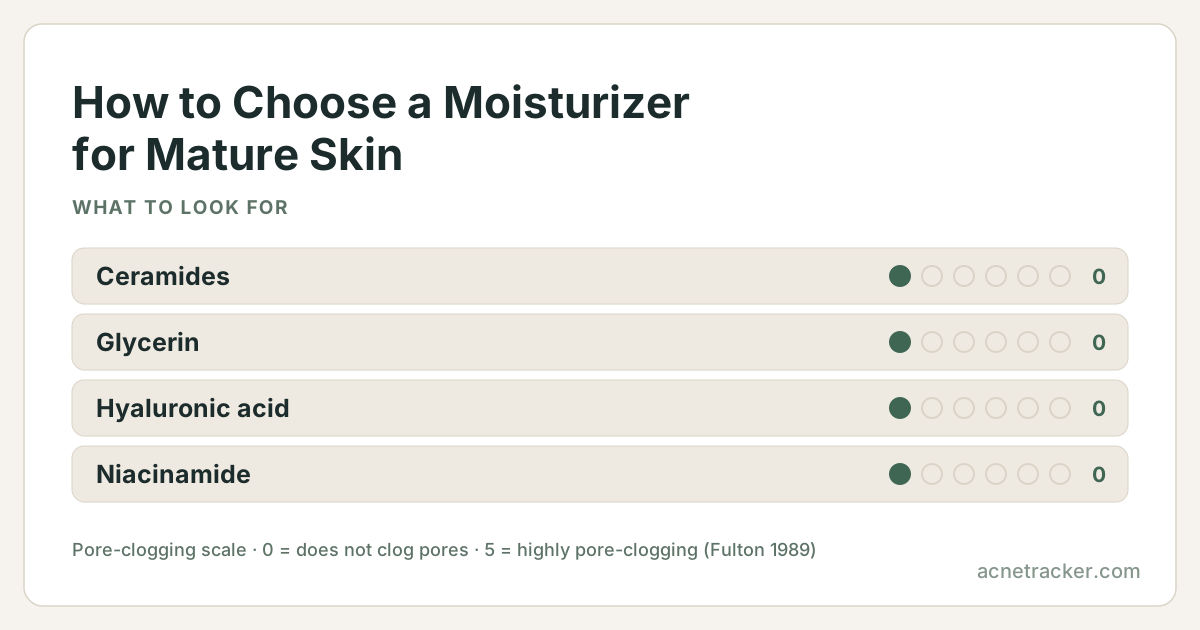
Ingredients to look for
| Ingredient | Why it matters |
|---|---|
| Ceramides | Replace the barrier lipids that decline with age, reducing the dryness and roughness common in mature skin. |
| Glycerin | A reliable humectant that hydrates skin that holds water less well than it once did. |
| Hyaluronic acid | Plumps the upper skin and softens fine dehydration lines, giving mature skin a smoother, fuller look. |
| Niacinamide | Supports the barrier, boosts ceramide production and improves tone and texture over weeks, well suited to ageing skin. |
| Shea butter | A rich emollient that softens and comforts the drier, thinner skin that often comes with age. |
Ingredients to avoid
| Ingredient | Why it matters |
|---|---|
| Thin lotions with no real emollient or occlusive | Mature skin usually needs more richness than a watery lotion provides, or it feels tight again within hours. |
| High denatured-alcohol formulas | Their drying effect is harder on skin that is already lower in oil and slower to recover. |
| Heavy fragrance loads | Thinner, drier mature skin is often more reactive, so strong fragrance adds an avoidable irritation risk. |
| Products sold purely on 'anti-ageing' claims with weak ingredient lists | A luxury price and bold wording do not substitute for the barrier lipids and humectants that actually help. |
How to choose
Match richness to how dry your skin has become, and judge by ingredients rather than anti-ageing marketing. A good mature-skin cream combines humectants (glycerin, hyaluronic acid) with barrier lipids (ceramides) and a real emollient such as shea butter or squalane, so it both hydrates and nourishes. Niacinamide is a worthwhile bonus for tone and barrier support. Keep proven anti-ageing actives — retinoids, vitamin C, peptides — as separate steps you control, rather than expecting a moisturizer to do everything; a cream's main job is comfort and barrier support. Be sceptical of the priciest jars: cost tracks marketing more than efficacy. And remember that daily sunscreen prevents far more visible ageing than any night cream reverses, so a mature-skin routine is incomplete without it.
How to apply
Apply to slightly damp skin morning and evening, using enough to leave skin comfortable rather than tight. A richer texture at night suits mature skin, which repairs most during sleep and tolerates heavier creams while you rest. Extend your moisturizer down onto the neck and back of the hands, where ageing shows early and skin is often neglected. In the morning, let the cream absorb, then always apply sunscreen — it is the most effective anti-ageing step in any routine and protects the results of everything else.
Frequently asked questions
What is the most important moisturizer ingredient for mature skin?
There is no single hero, but the combination of barrier lipids like ceramides with humectants like glycerin and hyaluronic acid addresses the dryness and reduced water-holding that define mature skin.
Can a moisturizer reduce wrinkles?
It can soften fine lines caused by dehydration by plumping the skin, but it cannot erase deep, structural wrinkles. Retinoids and sunscreen have stronger evidence for long-term wrinkle prevention and improvement.
Do I need a separate day and night cream?
Not strictly, but a richer night cream is practical because mature skin repairs during sleep and tolerates heavier textures then. A lighter formula that sits well under sunscreen is useful by day.
Are expensive anti-ageing creams worth it?
Price mostly reflects marketing and packaging, not results. A well-formulated affordable cream with ceramides, humectants and niacinamide often outperforms a luxury jar with a weaker ingredient list.
Should mature skin use retinol in a moisturizer?
Retinoids help ageing skin, but they are usually better as a controlled separate step so you can manage strength and irritation. Pair them with a nourishing moisturizer that offsets their dryness.
Sources & further reading
There is no single study of this exact question. The guidance here is reasoned from the ingredient profiles below, each of which carries its own references:
- Ceramides3 refs
- Glycerin3 refs
- Hyaluronic Acid3 refs
- Niacinamide2 refs
- Shea Butter3 refs
Show every reference behind this page (9)
- DermNet — Skin barrier functioncited by Ceramides
- PubChem — Ceramide compound summarycited by Ceramides
- European Commission CosIng database — Ceramide NPcited by Ceramides, Glycerin, Hyaluronic Acid, Niacinamide, Shea Butter
- PubChem — Glycerol compound summarycited by Glycerin
- DermNet — Moisturiserscited by Glycerin, Hyaluronic Acid
- PubChem — Hyaluronic acid compound summarycited by Hyaluronic Acid
- Niacinamide: mechanisms of action and its topical use in dermatology (PubMed)cited by Niacinamide
- PubChem — Stearic acid (major shea fatty acid)cited by Shea Butter
- Safety Assessment of Butyrospermum parkii (Shea)-Derived Ingredients as Used in Cosmetics (PubMed)cited by Shea Butter
Medical disclaimer
Ingredients mentioned on this page
Find your personal acne triggers
Our free Acne Tracker lets you log breakouts, sleep, stress and diet, and shows you which factors correlate with your flare-ups.