How to Choose a Cleanser for Fungal Acne
Fungal acne — more accurately Malassezia (Pityrosporum) folliculitis — is not true acne at all. It is an overgrowth of a yeast that lives on everyone's skin, showing up as uniform, itchy little bumps, often on the forehead, chest and back. Because the cause is a yeast rather than clogged pores, ordinary acne cleansers do little, and many oils and fatty ingredients actually feed it. This guide describes what to look for in a wash if you suspect fungal acne, the ingredients that make it worse, and why a doctor's diagnosis matters — the bumps can mimic ordinary acne, and confirming the cause changes the whole approach.
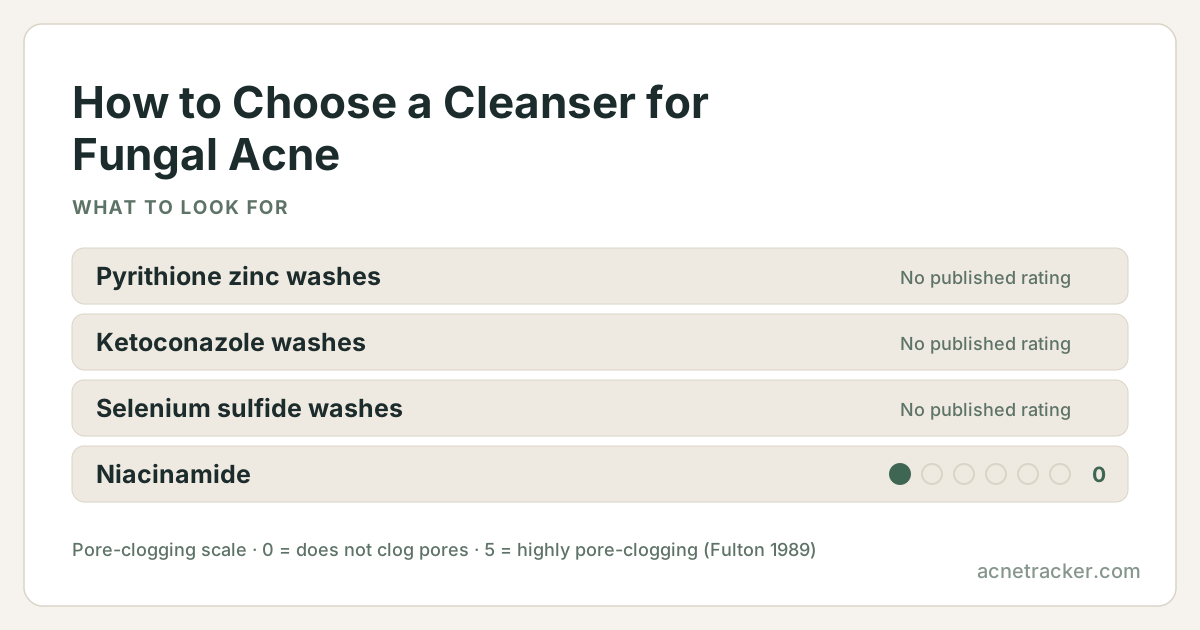
Ingredients to look for
| Ingredient | Why it matters |
|---|---|
| Pyrithione zinc washes | An antifungal agent in some medicated body and face washes, used against the yeast behind fungal acne. |
| Ketoconazole washes | An antifungal used, often on medical advice, as a short-contact wash to reduce Malassezia overgrowth. |
| Selenium sulfide washes | Another antifungal wash sometimes used on the body to lower yeast levels; leave briefly then rinse. |
| Niacinamide | A barrier-friendly signal ingredient that does not feed the yeast, useful in a gentle everyday cleanser. |
| Glycerin | A simple humectant that hydrates without the fatty esters and oils that Malassezia can feed on. |
Ingredients to avoid
| Ingredient | Why it matters |
|---|---|
| Fatty acids and esters, and most plant oils | Malassezia feeds on certain lipids, so oil-rich and ester-heavy cleansers can fuel the overgrowth. |
| Cleansing balms and oil cleansers | Their oils are exactly the fuel this yeast uses, so they can worsen fungal acne even while removing makeup. |
| Rich, occlusive formulas that leave a film | A greasy residue creates the warm, oily environment the yeast thrives in. |
| Fragrance in an already irritated area | Adds irritation to inflamed follicles without doing anything about the yeast. |
How to choose
First, get the diagnosis right — fungal acne looks like small, uniform, itchy bumps rather than the mixed blackheads, whiteheads and cysts of ordinary acne, and a doctor can confirm it. If it is fungal, an antifungal wash containing pyrithione zinc, ketoconazole or selenium sulfide, used as a short-contact treatment a few times a week, targets the yeast; a doctor can advise on strength and frequency. For daily washing, choose a simple cleanser without oils, fatty esters or rich emollients, since those can feed Malassezia. 'Fungal-acne-safe' is an informal community label, not a regulated term, so still read the list for oils and esters. Judge success over a few weeks: genuine fungal acne responds to antifungal treatment, whereas ordinary acne does not — which is itself a useful clue to the diagnosis.
How to apply
If using an antifungal wash, apply it to the affected areas, leave it on for the few minutes the product or your doctor specifies, then rinse — the contact time is what lets it work. Use it a few times a week rather than constantly, and follow with a light, oil-free moisturiser. For the rest of the routine, keep products simple and free of the oils and esters the yeast feeds on. Change out of sweaty clothing promptly and shower after exercise, since heat and sweat encourage the overgrowth. If it does not clear, see a doctor.
Frequently asked questions
How do I know if I have fungal acne or regular acne?
Fungal acne tends to be small, uniform, itchy bumps in clusters, often on the forehead, chest or back, and it does not respond to normal acne treatment. Ordinary acne is more varied, with blackheads and cysts. A doctor can confirm which you have.
Why do oils make fungal acne worse?
The yeast behind fungal acne, Malassezia, feeds on certain fatty acids and esters. Oil cleansers, cleansing balms and many rich creams supply exactly those lipids, so they can fuel the overgrowth even though they suit ordinary dry or acne-prone skin.
Can a normal salicylic acid cleanser treat fungal acne?
Only partly. Salicylic acid can help keep follicles clear and calm, but it does not kill the yeast, so an antifungal wash such as pyrithione zinc or ketoconazole is usually needed to address the actual cause.
When should I see a doctor about fungal acne?
See a doctor if you are unsure of the diagnosis, if antifungal washes do not clear the bumps within a few weeks, or if it keeps returning. Persistent folliculitis sometimes needs oral antifungal treatment that only a doctor can prescribe.
Sources & further reading
There is no single study of this exact question. The guidance here is reasoned from the ingredient profiles below, each of which carries its own references:
- Niacinamide2 refs
- Glycerin3 refs
Show every reference behind this page (4)
- Niacinamide: mechanisms of action and its topical use in dermatology (PubMed)cited by Niacinamide
- European Commission CosIng database — Niacinamidecited by Niacinamide, Glycerin
- PubChem — Glycerol compound summarycited by Glycerin
- DermNet — Moisturiserscited by Glycerin
Medical disclaimer
Ingredients mentioned on this page
Find your personal acne triggers
Our free Acne Tracker lets you log breakouts, sleep, stress and diet, and shows you which factors correlate with your flare-ups.