Tamanu Oil: Comedogenic Rating & Ingredient Analysis
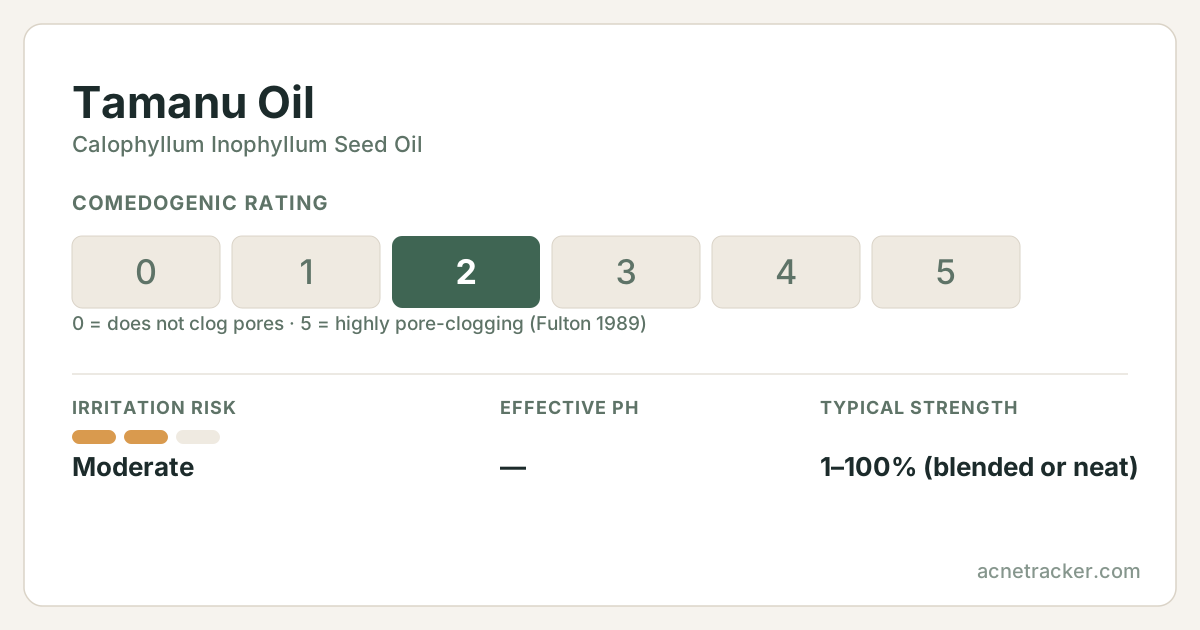
Tamanu oil is a thick, dark-green oil pressed from the nut of the Calophyllum inophyllum tree, which grows along the coasts of Polynesia, Southeast Asia and East Africa. Islanders have used it on skin for generations, and it has become a cult ingredient in facial oils and balms marketed for scars, marks and rough, tired skin. It has a distinctive nutty smell and a heavy texture that sinks in slowly, so a little goes a long way. Rather than a lightweight daily moisturiser, tamanu is best thought of as a targeted conditioning oil for areas that need extra comfort.
Quick facts
- Comedogenic rating
- our estimate — not measured
- Irritation risk
- Moderate
- Effective pH
- —
- Typical strength
- 1–100% (blended or neat)
- Pregnancy
- Ask your doctor
- Suits skin types
- drynormalmaturecombination
Where this number comes from
No one has published a comedogenic rating for this ingredient. Fulton's 1989 table tested about 250 raw materials and this was not among them, and we found no later study measuring it. The figure shown is our own reasoning from the ingredient's chemistry and how it is used — treat it as an estimate, not a measurement.
Fulton read his own scale as 0-1 not significant, 2-3 borderline, 4-5 positive. The assay is the rabbit ear at 10% dilution, which the paper itself calls extremely sensitive and not fully predictive of human skin. Ratings describe the raw ingredient; concentration and formulation change real-world behaviour.
Caution profile
The four published fields on this page, on one 0–5 scale. Further from the centre means more care is needed — never that the ingredient is worse.
Derived, not measured: pore-clogging is the published comedogenic rating; irritation maps low/moderate/high to 1/3/5; pregnancy maps safe/caution/avoid to 0/3/5; skin-type limits is how many of the seven skin types this entry does NOT list. Every input is printed in words in the quick-facts card above.
Show the numbers
| Metric | 0–5 | Published field |
|---|---|---|
| Pore-clogging | 2 | 2/5 |
| Irritation | 3 | Moderate |
| Skin-type limits | 2.1 | 4/7 |
| Pregnancy | 3 | Ask your doctor |
Working pH and typical strength
Where this ingredient is formulated to sit, and at what concentration.
Both bars come from the fields above: the pH window and the typical strength range published for this ingredient. The tinted column is healthy skin's surface pH (about 4.7–5.75).
Show the numbers
| Metric | 0–5 |
|---|---|
| Typical strength | 1–100% (blended or neat) |
What is it?
Chemically, tamanu oil is dominated by oleic and linoleic fatty acids in fairly balanced amounts, alongside a set of unusual plant compounds — calophyllolide, delta-tocotrienol and other antioxidants — that give the oil its colour and its reputation for calming irritated-looking skin. Because it leans moderately toward oleic acid, it is richer and more occlusive than a linoleic oil like grapeseed-oil, which is why it suits drier skin better than very oily skin. It is usually cold-pressed and left unrefined to keep those active compounds intact, which also explains the strong colour and scent. Its comedogenic rating is not in Fulton's original tables; based on its oleic-heavy profile we estimate it around 2, meaning moderate pore-clogging potential.
Benefits
Comforts marks left by blemishes
Tamanu is traditionally used on the discoloured marks that linger after spots heal; its antioxidants and rich lipids keep the area supple while it fades naturally over time.
Deeply conditions dry, rough patches
The heavy, oleic-rich texture forms a soft protective layer that reduces water loss, making it useful on flaky elbows, dry cheeks and weather-beaten skin.
Soothes the look of irritation
Its natural antioxidant compounds help calm the appearance of redness and reactive skin, which is why it often appears in after-sun and repair balms.
Supports a resilient barrier
Blended with lighter oils, tamanu adds fatty acids and vitamin E-family antioxidants that help the skin barrier feel stronger and less easily irritated.
How to use
Because it is heavy and moderately comedogenic, use tamanu oil sparingly and usually diluted. A common approach is to add a few drops to a lighter carrier such as jojoba-oil or rosehip-oil, or to a plain moisturiser, and apply at night to dry areas or over marks. Warm one or two drops between the fingers and press it into cleansed, slightly damp skin as the last step. Patch test on the inner arm for a few days first, as unrefined tamanu is a known sensitiser for some people. It is best kept away from very oily, congestion-prone zones like the nose and central forehead.
Side effects
Unrefined tamanu oil can cause contact allergy and stinging in sensitive individuals, so a patch test is important. On oily or acne-prone skin its richness may contribute to congestion if used neat over large areas. The strong nutty odour bothers some users. Anyone with a known nut allergy should be cautious, as it is pressed from a tree nut, and should consult a doctor before use.
Who should avoid it
People with very oily or breakout-prone skin should avoid applying it neat over the whole face. Those with tree-nut allergies or a history of contact dermatitis should be careful. During pregnancy, topical use of unrefined botanical oils is best cleared with a doctor, since safety data are limited — treat it as caution rather than confirmed safe.
Pairs well with
Avoid combining with
Frequently asked questions
Does tamanu oil clog pores?
It can. Its oleic-heavy profile puts it at an estimated comedogenic rating of about 2, so on oily or acne-prone skin it is safest diluted and used only on drier areas rather than slathered over congested zones.
Can tamanu oil fade acne scars?
It cannot erase true indented scars, but its antioxidants and rich lipids can keep the skin comfortable and supple while post-blemish marks fade on their own. Manage expectations: it is a conditioning oil, not a resurfacing treatment.
Why does tamanu oil smell so strong?
The nutty, earthy smell comes from the unrefined, cold-pressed processing that preserves its natural antioxidant compounds. Refined versions smell milder but lose some of the components people seek it out for.
How do I use tamanu oil without breaking out?
Dilute a few drops into a lighter oil like jojoba-oil or into your moisturiser, keep it to drier areas, apply at night, and patch test first. Avoid using it neat across oily, congestion-prone parts of the face.
Where this ingredient shows up here
Counted across this database, not the web — these are the pages on this site that reason about this ingredient.
Sources & further reading
Medical disclaimer
Find your personal acne triggers
Our free Acne Tracker lets you log breakouts, sleep, stress and diet, and shows you which factors correlate with your flare-ups.