Avocado Oil: Comedogenic Rating & Ingredient Analysis
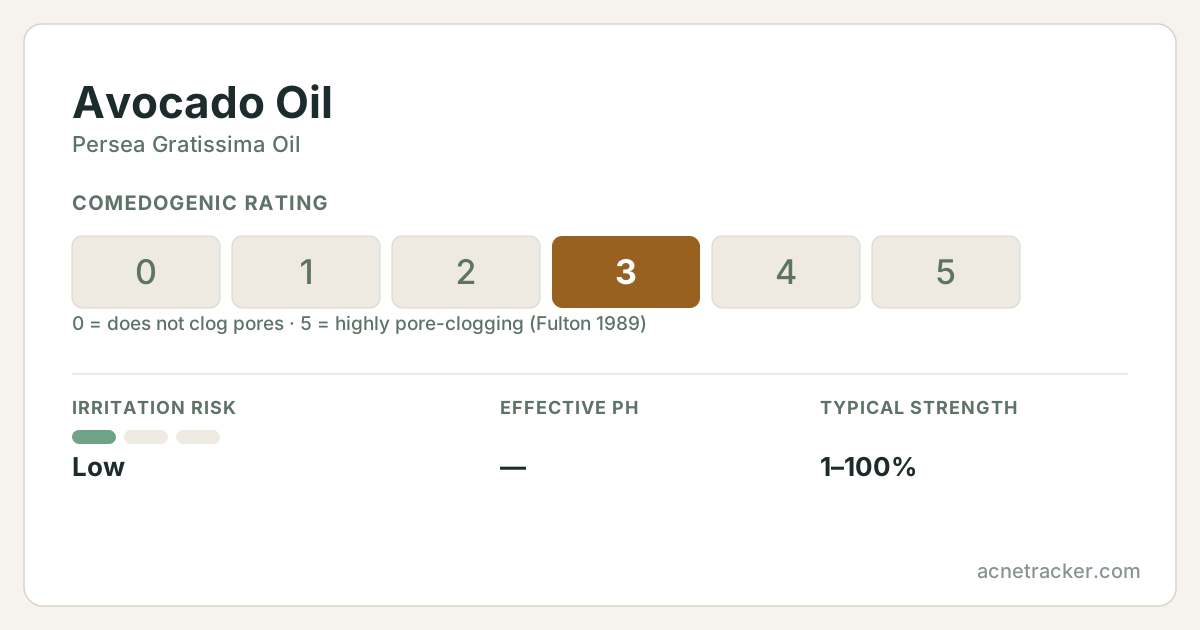
Avocado oil is one of the richest and most nourishing plant oils used on skin, pressed from the flesh of the avocado rather than a seed. It is deeply emollient, loaded with fatty acids, vitamin E and other fat-soluble nutrients, and it sinks in to leave dry, depleted skin feeling soft and cushioned. That richness is exactly why it is a wonderful ingredient for dry, mature and normal skin, and just as clearly why it is not a good match for acne-prone skin. With a comedogenic rating of around 3, avocado oil sits at the higher end for pore-clogging potential, so its generous nourishment comes with a caveat for anyone who breaks out easily.
Quick facts
- Comedogenic rating
- measured (Fulton 1989)
- Irritation risk
- Low
- Effective pH
- —
- Typical strength
- 1–100%
- Pregnancy
- Considered safe
- Suits skin types
- drymaturenormalsensitive
Where this number comes from
Read directly from Table I of Fulton's 1989 paper — the primary source, not one of the copied tables that circulate online.
Fulton read his own scale as 0-1 not significant, 2-3 borderline, 4-5 positive. The assay is the rabbit ear at 10% dilution, which the paper itself calls extremely sensitive and not fully predictive of human skin. Ratings describe the raw ingredient; concentration and formulation change real-world behaviour.
Caution profile
The four published fields on this page, on one 0–5 scale. Further from the centre means more care is needed — never that the ingredient is worse.
Derived, not measured: pore-clogging is the published comedogenic rating; irritation maps low/moderate/high to 1/3/5; pregnancy maps safe/caution/avoid to 0/3/5; skin-type limits is how many of the seven skin types this entry does NOT list. Every input is printed in words in the quick-facts card above.
Show the numbers
| Metric | 0–5 | Published field |
|---|---|---|
| Pore-clogging | 3 | 3/5 |
| Irritation | 1 | Low |
| Skin-type limits | 2.1 | 4/7 |
| Pregnancy | 0 | Considered safe |
Working pH and typical strength
Where this ingredient is formulated to sit, and at what concentration.
Both bars come from the fields above: the pH window and the typical strength range published for this ingredient. The tinted column is healthy skin's surface pH (about 4.7–5.75).
Show the numbers
| Metric | 0–5 |
|---|---|
| Typical strength | 1–100% |
What is it?
Avocado oil (Persea Gratissima Oil) is a fruit oil rich in monounsaturated oleic acid, along with palmitic and linoleic acids and a notable amount of unsaponifiables — the vitamin-rich, non-fatty fraction that includes vitamin E, carotenoids and phytosterols. This nutrient density gives avocado oil real conditioning and antioxidant value, and its sterols have been of interest for soothing and supporting dry skin. Because it is high in oleic acid and thick in texture, it is a rich, partly occlusive emollient that softens and seals the skin, but the same qualities give it a comedogenic rating of about 3, higher than lighter, linoleic-rich oils. It is well tolerated on dry and mature skin but not an ideal facial oil where clogged pores are a concern.
Benefits
Deeply nourishes dry skin
Avocado oil is a rich emollient that softens and cushions dry, rough or mature skin, easing tightness and restoring a supple feel.
Nutrient and antioxidant rich
Its high unsaponifiable content supplies vitamin E, carotenoids and sterols that condition the skin and help defend against environmental stress.
Seals in moisture
As a partly occlusive oil it slows surface water loss, making it a good nourishing layer over humectants on very dry skin.
Comforting for mature skin
Its richness and sterol content make it especially comforting for mature and dehydrated skin that needs extra nourishment.
How to use
Use avocado oil as a rich final step on dry skin, applied over humectants like glycerin or hyaluronic acid, or blended into a night cream or balm, mostly in the evening. A little goes a long way given its richness. Keep it to dry areas and off acne-prone or oily parts of the face because of its comedogenic rating. For a lighter facial oil, choose non-comedogenic options like safflower oil or stable squalane instead. It pairs well with barrier lipids like ceramides. Store it away from heat and light to keep it fresh.
Side effects
Avocado oil is generally well tolerated and rarely irritating, but its comedogenic rating of about 3 means it has a meaningful potential to clog pores, especially on acne-prone or oily skin. It does not increase sun sensitivity. As a rich oil it can feel heavy on some skin. True allergy is uncommon, though those with a latex-fruit sensitivity may wish to patch test. Discard the oil if it smells rancid.
Who should avoid it
Acne-prone and oily skin should generally avoid avocado oil on the face because of its higher comedogenic rating. It is best reserved for dry, mature or very depleted skin. People with latex-fruit allergy syndrome may want to patch test, as avocado is among the associated foods.
Frequently asked questions
Is avocado oil good for the skin?
Yes, for dry and mature skin. It is a rich, nutrient-dense emollient with vitamin E and sterols that nourish and soften. However, its comedogenic rating of around 3 makes it less suitable for acne-prone skin.
Does avocado oil clog pores?
It has a comedogenic rating of about 3, so it has a relatively high potential to clog pores. Dry skin usually tolerates it, but acne-prone and oily skin should avoid it on the face.
Is avocado oil good for wrinkles?
Its richness and antioxidant, sterol-rich content make it comforting and conditioning for mature skin, which can improve softness and comfort, though no oil erases wrinkles. Use it as nourishment alongside proven actives.
Can I use avocado oil around my eyes?
Its richness can suit the dry eye area for some people, but keep it thin and be cautious if you are prone to milia or clogged pores there. Patch test and observe how your skin responds.
Where this ingredient shows up here
Counted across this database, not the web — these are the pages on this site that reason about this ingredient.
Buying guides 1
Sources & further reading
Medical disclaimer
Find your personal acne triggers
Our free Acne Tracker lets you log breakouts, sleep, stress and diet, and shows you which factors correlate with your flare-ups.