How to Choose an Eye Cream for Puffiness and Eye Bags
There are two entirely separate things people call eye bags, and the distinction decides whether a cream is worth buying. One is fluid: lymph and interstitial water that pools in loose periorbital tissue overnight and drains as the day goes on. The other is structural: the thin membrane holding orbital fat in place weakens with age, and the fat pad pushes forward into a permanent bulge. Caffeine, cold and time genuinely help the first. Nothing you can apply to skin moves the second, no matter how it is marketed. Here is how to work out which one is looking back at you.
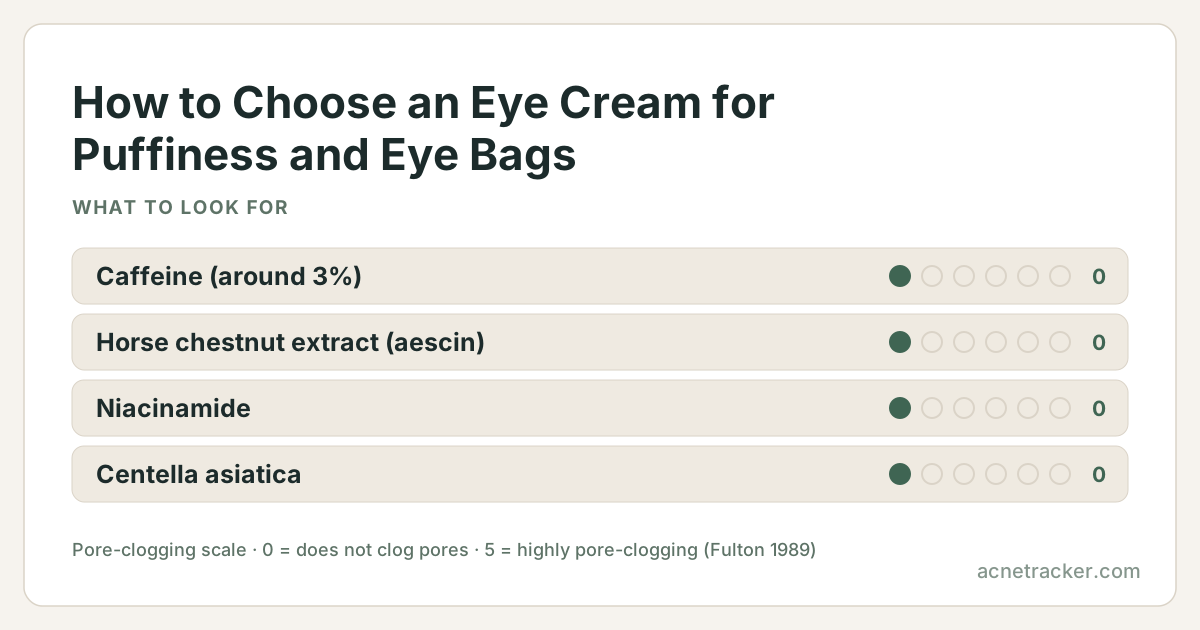
Ingredients to look for
| Ingredient | Why it matters |
|---|---|
| Caffeine (around 3%) | The best-supported topical for fluid puffiness: it constricts vessels and is thought to nudge fluid out of the tissue. Small studies of caffeine-containing eye formulations report modest short-term improvement. |
| Horse chestnut extract (aescin) | Used in venous and oedema preparations for its effect on capillary permeability. The oral evidence in leg oedema is far stronger than anything published for eye creams, so temper expectations. |
| Niacinamide | Not a decongestant, but it supports barrier function and calms low-grade inflammation, and inflammatory puffiness from irritation is a real and commonly missed contributor. |
| Centella asiatica | Has a documented role in supporting microcirculation and vessel wall integrity, which is the same territory puffiness lives in — a supporting player rather than the active. |
| A metal applicator or cool storage | Unglamorous but honest: much of the morning de-puffing effect people attribute to a formula is simply cold causing vasoconstriction. It works, it is free, and it lasts about an hour. |
Ingredients to avoid
| Ingredient | Why it matters |
|---|---|
| Products claiming to remove eye bags | If the bulge is herniated orbital fat, no cream reaches it — the fat sits behind muscle and a fibrous septum. That claim is aimed at people who have not been told the difference. |
| Heavy occlusive balms on the lid overnight | Very rich textures on lid skin can hold fluid at the surface and leave you puffier by morning, which is the opposite of the goal. |
| Tightening films sold as instant fixes | Silicate film formers shrink as they dry and visibly smooth a bag for a few hours. It is a temporary optical effect that does nothing to the tissue underneath and creases under makeup. |
| Aggressive lymphatic massage tools | Dragging thin lid skin with rollers and gua sha risks the chronic friction that drives pigmentation, and trades a morning of puffiness for a year of darkness. |
How to choose
Run a timing test for two days. Note the bag when you wake and again at 4pm. If it is markedly smaller by the afternoon, you have fluid puffiness — gravity drained it, and this is exactly what caffeine, cold and sleeping with your head raised are for. If the bulge is identical morning and evening, and especially if it has been slowly appearing over years, you are looking at an orbital fat pad, and the only interventions that change that are surgical ones to discuss with a doctor. For the fluid type, the label matters less than you would hope. Caffeine around 3% is the ingredient with the most support, a light gel texture beats a rich cream, and fragrance-free protects you from the irritation that itself causes swelling. Look also at the causes rather than the cure: salt, alcohol, sleep position, crying, and untreated allergy account for a lot of periorbital fluid, and none of them are solved by a jar. If your puffiness is worst in spring and comes with itching, treat the allergy — that single change outperforms every eye gel on the shelf.
How to apply
Use it first thing, on cool skin, patting along the orbital bone from the inner corner outward — the direction lymph drains anyway. A pea for both eyes is plenty; excess just migrates into the eye and stings. Keep the tube in the fridge if you want the vasoconstriction that does most of the visible work. Give it ten minutes before makeup. At night, an extra pillow does more for morning fluid than any product, and cutting late-evening salt and alcohol does more still.
Frequently asked questions
How do I know if my eye bags are fat or fluid?
Time of day is the giveaway. Fluid bags are worst on waking and shrink noticeably by afternoon, and they fluctuate with salt, alcohol and crying. Fat pad bags look the same at 8am and 8pm, do not respond to sleep, and have usually been slowly developing over several years.
Does caffeine eye cream reduce puffiness?
For fluid puffiness, modestly and temporarily. Caffeine constricts small vessels, and formulations around 3% have shown small short-term improvements in eye-area studies. It will not touch a herniated fat pad, and the effect wears off within hours rather than accumulating over weeks.
Why are my eyes puffy every morning?
Lying flat for hours lets fluid settle in the loose tissue around the eye, and it drains once you are upright. Salt, alcohol, crying, poor sleep and allergic rhinitis all increase how much fluid is available to pool. Puffiness that never resolves during the day is a different problem.
Can eye cream get rid of under-eye bags permanently?
No. Fluid puffiness recurs every night because its cause recurs every night, and structural bags are anatomy rather than a skin condition. Creams manage the fluid type and misrepresent the fat type, which is why this category has such a poor reputation.
When is puffy eyes a medical problem?
See a doctor if swelling comes on suddenly, affects one eye only, is painful, red or hot, comes with fever or any change in vision, or if you can feel a distinct lump in the lid. Persistent swelling of both eyes that never settles also deserves assessment, since thyroid, kidney and allergic causes are all treatable and none of them are a skincare question.
Sources & further reading
There is no single study of this exact question. The guidance here is reasoned from the ingredient profiles below, each of which carries its own references:
- Caffeine2 refs
- Horse Chestnut Extract2 refs
- Niacinamide2 refs
- Centella Asiatica2 refs
Show every reference behind this page (6)
- PubChem — Caffeinecited by Caffeine
- DermNet — Cosmeceuticalscited by Caffeine
- European Commission CosIng database — Aesculus Hippocastanum (Horse Chestnut) Seed Extractcited by Horse Chestnut Extract, Niacinamide, Centella Asiatica
- Horse chestnut seed extract for chronic venous insufficiency (Cochrane systematic review, PubMed)cited by Horse Chestnut Extract
- Niacinamide: mechanisms of action and its topical use in dermatology (PubMed)cited by Niacinamide
- Bylka W et al. Centella asiatica in dermatology: an overview. Phytother Res 2014 Aug (PubMed)cited by Centella Asiatica
Medical disclaimer
Ingredients mentioned on this page
Find your personal acne triggers
Our free Acne Tracker lets you log breakouts, sleep, stress and diet, and shows you which factors correlate with your flare-ups.