Caffeine: Comedogenic Rating & Ingredient Analysis
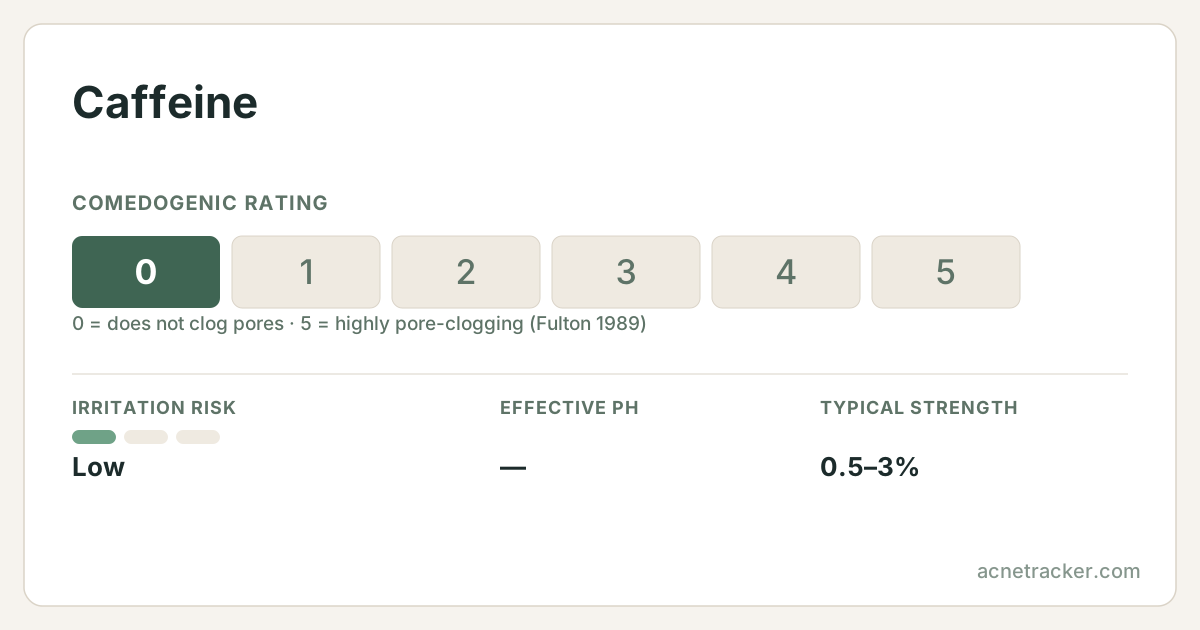
Caffeine is best known as the molecule in your morning coffee, but it has earned a firm place in skincare too, above all in eye creams and serums aimed at the look of tired, puffy eyes. Applied topically it is a small, well-absorbed molecule with two useful properties for the skin: it is an antioxidant, and it has a temporary tightening, de-puffing effect on the delicate area around the eyes. It is not a treatment for any medical condition and it will not permanently erase dark circles, but used sensibly it can make the under-eye area look fresher and more awake. In products it usually appears between 0.5% and 3%.
Quick facts
- Comedogenic rating
- our estimate — not measured
- Irritation risk
- Low
- Effective pH
- —
- Typical strength
- 0.5–3%
- Pregnancy
- Considered safe
- Suits skin types
- normaldrycombinationoilysensitivemature
Where this number comes from
No one has published a comedogenic rating for this ingredient. Fulton's 1989 table tested about 250 raw materials and this was not among them, and we found no later study measuring it. The figure shown is our own reasoning from the ingredient's chemistry and how it is used — treat it as an estimate, not a measurement.
Fulton read his own scale as 0-1 not significant, 2-3 borderline, 4-5 positive. The assay is the rabbit ear at 10% dilution, which the paper itself calls extremely sensitive and not fully predictive of human skin. Ratings describe the raw ingredient; concentration and formulation change real-world behaviour.
Caution profile
The four published fields on this page, on one 0–5 scale. Further from the centre means more care is needed — never that the ingredient is worse.
Derived, not measured: pore-clogging is the published comedogenic rating; irritation maps low/moderate/high to 1/3/5; pregnancy maps safe/caution/avoid to 0/3/5; skin-type limits is how many of the seven skin types this entry does NOT list. Every input is printed in words in the quick-facts card above.
Show the numbers
| Metric | 0–5 | Published field |
|---|---|---|
| Pore-clogging | 0 | 0/5 |
| Irritation | 1 | Low |
| Skin-type limits | 0.7 | 6/7 |
| Pregnancy | 0 | Considered safe |
Working pH and typical strength
Where this ingredient is formulated to sit, and at what concentration.
Both bars come from the fields above: the pH window and the typical strength range published for this ingredient. The tinted column is healthy skin's surface pH (about 4.7–5.75).
Show the numbers
| Metric | 0–5 |
|---|---|
| Typical strength | 0.5–3% |
What is it?
Chemically, caffeine is a methylxanthine — the same stimulant found in coffee, tea and cocoa. In skincare its value comes from a couple of measurable actions rather than any dramatic transformation. As an antioxidant it helps neutralise some of the free radicals generated by ultraviolet light and pollution, which contribute over time to dullness and premature ageing. It also has a mild vasoconstrictive, fluid-shifting effect: applied to thin under-eye skin, it can temporarily reduce the appearance of puffiness and shadowing by tightening the look of the area. Because it is water-soluble and penetrates skin readily, it is easy to formulate at low, comfortable concentrations that suit even sensitive skin.
Benefits
Temporarily reduces the look of puffiness
Caffeine's mild tightening effect on the thin under-eye skin can temporarily reduce the look of puffiness and morning swelling, making the eye area appear more awake and refreshed.
Antioxidant protection
As an antioxidant, caffeine helps neutralise some of the free radicals produced by UV exposure and pollution, supporting the skin's defences against dullness and premature ageing.
Brightens the look of tired eyes
By tightening the appearance of the delicate eye area and reducing puffiness, caffeine can make dark circles look less pronounced, giving a fresher, more rested overall impression.
Comfortable for sensitive skin
At the low 0.5–3% concentrations used in cosmetics, caffeine is gentle and non-irritating, so it fits easily into eye creams and serums for reactive or thin, delicate skin.
How to use
Caffeine is most often found in eye creams, gels and serums, and that is where it shines. Pat a small amount gently around the orbital bone morning and night, avoiding direct contact with the eyes themselves. A cool applicator or a few seconds in the fridge can enhance the immediate de-puffing feel. For the face more broadly, caffeine-containing serums can be layered like any lightweight water-based product, and it combines well with antioxidants such as vitamin C and hydrators like hyaluronic acid and squalane. There is no adjustment period; the de-puffing effect is temporary, so consistent daily use gives the best ongoing appearance.
Side effects
Topical caffeine is very well tolerated and rarely causes irritation at cosmetic concentrations. The most likely issue is simple product sensitivity from other ingredients in an eye formula rather than the caffeine itself. Because eye products are used so close to the eyes, take care not to get them in the eyes, which can sting. There is no risk of a caffeine buzz from skincare — the amounts absorbed are tiny compared with a cup of coffee.
Who should avoid it
Almost nobody needs to avoid topical caffeine. It is regarded as safe during pregnancy and breastfeeding, since the amount absorbed through the skin is negligible. Those with very reactive skin should, as always, patch test a new eye product first — usually the caution is about fragrance or preservatives in the formula rather than the caffeine. Keep eye products from getting into the eyes.
Pairs well with
Frequently asked questions
Does caffeine help with under-eye bags and puffiness?
It can temporarily reduce the look of puffiness. Caffeine has a mild tightening effect on thin under-eye skin that makes the area appear less swollen and more awake, though the effect is short-lived rather than permanent.
Does caffeine get rid of dark circles?
Not entirely. It can make dark circles look less noticeable by de-puffing and tightening the appearance of the eye area, but it does not permanently remove circles caused by pigment or genetics.
How long does caffeine's de-puffing effect last?
It is temporary, generally lasting a few hours. That is why caffeine eye products are used consistently morning and night to keep the eye area looking fresh rather than as a one-time fix.
Can caffeine in skincare keep me awake?
No. The amount of caffeine absorbed through the skin from an eye cream is minuscule compared with a cup of coffee and has no stimulant effect on the body.
Is caffeine safe to use during pregnancy?
Yes. Topical caffeine is considered safe during pregnancy and breastfeeding because so little is absorbed through the skin. As always, confirm with your doctor if you have concerns.
Where this ingredient shows up here
Counted across this database, not the web — these are the pages on this site that reason about this ingredient.
Sources & further reading
Medical disclaimer
Find your personal acne triggers
Our free Acne Tracker lets you log breakouts, sleep, stress and diet, and shows you which factors correlate with your flare-ups.