How to Choose an Eye Cream for Hooded Eyes
A hood is upper lid skin that folds down over the crease, and it comes from one of two places: you were born with the anatomy, or the skin and brow have descended over time. Either way, it is a question of where tissue sits — and no substance applied to the surface of skin moves tissue from one position to another. That is an unusual thing to read on a page about eye cream, but it is the truth, and the rest of this page is more useful once it is said. There are still things worth doing here; they are just smaller and more specific than the marketing suggests.
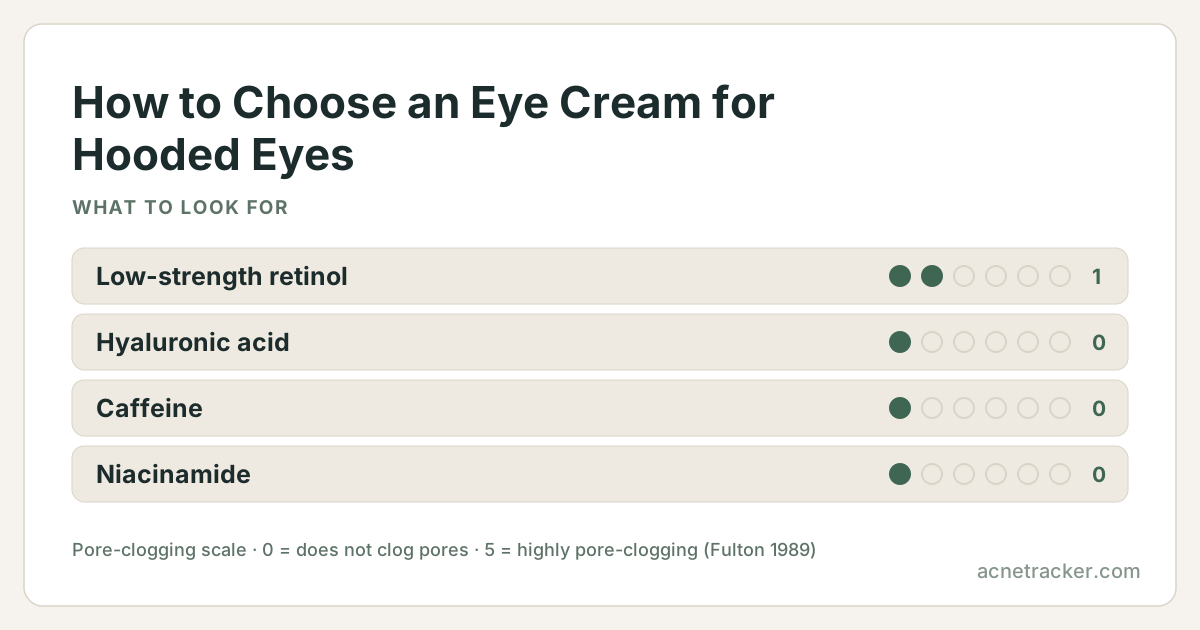
Ingredients to look for
| Ingredient | Why it matters |
|---|---|
| Low-strength retinol | Over a year it improves dermal thickness and texture, which can make lid skin look less papery. It does not shorten or raise the skin, and the distinction is the whole point. |
| Hyaluronic acid | Hydrated lid skin looks smoother and reflects light more evenly. A cosmetic improvement to the surface of a hood, not a change to the hood. |
| Caffeine | Where fluid retention is exaggerating the fold — which is common in the morning — reducing that fluid genuinely makes the lid look less heavy for a few hours. A real effect within a small scope. |
| Niacinamide | Supports the barrier on skin that is thin, mobile and often chronically slightly irritated by makeup and removers. Calm skin drapes better than inflamed skin does. |
| Squalane | A lightweight emollient that keeps the lid pliable without the weight of a balm, which matters here because heavy textures make a hood look heavier and destroy eyeshadow. |
Ingredients to avoid
| Ingredient | Why it matters |
|---|---|
| Any 'eyelid lift' or 'instant hood lift' product | These are film formers that contract on drying. The effect lasts hours, flakes visibly under makeup, and reverses completely. It is a cosmetic illusion sold in the language of surgery. |
| Heavy creams and balms on the upper lid | Weight and slip work against you: rich textures make the fold look more pronounced, migrate into the eye, and cause makeup to slide off within an hour. |
| Strong actives on the upper lid itself | Upper lid skin is the thinnest on the entire body. It reacts to concentrations the under-eye tolerates, and an inflamed swollen lid looks considerably more hooded, not less. |
| Dragging the lid to apply makeup | Repeatedly stretching lax skin is not thought to help laxity, and the friction reliably contributes to pigmentation in the process. |
How to choose
Work out which hood you have, because it changes what is reasonable to expect. Look at photographs of yourself at twenty. If the hood was already there, it is your inherited eye architecture, it has never been a skin-quality problem, and no routine will change it — makeup technique will do more for you than any product in this category. If it has developed gradually, then upper lid skin has stretched and your brow has descended, both of which are genuine ageing changes, and both of which are still position rather than quality. In either case, what a cream can legitimately offer is better skin on the hood: hydrated, less crepey, calmer, with a retinoid slowly improving texture over a year. Buy for that, and buy light — a fluid or gel, fragrance-free, without heavy occlusives that will migrate. If the hood genuinely bothers you beyond that, the interventions that reposition tissue are surgical and belong in a consultation with a qualified doctor. That is not a recommendation; it is simply where the honest boundary of skincare sits.
How to apply
Use a very small amount on the upper lid and the brow bone, patted rather than dragged, and let it absorb fully before any makeup. Keep the texture light; anything that feels rich on your fingertip will crease within the hour. Retinoid, if you use one, goes on the brow bone and outer corner rather than the mobile lid, and only at night. Cool storage helps if morning fluid is exaggerating the fold. Beyond that, the highest-yield habits here are the free ones: sunglasses, sleep, and not rubbing.
Frequently asked questions
Can eye cream fix hooded eyes?
No cream repositions eyelid skin, because hooding is where tissue sits rather than what condition it is in. Creams can make the skin of a hood smoother, better hydrated and less crepey, which is a genuine cosmetic improvement to the surface but leaves the fold exactly where it was.
Are hooded eyes genetic or from ageing?
Both exist and they are worth distinguishing. Congenital hooding is visible in childhood and adolescent photographs and is simply your eye shape. Acquired hooding appears gradually in adulthood as upper lid skin loosens and the brow descends. Old photographs answer the question faster than a mirror.
Does caffeine help hooded eyes?
Only to the extent that fluid is part of the picture, which is mostly a morning phenomenon. Reducing that fluid can make the lid sit slightly lighter for a few hours. It has no effect whatsoever on the underlying skin position, and by afternoon the difference is gone anyway.
What kind of eye cream texture is best for hooded eyes?
Light. Gels and fluids sit better on a mobile lid, absorb without residue and do not collect in the fold. Rich balms are counterproductive here regardless of their ingredient list, because the weight accentuates the fold and the slip ruins any makeup applied over it.
When should hooded eyelids be checked by a doctor?
If the hood obstructs your upper field of vision, if one eyelid droops noticeably more than the other, or if drooping appears suddenly or worsens through the day or with fatigue. Asymmetric or rapid-onset drooping is a medical finding rather than a cosmetic one and should be assessed rather than treated with skincare.
Sources & further reading
There is no single study of this exact question. The guidance here is reasoned from the ingredient profiles below, each of which carries its own references:
- Retinol2 refs
- Hyaluronic Acid3 refs
- Caffeine2 refs
- Niacinamide2 refs
- Squalane3 refs
Show every reference behind this page (9)
- Improvement of naturally aged skin with vitamin A (retinol) (PubMed)cited by Retinol
- European Commission SCCS opinion on vitamin A in cosmeticscited by Retinol
- PubChem — Hyaluronic acid compound summarycited by Hyaluronic Acid
- European Commission CosIng database — Hyaluronic Acidcited by Hyaluronic Acid, Niacinamide, Squalane
- DermNet — Moisturisers and humectantscited by Hyaluronic Acid, Squalane
- PubChem — Caffeinecited by Caffeine
- DermNet — Cosmeceuticalscited by Caffeine
- Niacinamide: mechanisms of action and its topical use in dermatology (PubMed)cited by Niacinamide
- PubChem — Squalane compound summarycited by Squalane
Medical disclaimer
Ingredients mentioned on this page
Find your personal acne triggers
Our free Acne Tracker lets you log breakouts, sleep, stress and diet, and shows you which factors correlate with your flare-ups.