Can You Mix Mandelic Acid and Niacinamide?
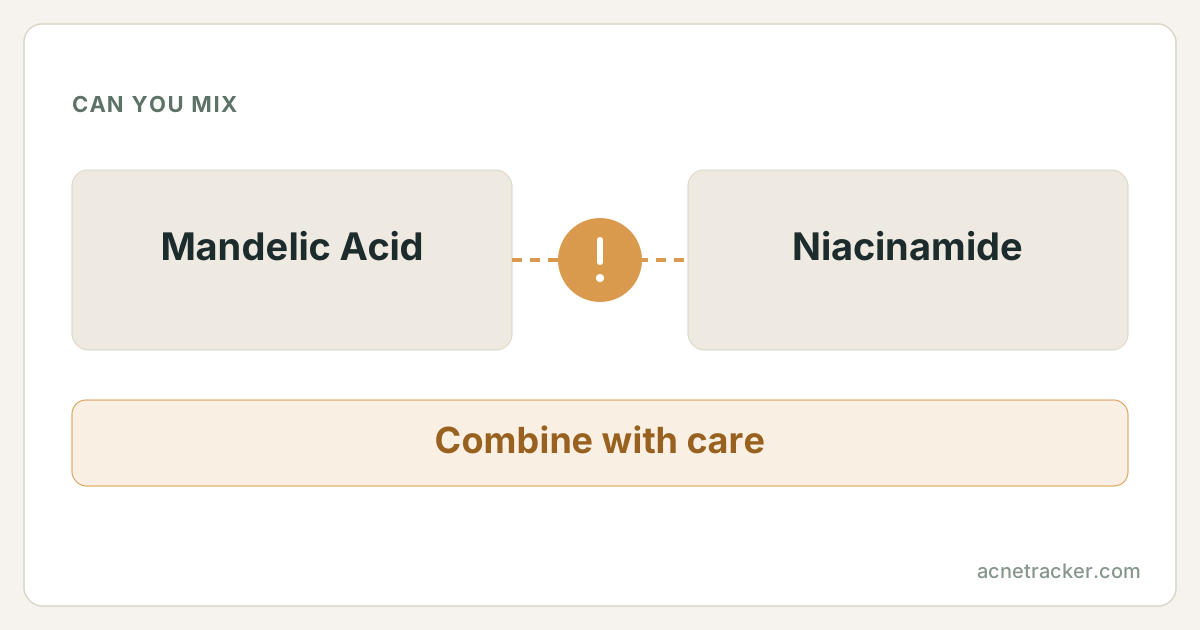
Mostly yes, with a small timing note. Mandelic acid is the gentlest and largest AHA, popular for sensitive and darker skin tones, and it pairs nicely with niacinamide's soothing, oil-controlling benefits. The only caution is the pH gap between the acid and niacinamide, so a short wait or a morning/night split lets each perform. Apply mandelic acid first, then niacinamide.
How this pairing resolves
The two ingredients, their published numbers, and where they land together.
The numbers beside each ingredient are its published comedogenic rating and effective pH window, taken from its own profile page.
Show the numbers
| Ingredients | Metric | 0–5 |
|---|---|---|
| Mandelic Acid | Comedogenic rating | 0/5 |
| Mandelic Acid | Effective pH | 3.0–4.0 |
| Niacinamide | Comedogenic rating | 0/5 |
| Niacinamide | Effective pH | 5.0–7.0 |
Why
Mandelic acid is derived from bitter almonds and has a notably large molecular size, so it penetrates slowly and evenly, exfoliating the surface with less sting and less risk of the blotchy irritation finer acids can cause. That gentleness makes it a favourite for sensitive skin and for deeper skin tones, where harsh exfoliation can trigger post-inflammatory pigmentation. It brings mild antibacterial activity too, which sits well beside niacinamide's oil control in acne-prone skin. Niacinamide dovetails with all of this: it controls oil, calms inflammation and strengthens the barrier so regular exfoliation stays comfortable. The caution is the familiar pH mismatch — mandelic acid exfoliates while acidic, around pH 3.5, whereas niacinamide is happiest nearer neutral. Layering niacinamide instantly on top can nudge the acid's pH up and shorten its working window. Because mandelic acid is mild this matters less than with stronger acids, but a brief pause or a split routine keeps the acid fully active while niacinamide soothes and supports afterwards.
How to combine them
The gentlest structure is mandelic acid at night on clean, dry skin, then moisturizer, with niacinamide in the morning under sunscreen so it calms the post-exfoliation barrier. For both in one evening, apply mandelic acid, wait around 10 minutes, then niacinamide and moisturizer. Start mandelic acid two or three nights a week — its gentleness allows a slightly higher frequency than harsher acids once tolerated — and keep niacinamide daily, since it needs no ramp-up. This pairing is especially suited to sensitive or acne-prone skin and to those prone to dark marks, because both ingredients are low-irritation. Finish every morning with broad-spectrum SPF 30 or higher, as even mandelic acid raises sun sensitivity.
Example routine
| When | Steps |
|---|---|
| Evening (2–3× per week) | Cleanser → Mandelic acid → Moisturizer |
| Every morning | Cleanser → Niacinamide → Moisturizer → SPF 30+ |
| Same-night option | Mandelic acid → wait ~10 min → Niacinamide → Moisturizer |
Warning signs
Frequently asked questions
Is mandelic acid gentle enough to pair with niacinamide?
Yes. Mandelic acid is the largest, slowest-penetrating AHA and one of the mildest, so it combines well with niacinamide. A short wait or a morning/night split handles the small pH difference.
Why is mandelic acid recommended for darker skin tones?
Its large molecule exfoliates gently and evenly, lowering the risk of the irritation that can trigger post-inflammatory hyperpigmentation. Pairing it with soothing niacinamide reinforces that gentleness.
Do I need to wait between them?
A brief pause of about 10 minutes helps mandelic acid keep its low working pH before niacinamide goes on. Splitting them across morning and night removes the need to wait at all.
Should mandelic acid or niacinamide go on first?
Mandelic acid first, on clean dry skin, so it reaches the surface at its acidic pH. Apply niacinamide afterwards, once the acid has had time to work, then moisturizer.
Can acne-prone skin use this combination?
Yes, it is a good fit. Mandelic acid has mild antibacterial action and unclogs gently, while niacinamide controls oil and calms inflammation, making the pair well suited to breakout-prone skin.
Sources & further reading
There is no single study of this exact question. The guidance here is reasoned from the ingredient profiles below, each of which carries its own references:
- Mandelic Acid2 refs
- Niacinamide2 refs
Show every reference behind this page (4)
- Mandelic acid — PubChem compound summarycited by Mandelic Acid
- DermNet — Alpha hydroxy acidscited by Mandelic Acid
- Niacinamide: mechanisms of action and its topical use in dermatology (PubMed)cited by Niacinamide
- European Commission CosIng database — Niacinamidecited by Niacinamide
Medical disclaimer
Ingredients mentioned on this page
Find your personal acne triggers
Our free Acne Tracker lets you log breakouts, sleep, stress and diet, and shows you which factors correlate with your flare-ups.