Can You Mix Mandelic Acid and Retinol?
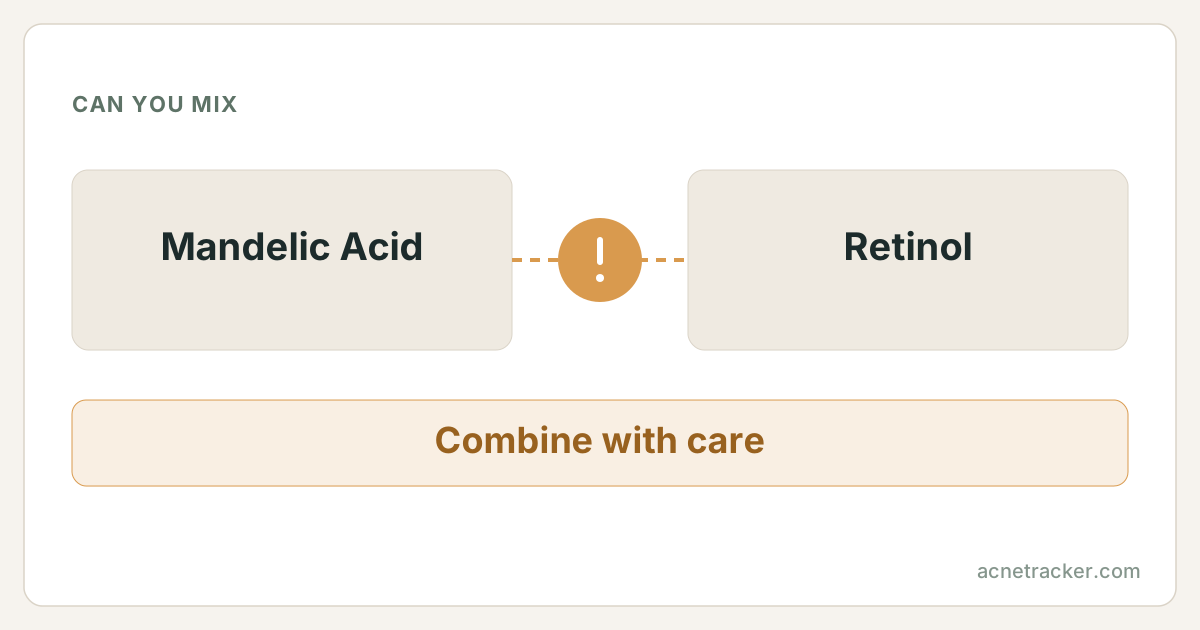
With care, yes. Mandelic acid is the mildest of the common alpha hydroxy acids because its large molecule penetrates slowly, so it is one of the easier acids to combine with retinol. Even so, it still exfoliates while retinol accelerates turnover, so most people should use them on alternate nights rather than layered together, especially when starting out.
How this pairing resolves
The two ingredients, their published numbers, and where they land together.
The numbers beside each ingredient are its published comedogenic rating and effective pH window, taken from its own profile page.
Show the numbers
| Ingredients | Metric | 0–5 |
|---|---|---|
| Mandelic Acid | Comedogenic rating | 0/5 |
| Mandelic Acid | Effective pH | 3.0–4.0 |
| Retinol | Comedogenic rating | 1/5 |
| Retinol | Effective pH | 5.0–6.0 |
Why
Mandelic acid is derived from bitter almonds and has a notably large molecular size compared with glycolic or even lactic acid. That size slows its penetration, so it exfoliates the surface gently and evenly with much less stinging, which is why it is often recommended for sensitive and darker skin tones prone to irritation-driven pigmentation. Mandelic acid also carries mild antibacterial activity, a useful extra in acne-prone skin. Retinol, meanwhile, renews the skin from the deeper epidermis by speeding cell turnover and building collagen. The reason for caution is simply that you are still combining two processes that increase cell shedding: mandelic acid loosens the surface while retinol thins and accelerates the barrier from within, so heavy simultaneous use can still tip into over-exfoliation despite mandelic's gentleness. Its low working pH is also not retinol's preferred environment. Because mandelic is so mild, though, tolerant skin can integrate the two more closely than it could with stronger acids — but separating them by night remains the safest default.
How to combine them
Alternate nights is the reliable pattern: mandelic acid two or three nights a week, retinol on two or three others, with moisturizer to seal each and recovery nights as needed. Apply to clean, dry skin. Because mandelic acid is gentle, well-adjusted skin can sometimes layer a low-strength mandelic serum then retinol with a moisturizer buffer, but stop at any stinging. A good beginner path is to establish mandelic acid first, since it is easy to tolerate, then introduce retinol slowly on separate nights. Mandelic acid also has some brightening benefit for uneven tone, complementing retinol's renewal over time. Every morning apply broad-spectrum SPF 30 or higher, because both actives increase sun sensitivity even though mandelic acid is mild.
Example routine
| When | Steps |
|---|---|
| Evening (2–3× per week) | Cleanser → Mandelic acid → Moisturizer |
| Evening (2–3× per week) | Cleanser → Retinol → Moisturizer |
| Remaining evenings | Cleanser → Moisturizer (recovery) |
| Every morning | Gentle cleanser → Moisturizer → SPF 30+ |
Warning signs
Frequently asked questions
Is mandelic acid gentle enough to use with retinol?
It is the gentlest common AHA because its large molecule penetrates slowly, so it pairs with retinol better than glycolic or lactic acid. Even so, give each its own night rather than layering both together.
Is this combination good for sensitive or darker skin?
Often yes. Mandelic acid causes less stinging and is frequently recommended for sensitive and darker skin tones, and paired carefully with retinol on separate nights it addresses both texture and uneven tone.
Can I layer mandelic acid and retinol together?
Only if your skin is well adjusted, and even then buffer with moisturizer and stop if it stings. Most people get smoother, calmer results by alternating them on separate evenings.
Should I avoid this pairing in pregnancy?
Mandelic acid at cosmetic strengths is generally considered acceptable, but retinol and retinoids are usually avoided in pregnancy. If pregnant, keep the mandelic acid and drop the retinol after checking with your doctor.
Sources & further reading
There is no single study of this exact question. The guidance here is reasoned from the ingredient profiles below, each of which carries its own references:
- Mandelic Acid2 refs
- Retinol2 refs
Show every reference behind this page (4)
- Mandelic acid — PubChem compound summarycited by Mandelic Acid
- DermNet — Alpha hydroxy acidscited by Mandelic Acid
- Improvement of naturally aged skin with vitamin A (retinol) (PubMed)cited by Retinol
- European Commission SCCS opinion on vitamin A in cosmeticscited by Retinol
Medical disclaimer
Ingredients mentioned on this page
Find your personal acne triggers
Our free Acne Tracker lets you log breakouts, sleep, stress and diet, and shows you which factors correlate with your flare-ups.