Can You Mix Retinol and Salicylic Acid?
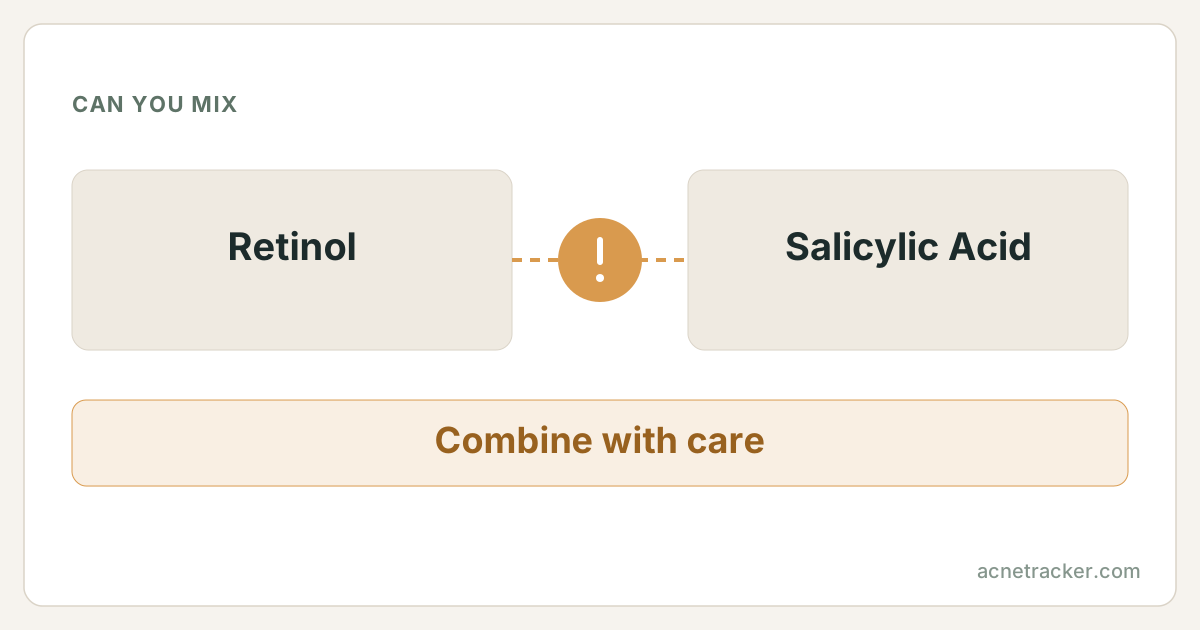
Use them with caution. Retinol and salicylic acid are both effective for acne, but they irritate the skin in overlapping ways, so applying them in the same layer often leads to over-exfoliation. The safest approach for most people is to alternate them on different nights, or use salicylic acid in the morning and retinol at night, letting each active work without piling stress on the barrier.
How this pairing resolves
The two ingredients, their published numbers, and where they land together.
The numbers beside each ingredient are its published comedogenic rating and effective pH window, taken from its own profile page.
Show the numbers
| Ingredients | Metric | 0–5 |
|---|---|---|
| Retinol | Comedogenic rating | 1/5 |
| Retinol | Effective pH | 5.0–6.0 |
| Salicylic Acid | Comedogenic rating | 0/5 |
| Salicylic Acid | Effective pH | 3.0–4.0 |
Why
Both ingredients accelerate the shedding of skin cells, but through different mechanisms, and that overlap is the problem. Salicylic acid is a beta hydroxy acid that is oil-soluble, so it penetrates into the pore, dissolves the sticky bonds between dead cells and clears sebum plugs at an acidic pH of about 3 to 4. Retinol works from the living layers of the epidermis, signalling cells to divide and turn over faster while remodelling collagen. Layered together, you get exfoliation from two directions at once: the acid strips the surface while retinol thins and speeds up the barrier from below. The result is often raw, flaking, stinging skin and a compromised barrier that is more prone to breakouts, not less. There is also a mild pH mismatch — salicylic acid prefers a low pH to stay active, while retinol converts best nearer pH 5.5 — although irritation, not chemistry, is the main reason to separate them. Both also increase photosensitivity, so daytime sun protection is essential.
How to combine them
Separate them in time rather than layering. The cleanest routine is alternating nights: salicylic acid on one evening, retinol on the next, with a plain moisturizer in between. Alternatively, use salicylic acid in the morning — as a cleanser or toner — and keep retinol for the evening. Start retinol at two nights per week and salicylic acid at two or three, and never double up on a single night while you are building tolerance. On mornings after retinol, keep the routine simple and always apply broad-spectrum SPF 30 or higher, because both actives leave skin more vulnerable to UV. If your skin is oily and resilient and already used to both, an experienced user can occasionally layer salicylic acid then retinol with a full moisturizer buffer, but drop back to alternating at the first sign of irritation.
Example routine
| When | Steps |
|---|---|
| Evening (night A) | Cleanser → Salicylic acid → Moisturizer |
| Evening (night B) | Cleanser → Retinol → Moisturizer |
| Every morning | Gentle cleanser → Moisturizer → SPF 30+ |
| Adjustment period | Introduce one active at a time, 3–4 weeks apart |
Warning signs
Frequently asked questions
Can I layer salicylic acid and retinol on the same night?
Only if your skin is already adjusted to both and resilient. Most people over-exfoliate this way. Alternating nights, or salicylic acid in the morning and retinol at night, is safer and just as effective.
Which is better for blackheads, retinol or salicylic acid?
Salicylic acid is better for existing blackheads because it is oil-soluble and works inside the pore. Retinol helps prevent new ones by normalising how skin cells shed. Used on separate nights they complement each other.
Does salicylic acid deactivate retinol?
It does not chemically destroy retinol, but its low pH is not ideal for retinol conversion, and combining them mainly compounds irritation. Separating them by time avoids both concerns.
Can I use them if I have sensitive skin?
Yes, but cautiously: choose low strengths, use each only once or twice a week on separate nights, and prioritise barrier repair with a good moisturizer. Stop if you see persistent redness or flaking.
Sources & further reading
There is no single study of this exact question. The guidance here is reasoned from the ingredient profiles below, each of which carries its own references:
- Retinol2 refs
- Salicylic Acid2 refs
Show every reference behind this page (4)
- Improvement of naturally aged skin with vitamin A (retinol) (PubMed)cited by Retinol
- European Commission SCCS opinion on vitamin A in cosmeticscited by Retinol
- Salicylic acid as a peeling agent: a comprehensive review (PubMed)cited by Salicylic Acid
- FDA OTC monograph — acne drug products (salicylic acid 0.5–2%)cited by Salicylic Acid
Medical disclaimer
Ingredients mentioned on this page
Find your personal acne triggers
Our free Acne Tracker lets you log breakouts, sleep, stress and diet, and shows you which factors correlate with your flare-ups.