Can You Mix Lactic Acid and Salicylic Acid?
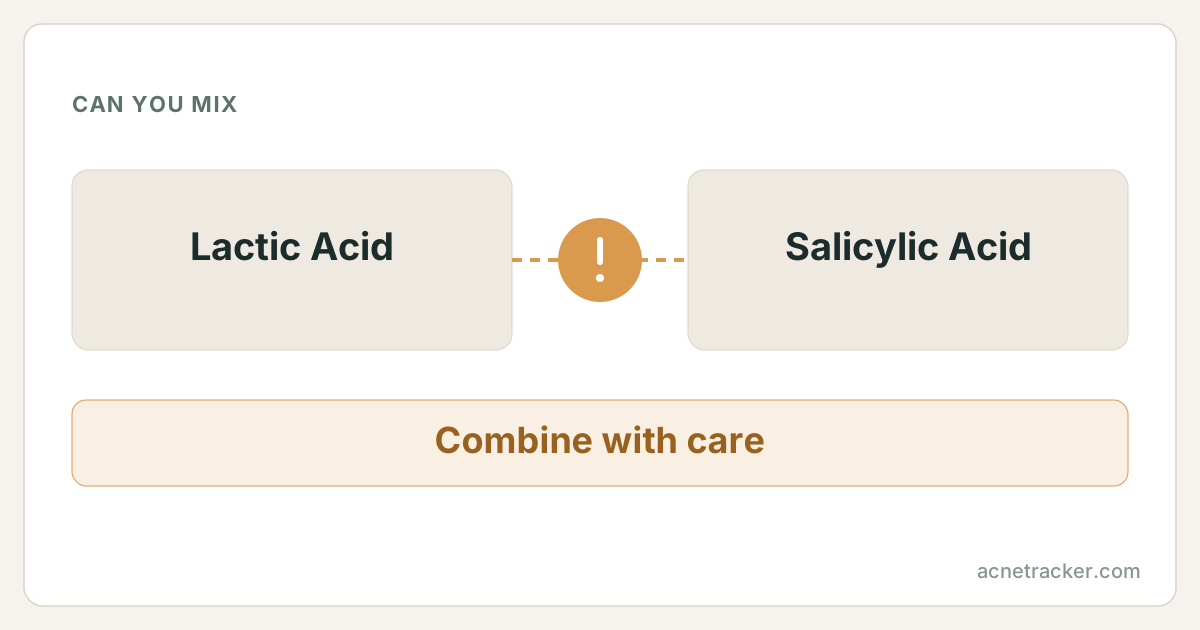
You can, with care. Lactic acid and salicylic acid can work together because lactic acid is a milder, hydrating AHA, but they are still both exfoliants, so using them in the same layer every day risks over-exfoliation. Most skin does best alternating them, or using lactic acid on dry, dull areas and salicylic acid on oily, congested zones.
How this pairing resolves
The two ingredients, their published numbers, and where they land together.
The numbers beside each ingredient are its published comedogenic rating and effective pH window, taken from its own profile page.
Show the numbers
| Ingredients | Metric | 0–5 |
|---|---|---|
| Lactic Acid | Comedogenic rating | 0/5 |
| Lactic Acid | Effective pH | 3.0–4.0 |
| Salicylic Acid | Comedogenic rating | 0/5 |
| Salicylic Acid | Effective pH | 3.0–4.0 |
Why
Lactic acid is one of the gentlest alpha-hydroxy acids. It is a larger molecule than glycolic acid, so it penetrates more slowly and irritates less, and it is naturally humectant, drawing water into the skin as it exfoliates the surface. Salicylic acid is a beta-hydroxy acid that is oil-soluble and dives into the pore to clear sebum. Because lactic acid works mainly on the surface while salicylic acid works inside the pore, their targets are complementary rather than redundant — which is why this pairing is more forgiving than two AHAs together. The catch is cumulative exfoliation and acidity: both lower surface pH and both remove dead cells, so a daily double dose still thins the barrier over time. Lactic acid's humectant nature can partly offset salicylic acid's drying tendency, making this one of the more workable acid pairs, but only if total frequency stays controlled. Sensitivity, flaking and stinging remain the ceiling.
How to combine them
The gentlest route is to alternate: salicylic acid on nights you target congestion, lactic acid on nights you want smoothing plus hydration. If your barrier is robust and you have used both before, you can layer thin — apply salicylic acid first to clean, dry skin, wait until fully absorbed, then a light lactic acid, followed by moisturizer — but keep this to one or two nights weekly. Multi-zone application also works well here: salicylic acid on the T-zone, lactic acid on drier cheeks. Always seal with a barrier-supporting moisturizer and wear SPF 30+ each morning. Introduce one acid at a time, giving your skin two to four weeks to adjust before adding the second.
Example routine
| When | Steps |
|---|---|
| Tuesday PM | Cleanser → Salicylic acid → Moisturizer |
| Thursday PM | Cleanser → Lactic acid → Moisturizer |
| Weekend PM | Cleanser → Hydrating serum → Moisturizer |
| Every morning | Cleanser → Moisturizer → SPF 30+ |
Warning signs
Frequently asked questions
Is lactic acid gentle enough to combine with salicylic acid?
Lactic acid is one of the mildest AHAs and adds hydration, so it pairs more comfortably with salicylic acid than glycolic acid does. Even so, keep total exfoliation modest to avoid a compromised barrier.
Should I layer them or alternate?
Alternating on different nights is the safest default. Only layer them if your skin already tolerates each acid alone, and limit layering to one or two nights per week with a moisturizer on top.
Which goes on first if I layer lactic and salicylic acid?
Apply salicylic acid first because it targets the pore, let it absorb fully, then apply the lactic acid. Follow with moisturizer. Stop layering immediately if you feel stinging that lingers.
Can dry skin handle both lactic and salicylic acid?
Dry skin often tolerates lactic acid well thanks to its humectant action, but salicylic acid can be drying. Use salicylic acid sparingly on oily spots and rely more on lactic acid for overall smoothing.
Sources & further reading
There is no single study of this exact question. The guidance here is reasoned from the ingredient profiles below, each of which carries its own references:
- Lactic Acid3 refs
- Salicylic Acid2 refs
Show every reference behind this page (5)
- PubChem — Lactic acid compound summarycited by Lactic Acid
- DermNet — Alpha hydroxy acidscited by Lactic Acid
- European Commission CosIng database — Lactic Acidcited by Lactic Acid
- Salicylic acid as a peeling agent: a comprehensive review (PubMed)cited by Salicylic Acid
- FDA OTC monograph — acne drug products (salicylic acid 0.5–2%)cited by Salicylic Acid
Medical disclaimer
Ingredients mentioned on this page
Find your personal acne triggers
Our free Acne Tracker lets you log breakouts, sleep, stress and diet, and shows you which factors correlate with your flare-ups.