Can You Mix Salicylic Acid and Vitamin C?
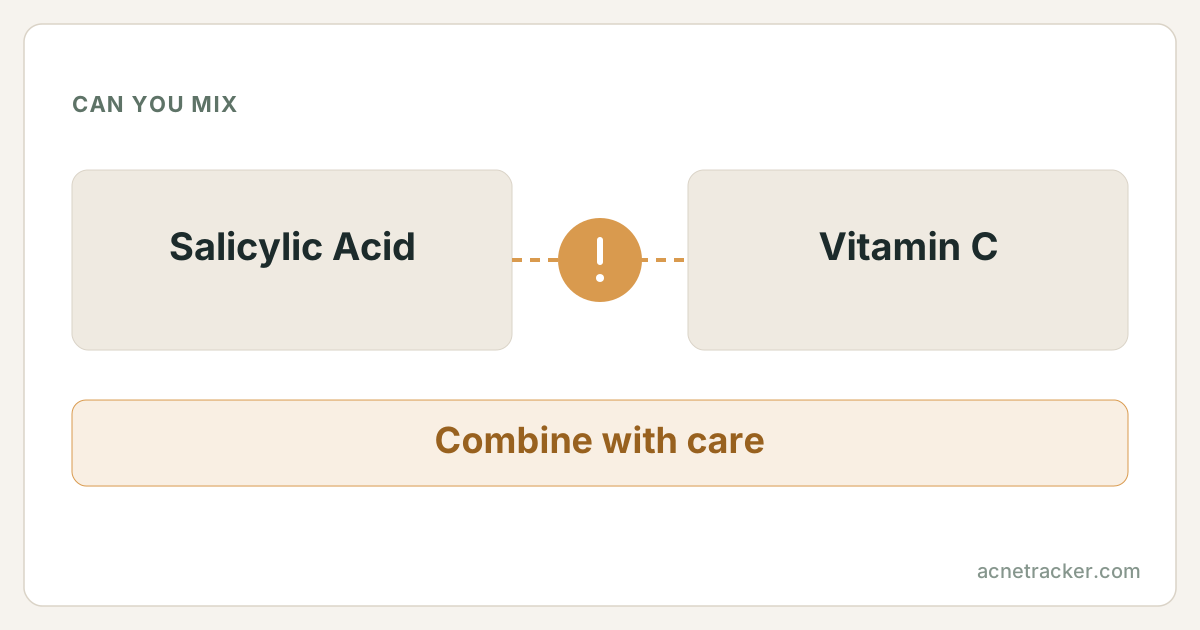
Yes, but usually not in the same layer. Both L-ascorbic acid and salicylic acid work at a low pH, so stacking them multiplies stinging and dryness without adding benefit. The reliable approach is to separate them: vitamin C in the morning for antioxidant defense, salicylic acid in the evening to clear pores. If you only tolerate a gentler vitamin C derivative, layering becomes far easier.
How this pairing resolves
The two ingredients, their published numbers, and where they land together.
The numbers beside each ingredient are its published comedogenic rating and effective pH window, taken from its own profile page.
Show the numbers
| Ingredients | Metric | 0–5 |
|---|---|---|
| Salicylic Acid | Comedogenic rating | 0/5 |
| Salicylic Acid | Effective pH | 3.0–4.0 |
| Vitamin C | Comedogenic rating | 0/5 |
| Vitamin C | Effective pH | 2.5–3.5 |
Why
The tension here is about acidity and tolerance, not a destructive reaction. L-ascorbic acid is formulated at pH 2.5–3.5 so it stays stable and penetrates; salicylic acid, a lipid-soluble beta hydroxy acid, works in a similar acidic window and dissolves the oily debris inside pores. Chemically neither ruins the other — both actually prefer low pH — but that shared acidity is the problem for your skin. Salicylic acid loosens the outer layer and speeds cell turnover, which leaves fresh skin more reactive to the sharp sting of ascorbic acid. Piled together, you get compounding redness, tightness, and flaking, and the barrier disruption can leave you worse off than either alone. There is also a functional mismatch: vitamin C is an antioxidant best suited to daytime, when it neutralizes UV- and pollution-driven free radicals under sunscreen, while a BHA exfoliant does its clearing work overnight. Splitting them is not a compromise; it places each where it performs best while keeping total acid load manageable.
How to combine them
Keep them in separate routines. Morning: cleanse, apply vitamin C serum to dry skin, wait a few minutes, moisturize, and finish with broad-spectrum SPF 30+. Evening: cleanse, apply salicylic acid (leave-on or as a treatment step), then moisturizer. Start the BHA two or three nights a week and build up as tolerance allows. If you want both in one routine because your schedule is tight, apply salicylic acid first, let it absorb for 15–20 minutes, then a low-strength or derivative vitamin C — but treat that as advanced and back off at the first sign of irritation. A gentler derivative such as sodium ascorbyl phosphate or THD ascorbate is much more forgiving to layer with a BHA.
Example routine
| When | Steps |
|---|---|
| Morning | Cleanser → Vitamin C serum → Moisturizer → SPF 30+ |
| Evening (2–3x/week) | Cleanser → Salicylic acid → Moisturizer |
| Evening (other days) | Cleanser → Moisturizer (recovery) |
| Sensitive skin | Swap L-ascorbic acid for a gentler derivative to layer safely |
Warning signs
Frequently asked questions
Do vitamin C and salicylic acid cancel each other out?
No. Both prefer a low pH, so they do not neutralize each other. The concern is cumulative irritation from stacking two acidic actives, not a loss of effectiveness.
Which goes on first if I layer salicylic acid and vitamin C?
Apply salicylic acid first, let it absorb for 15–20 minutes, then vitamin C. But most people get better tolerance from using vitamin C in the morning and salicylic acid at night.
Is a vitamin C derivative easier to combine with a BHA?
Yes. Sodium ascorbyl phosphate and THD ascorbate work closer to skin-neutral pH and sting less, so they layer with salicylic acid more comfortably than pure L-ascorbic acid.
Can I use salicylic acid and vitamin C every day?
Vitamin C daily in the morning is fine for most skin. Daily salicylic acid is only for well-adjusted skin; two to three evenings a week is a safer starting point.
Sources & further reading
There is no single study of this exact question. The guidance here is reasoned from the ingredient profiles below, each of which carries its own references:
- Salicylic Acid2 refs
- Vitamin C3 refs
Show every reference behind this page (5)
- Salicylic acid as a peeling agent: a comprehensive review (PubMed)cited by Salicylic Acid
- FDA OTC monograph — acne drug products (salicylic acid 0.5–2%)cited by Salicylic Acid
- PubChem — Ascorbic Acid compound summarycited by Vitamin C
- DermNet — Topical vitamin Ccited by Vitamin C
- European Commission CosIng database — Ascorbic Acidcited by Vitamin C
Medical disclaimer
Ingredients mentioned on this page
Find your personal acne triggers
Our free Acne Tracker lets you log breakouts, sleep, stress and diet, and shows you which factors correlate with your flare-ups.