Can You Mix Glycolic Acid and Salicylic Acid?
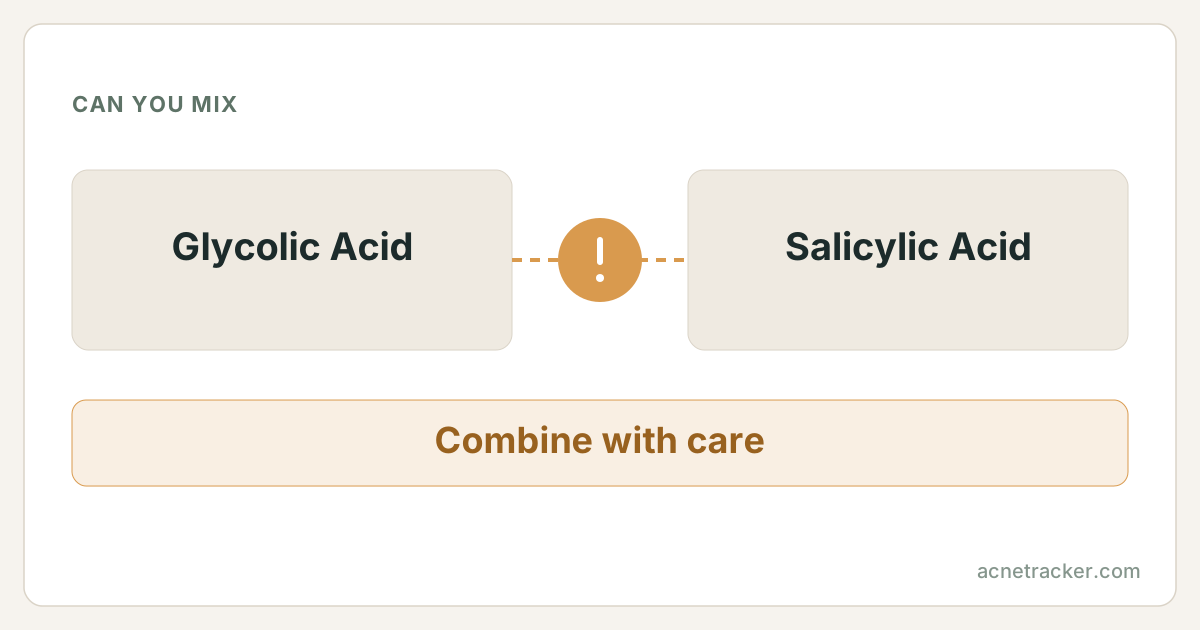
You can, but most people should not use glycolic acid and salicylic acid in the same routine. Both are exfoliating acids that dissolve the bonds holding dead cells together, so layering them multiplies the peeling effect and easily tips skin into over-exfoliation. The safer approach is to alternate them on different nights, or use one for oily, congested zones and reserve the other for occasional full-face treatment.
How this pairing resolves
The two ingredients, their published numbers, and where they land together.
The numbers beside each ingredient are its published comedogenic rating and effective pH window, taken from its own profile page.
Show the numbers
| Ingredients | Metric | 0–5 |
|---|---|---|
| Glycolic Acid | Comedogenic rating | 0/5 |
| Glycolic Acid | Effective pH | 3.0–4.0 |
| Salicylic Acid | Comedogenic rating | 0/5 |
| Salicylic Acid | Effective pH | 3.0–4.0 |
Why
These two acids attack the same problem from different angles, which is exactly why stacking them is risky. Glycolic acid is a small alpha-hydroxy acid (AHA) that is water-soluble and works on the skin surface, loosening the glue between corneocytes to lift dullness and smooth texture. Salicylic acid is a beta-hydroxy acid (BHA) that is oil-soluble, so it travels down into the pore lining and clears sebum and debris. Individually each is a proven exfoliant; together they compound. Both drop the skin's surface pH and both strip protective lipids, so applying them back-to-back removes far more of the stratum corneum than intended. The result is not faster results but a damaged barrier: tightness, shine loss, stinging and rebound oiliness. There is also redundancy — if congestion is your concern, salicylic acid already reaches the pore; adding glycolic mostly adds irritation, not benefit. Sensitivity to one acid usually predicts sensitivity to the other, since the mechanism overlaps.
How to combine them
Treat them as an either/or on any given night rather than a stack. A practical rotation is salicylic acid on two nights for the oily T-zone and pore congestion, glycolic acid on one separate night for overall dullness, with recovery nights in between using only a bland moisturizer. If you have combination skin, you can even apply them to different regions on the same evening — salicylic to the nose and chin, glycolic to the cheeks — but keep total acid frequency modest. Always follow with a fragrance-free moisturizer, and use daily SPF 30+, because both acids increase sun sensitivity. Start low: one acid night per week, building up only if skin stays calm. Never introduce both actives in the same week.
Example routine
| When | Steps |
|---|---|
| Monday PM | Cleanser → Salicylic acid → Moisturizer |
| Wednesday PM | Cleanser → Moisturizer (recovery night) |
| Friday PM | Cleanser → Glycolic acid → Moisturizer |
| Every morning | Gentle cleanser → Moisturizer → SPF 30+ |
Warning signs
Frequently asked questions
Can I use glycolic acid and salicylic acid on the same night?
It is not recommended for most people. Layering two exfoliating acids in one routine sharply raises the risk of over-exfoliation. Alternate them on different nights, or apply them to different areas of the face.
Which is better for acne, glycolic or salicylic acid?
Salicylic acid is usually the better acne choice because it is oil-soluble and clears inside the pore. Glycolic acid mainly resurfaces the skin surface and helps with dullness and post-acne marks.
Is it safe to use a product that contains both acids?
Formulated combination products are balanced by the manufacturer to keep total acid load reasonable, so they can be fine. The risk comes from stacking two separate strong acid products yourself.
Are these acids safe during pregnancy?
Glycolic acid is generally considered fine in pregnancy. Leave-on salicylic acid is often advised in low concentrations only or avoided; check with your midwife or doctor, and never treat this as medical advice.
Sources & further reading
There is no single study of this exact question. The guidance here is reasoned from the ingredient profiles below, each of which carries its own references:
- Glycolic Acid3 refs
- Salicylic Acid2 refs
Show every reference behind this page (5)
- PubChem — Glycolic acid compound summarycited by Glycolic Acid
- DermNet — Alpha hydroxy acidscited by Glycolic Acid
- European Commission CosIng database — Glycolic Acidcited by Glycolic Acid
- Salicylic acid as a peeling agent: a comprehensive review (PubMed)cited by Salicylic Acid
- FDA OTC monograph — acne drug products (salicylic acid 0.5–2%)cited by Salicylic Acid
Medical disclaimer
Ingredients mentioned on this page
Find your personal acne triggers
Our free Acne Tracker lets you log breakouts, sleep, stress and diet, and shows you which factors correlate with your flare-ups.