How to Choose a Sunscreen for Redness
Redness has many causes — sensitivity, a compromised barrier, flushing, post-inflammatory colour after breakouts — but they share a need for a sunscreen that calms rather than provokes, and ideally helps neutralise the colour. Sun and heat can intensify facial redness, so daily protection is part of the answer, but a harsh formula makes things worse. This guide describes the gentle filters, soothing ingredients and colour-correcting tints that suit red, reactive skin, and the additives most likely to sting or flush it. If redness is persistent or spreading, a dermatologist can identify the cause; this is general guidance.
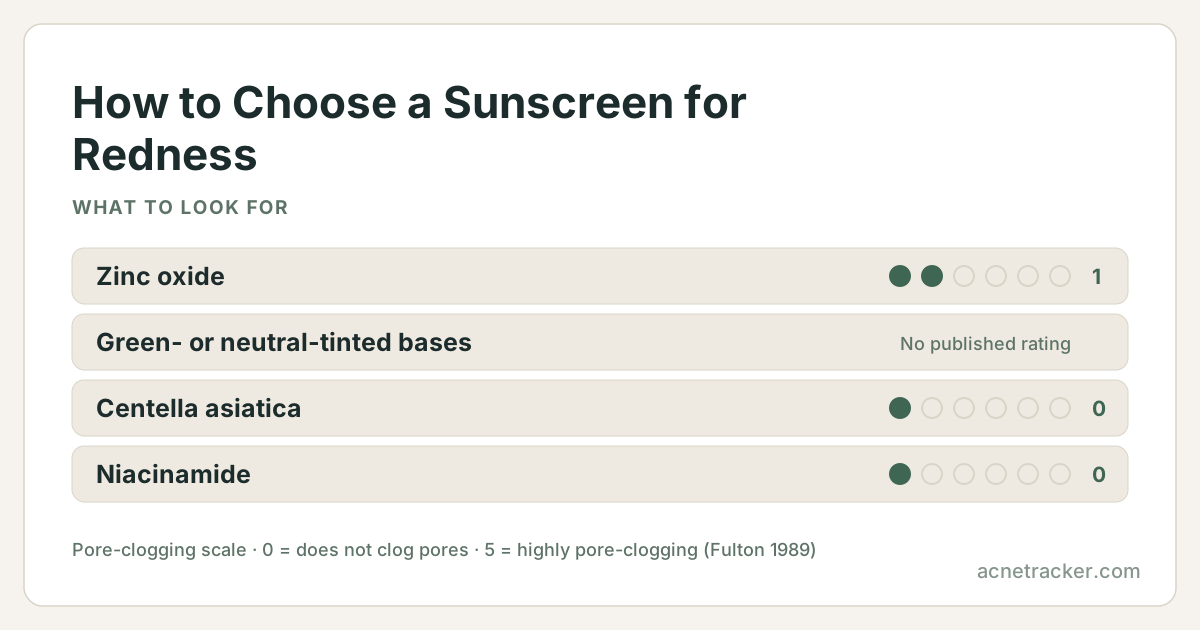
Ingredients to look for
| Ingredient | Why it matters |
|---|---|
| Zinc oxide | A gentle mineral filter that rarely stings and has mild soothing qualities, well suited to redness-prone skin. |
| Green- or neutral-tinted bases | A green tint optically cancels redness on the colour wheel, so a tinted sunscreen visibly calms flushing as it protects. |
| Centella asiatica | A soothing botanical widely used to reduce visible redness and reactivity in daily formulas. |
| Niacinamide | Strengthens the barrier and can reduce redness over time, a helpful supporting ingredient under SPF. |
| Panthenol | Calms and supports the barrier, easing the irritation that often drives a red, reactive complexion. |
Ingredients to avoid
| Ingredient | Why it matters |
|---|---|
| Added fragrance and essential oils | Frequent triggers of irritation and flushing that can turn a mildly red complexion visibly angrier. |
| Menthol, camphor and eucalyptus | 'Cooling' agents that feel soothing but often irritate reactive skin and intensify redness. |
| High denatured alcohol content | Dries and stings sensitive skin, weakening the barrier that keeps redness in check. |
| Rough application and abrasive textures | Friction and heat increase blood flow to the surface, deepening redness on reactive skin. |
How to choose
Choose a gentle base built around mineral filters (zinc oxide, titanium dioxide), which sit on the surface and rarely sting red, reactive skin. A tinted sunscreen does extra work here: a green or neutral tint sits opposite red on the colour wheel and optically neutralises flushing, so the skin looks calmer immediately while being protected. Look for soothing, barrier-supporting ingredients such as centella, niacinamide and panthenol, and insist on fragrance-free. Steer clear of cooling agents like menthol and camphor, which feel pleasant but commonly aggravate redness. Aim for at least SPF 30, broad-spectrum, and a formula that spreads easily so you are not rubbing hard. Patch-test first: with redness-prone skin, only wearing it for a few days confirms a product calms rather than provokes.
How to apply
Apply gently with light pressing motions rather than rubbing, since friction and heat can heighten redness. Use a full two fingers' length for even cover; a tinted mineral formula doubles as colour correction, reducing the need for extra makeup over red areas. Let it set for a minute so it blends smoothly. Reapply every two hours outdoors, favouring shade and a hat during strong sun to limit the heat that drives flushing. If a formula stings or leaves the skin redder after use, stop and switch to a simpler, fragrance-free mineral option.
Frequently asked questions
Can a tinted sunscreen reduce facial redness?
Yes. A green or neutral tint sits opposite red on the colour wheel and optically neutralises it, so a tinted sunscreen makes redness look calmer immediately while its filters protect the skin from further flushing.
Why does sun make my face redder?
UV and heat increase blood flow to the surface and can inflame reactive skin, intensifying redness. Daily broad-spectrum sunscreen, ideally a gentle tinted one, helps limit this trigger and keep the complexion calmer.
Which sunscreen filters are best for red, reactive skin?
Mineral filters like zinc oxide and titanium dioxide tend to suit redness-prone skin best because they sit on the surface and rarely sting. Pairing them with a green tint adds immediate colour correction.
What ingredients should I avoid if my skin flushes easily?
Avoid added fragrance, essential oils, high alcohol content and cooling agents like menthol and camphor. These commonly irritate reactive skin and can intensify flushing, so a short, fragrance-free formula is safest.
Sources & further reading
There is no single study of this exact question. The guidance here is reasoned from the ingredient profiles below, each of which carries its own references:
- Zinc Oxide2 refs
- Centella Asiatica2 refs
- Niacinamide2 refs
- Panthenol3 refs
Show every reference behind this page (7)
- FDA — Sunscreen: How to Read a Label and drug factscited by Zinc Oxide
- PubChem — Zinc Oxide compound summarycited by Zinc Oxide
- Bylka W et al. Centella asiatica in dermatology: an overview. Phytother Res 2014 Aug (PubMed)cited by Centella Asiatica
- European Commission CosIng database — Centella Asiatica Extractcited by Centella Asiatica, Niacinamide, Panthenol
- Niacinamide: mechanisms of action and its topical use in dermatology (PubMed)cited by Niacinamide
- PubChem — Panthenol compound summarycited by Panthenol
- Safety Assessment of Panthenol, Pantothenic Acid, and Derivatives as Used in Cosmetics (PubMed)cited by Panthenol
Medical disclaimer
Ingredients mentioned on this page
Find your personal acne triggers
Our free Acne Tracker lets you log breakouts, sleep, stress and diet, and shows you which factors correlate with your flare-ups.