Aloe Vera: Comedogenic Rating & Ingredient Analysis
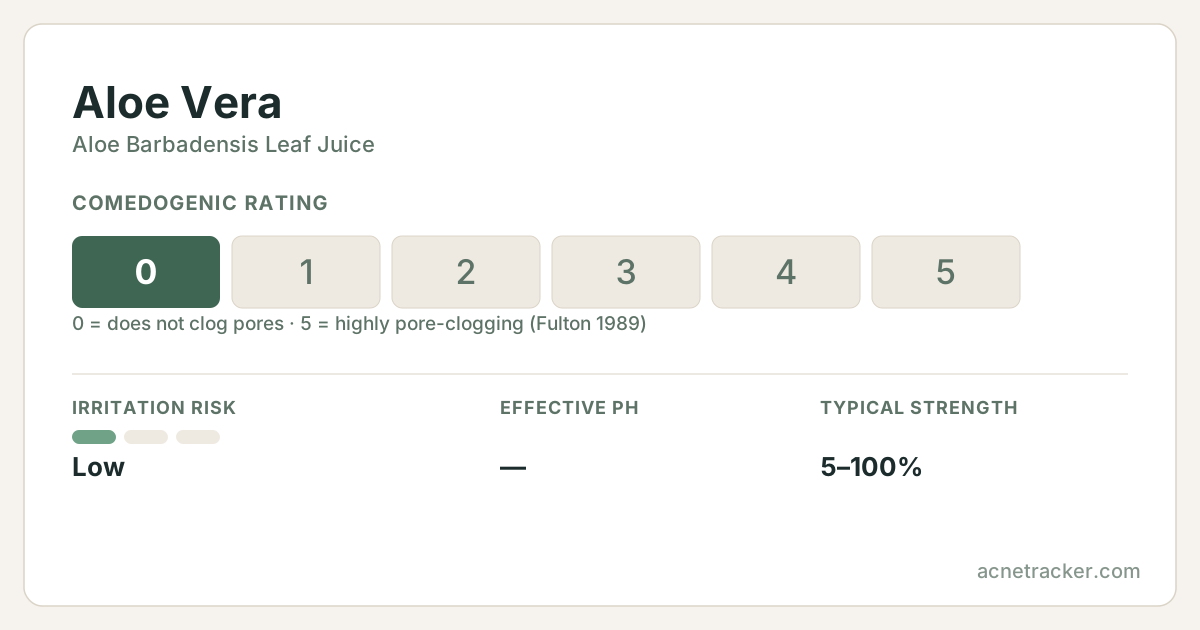
Aloe vera is one of the oldest and most universally recognised skin soothers, a clear gel harvested from the fleshy leaves of Aloe barbadensis. Its reputation rests on comfort: it calms hot, irritated, sunburned or over-exfoliated skin, delivers light water-based hydration and feels instantly cooling. Because it is watery, non-greasy and non-comedogenic, it suits every skin type, including oily and acne-prone complexions that struggle with heavier moisturisers. It is not a powerful treatment active, but as a gentle, well-tolerated support ingredient for calming and hydrating, few things match its track record.
Quick facts
- Comedogenic rating
- our estimate — not measured
- Irritation risk
- Low
- Effective pH
- —
- Typical strength
- 5–100%
- Pregnancy
- Considered safe
- Suits skin types
- oilydrycombinationsensitivenormalacne-prone
Where this number comes from
No one has published a comedogenic rating for this ingredient. Fulton's 1989 table tested about 250 raw materials and this was not among them, and we found no later study measuring it. The figure shown is our own reasoning from the ingredient's chemistry and how it is used — treat it as an estimate, not a measurement.
Fulton read his own scale as 0-1 not significant, 2-3 borderline, 4-5 positive. The assay is the rabbit ear at 10% dilution, which the paper itself calls extremely sensitive and not fully predictive of human skin. Ratings describe the raw ingredient; concentration and formulation change real-world behaviour.
Caution profile
The four published fields on this page, on one 0–5 scale. Further from the centre means more care is needed — never that the ingredient is worse.
Derived, not measured: pore-clogging is the published comedogenic rating; irritation maps low/moderate/high to 1/3/5; pregnancy maps safe/caution/avoid to 0/3/5; skin-type limits is how many of the seven skin types this entry does NOT list. Every input is printed in words in the quick-facts card above.
Show the numbers
| Metric | 0–5 | Published field |
|---|---|---|
| Pore-clogging | 0 | 0/5 |
| Irritation | 1 | Low |
| Skin-type limits | 0.7 | 6/7 |
| Pregnancy | 0 | Considered safe |
Working pH and typical strength
Where this ingredient is formulated to sit, and at what concentration.
Both bars come from the fields above: the pH window and the typical strength range published for this ingredient. The tinted column is healthy skin's surface pH (about 4.7–5.75).
Show the numbers
| Metric | 0–5 |
|---|---|
| Typical strength | 5–100% |
What is it?
The gel inside the aloe leaf is over 98% water, with the remainder made up of polysaccharides, vitamins, minor amounts of vitamins and plant compounds that contribute mild anti-inflammatory and humectant effects. The polysaccharides help draw and hold water at the skin's surface, giving a light hydrating film, while the soothing constituents ease redness and discomfort. Aloe has traditional and some evidence-backed use in supporting minor wound and burn recovery. It is important to distinguish pure, well-preserved aloe from products loaded with alcohol, fragrance or colourants that can negate its calming reputation.
Benefits
Soothes irritated skin
Aloe's anti-inflammatory compounds calm redness, heat and discomfort, making it a go-to after sun exposure, shaving or strong actives that have left skin sensitive.
Lightweight hydration
Its water-binding polysaccharides give a fresh, non-greasy layer of moisture that suits oily and acne-prone skin which cannot tolerate rich creams.
Supports skin recovery
Traditionally and in some studies aloe supports the healing of minor burns and wounds, helping compromised skin feel more comfortable while it repairs.
Cooling and comfortable
The gel has an immediate cooling effect that eases the sting of sunburn or heat, offering fast symptomatic relief for hot, reactive skin.
How to use
Aloe vera is flexible: use it as a light hydrating layer under moisturiser, as a soothing gel after sun or exfoliation, or mixed into a routine wherever calming is needed, morning or night. Choose products where aloe sits high on the ingredient list and that are free of drying alcohol and heavy fragrance. On its own it hydrates lightly, so drier skin should follow it with a proper moisturiser to seal the water in. Patch test new gels, as the occasional preservative or additive rather than the aloe can cause a reaction.
Side effects
Pure aloe is very well tolerated and side effects are uncommon. A small number of people are genuinely allergic to the plant and can develop contact dermatitis, so a patch test is worthwhile with a new product. More often, any stinging comes from added alcohol, fragrance or preservatives in cheaper aloe gels rather than from the aloe itself.
Who should avoid it
Anyone with a known aloe or lily-family allergy should avoid it. Otherwise it is suitable for nearly all skin, including sensitive and acne-prone types, and is generally considered safe in pregnancy for topical use. If a specific product stings, suspect its additives and switch to a purer formulation.
Pairs well with
Frequently asked questions
Is aloe vera good for acne-prone skin?
Yes. It is non-comedogenic, lightweight and soothing, so it hydrates and calms without clogging pores or adding grease, which makes it well suited to oily and breakout-prone skin.
Can aloe vera hydrate dry skin?
It provides light, water-based hydration, but on its own it is not enough for very dry skin. Apply a proper moisturiser over it to lock in the water it delivers.
Does aloe vera help sunburn?
Its cooling, anti-inflammatory action can ease the discomfort of mild sunburn and support recovery, which is why it is a classic after-sun ingredient, though it does not undo the underlying UV damage.
Can I use aloe vera every day?
Yes, aloe is gentle enough for daily use morning and night. Choose a pure formula without drying alcohol or heavy fragrance to get its soothing benefit without irritation.
Where this ingredient shows up here
Counted across this database, not the web — these are the pages on this site that reason about this ingredient.
Combination guides 1
Sources & further reading
- European Commission CosIng database — Aloe Barbadensis Leaf Juice
- PubChem — Aloe-emodin (aloe constituent)
- Final report on the safety assessment of AloeAndongensis Extract, Aloe Andongensis Leaf Juice,aloe Arborescens Leaf Extract, Aloe Arborescens Leaf Juice, Aloe Arborescens Leaf Protoplasts, Aloe Barbadensis Flower Extract, Aloe Barbadensis Leaf, Aloe Barbadensis Leaf Extract, Aloe Barbadensis Leaf Juice,aloe Barbadensis Leaf Polysaccharides, Aloe Barbadensis Leaf Water, Aloe Ferox Leaf Extract, Aloe Ferox Leaf Juice, and Aloe Ferox Leaf Juice Extract (PubMed)
Medical disclaimer
Find your personal acne triggers
Our free Acne Tracker lets you log breakouts, sleep, stress and diet, and shows you which factors correlate with your flare-ups.