MSM (Methylsulfonylmethane): Comedogenic Rating & Ingredient Analysis
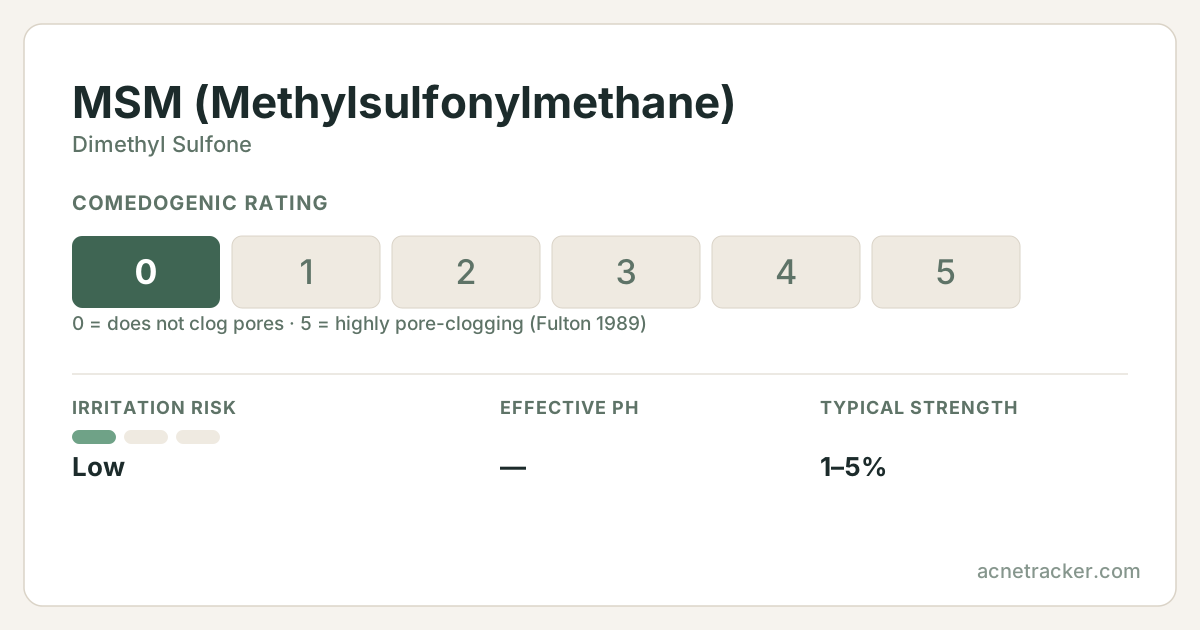
MSM, short for methylsulfonylmethane and listed on labels as dimethyl sulfone, is an organic sulfur compound that has crossed over from the supplement world into skincare. It is used as a gentle soothing and conditioning ingredient, sometimes with claims about supporting a calmer, clearer complexion. It has a comedogenic rating of 0 and low irritation risk, so it is comfortable to use across skin types. As with several supplement-derived ingredients, it is worth staying measured about the evidence: MSM is well tolerated, but robust independent data on its topical skin benefits is limited.
Quick facts
- Comedogenic rating
- our estimate — not measured
- Irritation risk
- Low
- Effective pH
- —
- Typical strength
- 1–5%
- Pregnancy
- Ask your doctor
- Suits skin types
- oilydrycombinationsensitivenormalacne-prone
Where this number comes from
No one has published a comedogenic rating for this ingredient. Fulton's 1989 table tested about 250 raw materials and this was not among them, and we found no later study measuring it. The figure shown is our own reasoning from the ingredient's chemistry and how it is used — treat it as an estimate, not a measurement.
Fulton read his own scale as 0-1 not significant, 2-3 borderline, 4-5 positive. The assay is the rabbit ear at 10% dilution, which the paper itself calls extremely sensitive and not fully predictive of human skin. Ratings describe the raw ingredient; concentration and formulation change real-world behaviour.
Caution profile
The four published fields on this page, on one 0–5 scale. Further from the centre means more care is needed — never that the ingredient is worse.
Derived, not measured: pore-clogging is the published comedogenic rating; irritation maps low/moderate/high to 1/3/5; pregnancy maps safe/caution/avoid to 0/3/5; skin-type limits is how many of the seven skin types this entry does NOT list. Every input is printed in words in the quick-facts card above.
Show the numbers
| Metric | 0–5 | Published field |
|---|---|---|
| Pore-clogging | 0 | 0/5 |
| Irritation | 1 | Low |
| Skin-type limits | 0.7 | 6/7 |
| Pregnancy | 3 | Ask your doctor |
Working pH and typical strength
Where this ingredient is formulated to sit, and at what concentration.
Both bars come from the fields above: the pH window and the typical strength range published for this ingredient. The tinted column is healthy skin's surface pH (about 4.7–5.75).
Show the numbers
| Metric | 0–5 |
|---|---|
| Typical strength | 1–5% |
What is it?
MSM is a naturally occurring sulfur-containing compound found in small amounts in plants, animals and humans, and sulfur itself is a building block the body uses in many structural proteins and processes. As a supplement MSM is taken for joint and inflammation-related reasons, and this background feeds its skincare reputation as a soothing, supportive ingredient. In topical formulas it is valued for a calming, conditioning effect and is sometimes paired with actives to improve comfort. Because much of the enthusiasm around MSM comes from oral-supplement use rather than controlled topical studies, its skincare benefits are best described as gentle and supportive rather than strongly proven.
Benefits
Soothing support
MSM is used for a calming effect on the skin, helping formulas feel comfortable and supporting a less reactive-feeling complexion.
Conditioning effect
As a conditioning ingredient, it contributes to a smooth, healthy-feeling surface as part of a supportive, gentle formula.
A source of sulfur
It supplies organic sulfur, an element involved in many of the body's structural proteins, which underpins its supportive reputation.
Well tolerated
With a rating of 0 and low irritation risk, MSM is gentle enough to combine with a wide range of actives without adding sting.
How to use
MSM appears in serums, moisturizers and soothing treatments, often blended with hydrators and other calming ingredients. Apply after cleansing, morning or night, and layer it with the rest of your routine. It does not conflict with other actives and can be used to add a supportive, soothing element alongside stronger treatments. Keep expectations realistic: think of MSM as a gentle supporting ingredient rather than a primary treatment, and rely on proven actives for specific concerns like acne or pigmentation.
Side effects
MSM is well tolerated topically, and side effects are uncommon. It has a low irritation profile and is generally suitable for sensitive skin. As with any ingredient, a reaction to a specific product is possible and is usually linked to other components of the formula. Because the strongest claims for MSM come from oral supplement use, the main caveat is about evidence and expectations rather than safety.
Who should avoid it
There is no strong safety reason for most people to avoid topical MSM. Those with a specific sensitivity to a formula should patch test. As a general precaution with supplement-derived ingredients that lack extensive cosmetic pregnancy data, some prefer to check with a doctor during pregnancy, though topical use is generally considered low risk.
Pairs well with
Frequently asked questions
What does MSM do for skin?
It is used as a gentle soothing and conditioning ingredient, supporting a calmer, comfortable complexion. Its benefits are supportive rather than strongly proven in topical studies.
Is MSM the same as sulfur for acne?
No. MSM is an organic sulfur compound used mainly for soothing and conditioning, whereas elemental sulfur is a dedicated acne ingredient with antibacterial and exfoliating action. They are different things.
Does MSM clog pores?
No. It has a comedogenic rating of 0 and is suitable for acne-prone skin, working as a gentle supportive ingredient rather than a pore-clogging one.
Can I use MSM with other actives?
Yes. It is gentle and non-acidic, layering comfortably with hydrators, niacinamide, vitamin C and most other ingredients without adding irritation.
Is MSM safe during pregnancy?
Topical use is generally considered low risk, but because cosmetic pregnancy data is limited, some prefer to check with a doctor. Confirm for your situation.
Sources & further reading
Medical disclaimer
Find your personal acne triggers
Our free Acne Tracker lets you log breakouts, sleep, stress and diet, and shows you which factors correlate with your flare-ups.