Safflower Oil: Comedogenic Rating & Ingredient Analysis
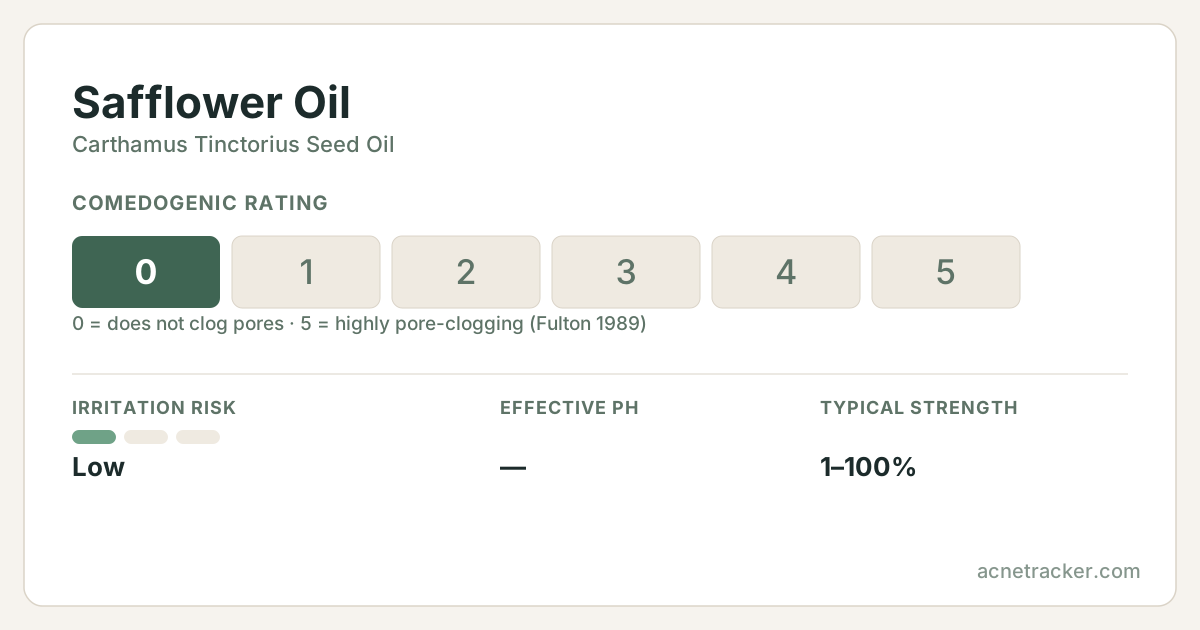
Safflower oil is one of the better plant oils for acne-prone and combination skin, and the reason comes down to its fatty acid profile. The high-linoleic version of safflower oil is rich in linoleic acid, an omega-6 fatty acid that is a natural component of healthy sebum and the skin barrier. People with acne tend to have lower linoleic acid in their sebum, and linoleic-rich oils are lighter and less likely to clog pores than oleic-heavy oils like olive oil. With a comedogenic rating of 0, safflower oil is a light, barrier-supporting emollient that can soften and condition skin without the greasiness or pore-clogging concern of heavier oils.
Quick facts
- Comedogenic rating
- measured (Fulton 1989)
- Irritation risk
- Low
- Effective pH
- —
- Typical strength
- 1–100%
- Pregnancy
- Considered safe
- Suits skin types
- drynormalcombinationsensitiveacne-proneoily
Where this number comes from
Read directly from Table I of Fulton's 1989 paper — the primary source, not one of the copied tables that circulate online.
Fulton read his own scale as 0-1 not significant, 2-3 borderline, 4-5 positive. The assay is the rabbit ear at 10% dilution, which the paper itself calls extremely sensitive and not fully predictive of human skin. Ratings describe the raw ingredient; concentration and formulation change real-world behaviour.
Caution profile
The four published fields on this page, on one 0–5 scale. Further from the centre means more care is needed — never that the ingredient is worse.
Derived, not measured: pore-clogging is the published comedogenic rating; irritation maps low/moderate/high to 1/3/5; pregnancy maps safe/caution/avoid to 0/3/5; skin-type limits is how many of the seven skin types this entry does NOT list. Every input is printed in words in the quick-facts card above.
Show the numbers
| Metric | 0–5 | Published field |
|---|---|---|
| Pore-clogging | 0 | 0/5 |
| Irritation | 1 | Low |
| Skin-type limits | 0.7 | 6/7 |
| Pregnancy | 0 | Considered safe |
Working pH and typical strength
Where this ingredient is formulated to sit, and at what concentration.
Both bars come from the fields above: the pH window and the typical strength range published for this ingredient. The tinted column is healthy skin's surface pH (about 4.7–5.75).
Show the numbers
| Metric | 0–5 |
|---|---|
| Typical strength | 1–100% |
What is it?
Safflower oil (Carthamus Tinctorius Seed Oil) is pressed from the seeds of the safflower plant. It comes in two main types: a high-linoleic version and a high-oleic version. The high-linoleic form, most valued in skincare, is dominated by linoleic acid, an essential omega-6 fatty acid the skin uses to build ceramides and maintain its barrier. Because linoleic acid is a natural, lighter component of skin lipids, oils rich in it feel light, absorb readily and have a low pore-clogging potential, which is why they suit oily and acne-prone skin better than oleic-rich oils. Safflower oil also supplies vitamin E and other antioxidants. It carries a comedogenic rating of 0 and a low irritation profile, making it one of the more universally friendly plant oils.
Benefits
Lightweight, non-clogging
Rich in linoleic acid, safflower oil is light and absorbs readily, with a comedogenic rating of 0, so it suits acne-prone and combination skin.
Supports the barrier
Its linoleic acid is a building block the skin uses for ceramides and barrier lipids, helping reinforce the barrier rather than disrupt it.
Softens and conditions
As an emollient it smooths and softens the skin surface, easing dryness without a heavy or greasy finish.
Antioxidant support
It supplies vitamin E and other antioxidants that help defend the skin against some environmental free radicals.
How to use
Use safflower oil as a light nourishing step, applied over humectants or mixed into a moisturiser, morning or night. Because it is light and low on the comedogenic scale, it works even for combination and acne-prone skin that usually avoids facial oils, though as with any oil you should observe how your own skin responds. Look specifically for high-linoleic safflower oil for the barrier and non-clogging benefits. It pairs well with barrier lipids like ceramides, softening squalane and soothing niacinamide. Store it away from heat and light, as linoleic-rich oils can oxidise over time.
Side effects
Safflower oil is well tolerated and, being non-comedogenic and linoleic-rich, is unlikely to clog pores. Its main practical drawback is that linoleic-rich oils are prone to oxidation, so a poorly stored or old oil can go rancid and become potentially irritating; buy fresh, well-packaged oil and store it cool and dark. It does not increase sun sensitivity. True allergy is uncommon. Discard the oil if it develops an off smell.
Who should avoid it
Very few need to avoid safflower oil; it suits most skin types, including acne-prone and combination skin, thanks to its non-comedogenic, linoleic-rich profile. Anyone with a known seed-oil allergy should patch test first, and everyone should avoid using oil that smells rancid.
Pairs well with
Frequently asked questions
Is safflower oil good for acne-prone skin?
Yes, generally. High-linoleic safflower oil is light, non-comedogenic and rich in the linoleic acid that acne-prone skin is often low in, so it is one of the more suitable facial oils for breakout-prone skin.
Does safflower oil clog pores?
It has a comedogenic rating of 0, so it is unlikely to clog pores. Choosing the high-linoleic version and keeping it fresh helps maintain this benefit.
What is the difference between high-linoleic and high-oleic safflower oil?
High-linoleic safflower oil is lighter, richer in barrier-friendly linoleic acid and better for acne-prone skin, while high-oleic versions are heavier and more like oleic-rich oils such as olive oil.
Can safflower oil go bad?
Yes. Linoleic-rich oils are prone to oxidation, so safflower oil can turn rancid if stored warm or kept too long. Buy fresh, store it cool and dark, and discard it if it smells off.
Where this ingredient shows up here
Counted across this database, not the web — these are the pages on this site that reason about this ingredient.
Buying guides 1
Sources & further reading
Medical disclaimer
Find your personal acne triggers
Our free Acne Tracker lets you log breakouts, sleep, stress and diet, and shows you which factors correlate with your flare-ups.