How to Choose a Toner for Large Pores
No toner shrinks pores — pore size is largely set by genetics, oil flow and age, and nothing you wipe on changes the underlying anatomy. What a good toner can do is make pores look smaller by keeping them clear of the oil and debris that stretch and darken them, and by supporting the skin around them. The 'pore-tightening' astringent is the great myth here: alcohol makes skin contract briefly, so pores seem finer for an hour, then rebound. This guide explains the ingredient profile that genuinely improves the look of pores over time and separates it from the temporary tricks that ultimately make oily, large-pored skin worse.
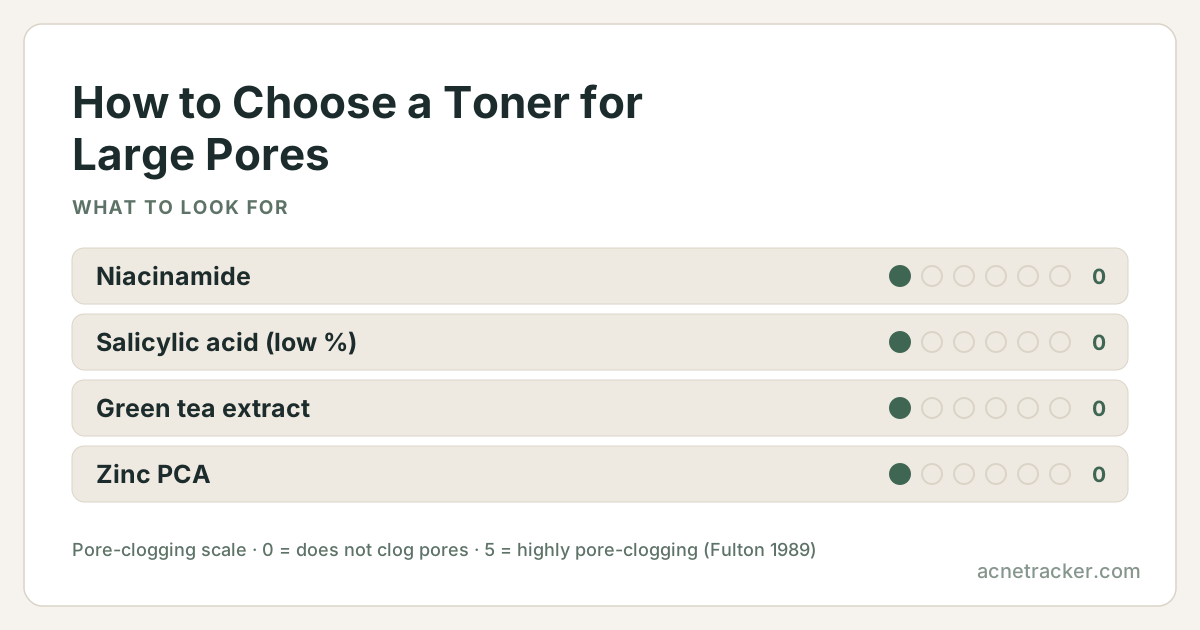
Ingredients to look for
| Ingredient | Why it matters |
|---|---|
| Niacinamide | The best-supported ingredient for the look of pores: helps regulate oil and improve skin quality so pores appear less prominent over weeks. |
| Salicylic acid (low %) | Clears the oil and debris inside pores that stretch and darken them, so an unclogged pore reads as smaller. |
| Green tea extract | An antioxidant linked to calmer, oil-balanced skin, a helpful support for congested, large-pored areas. |
| Zinc PCA | Mildly sebum-regulating, reducing the oil that keeps pores looking full and stretched. |
| Glycerin | Keeps skin hydrated and smooth so pores are less shadowed, without the greasiness that highlights them. |
Ingredients to avoid
| Ingredient | Why it matters |
|---|---|
| 'Pore-tightening' alcohol astringents | The tightening is a brief, cosmetic contraction that fades in an hour and leaves skin dried and oilier in rebound. |
| Heavy, pore-clogging toner ingredients | Occlusive or oily textures can pack pores and make them look larger, the opposite of the goal. |
| Aggressive scrubs and rough pads | Physical abrasion irritates skin and does nothing to clear the oil inside the pore that actually enlarges its look. |
| Fragrance-heavy formulas | Add irritation without any effect on pore appearance for skin that is usually oily and reactive already. |
How to choose
Set expectations first: choose a toner to keep pores clear and skin healthy, not to physically shrink them, and be sceptical of any product promising the latter. Niacinamide is the ingredient with the best track record for the look of pores, so a hydrating toner featuring it is a strong base. If oil and congestion are stretching your pores, a low-strength salicylic acid toner used a few evenings a week keeps them cleaner, which reads as smaller. Skip astringents that promise instant tightening — the effect is cosmetic and short-lived, and the drying makes oily skin rebound. Avoid heavy, potentially pore-clogging textures. Read past 'pore-refining' and 'pore-minimising' language to the actives, and judge by how your skin looks after a few weeks of consistent use rather than the flattering hour after an astringent splash.
How to apply
After cleansing, press a niacinamide-based hydrating toner over the areas where pores look largest, usually the nose, cheeks and forehead. If you use a salicylic acid toner for congestion, apply it to those zones a few evenings a week, not daily, to avoid over-drying. Follow with a light, non-comedogenic moisturizer so skin stays smooth and pores are less shadowed. Consistency matters more than intensity: the look of pores improves gradually with steady oil control and clear follicles. Wear SPF daily, since sun damage weakens the skin around pores and makes them look larger over time.
Frequently asked questions
Can a toner shrink my pores?
No product can permanently shrink pores, since their size is mostly genetic and age-related. A good toner makes pores look smaller by keeping them clear of oil and debris and improving skin quality, but the anatomy itself does not change.
Why do 'pore-tightening' toners not work long term?
They rely on alcohol briefly contracting the skin, so pores look finer for about an hour before rebounding. The drying then triggers more oil in oily skin, which can make pores look worse, not better.
Which ingredient is best for the look of pores?
Niacinamide has the strongest support for improving pore appearance over time by regulating oil and skin quality. Pairing it with occasional salicylic acid to keep pores clear is a sensible combination.
Does exfoliating help large pores?
Gentle, occasional exfoliation with a salicylic acid toner keeps pores clear of the oil that stretches them, which helps their appearance. Over-exfoliating, though, irritates skin and can make pores and oil worse.
Sources & further reading
There is no single study of this exact question. The guidance here is reasoned from the ingredient profiles below, each of which carries its own references:
- Niacinamide2 refs
- Salicylic Acid2 refs
- Green Tea Extract3 refs
- Zinc PCA3 refs
- Glycerin3 refs
Show every reference behind this page (10)
- Niacinamide: mechanisms of action and its topical use in dermatology (PubMed)cited by Niacinamide
- European Commission CosIng database — Niacinamidecited by Niacinamide, Green Tea Extract, Zinc PCA, Glycerin
- Salicylic acid as a peeling agent: a comprehensive review (PubMed)cited by Salicylic Acid
- FDA OTC monograph — acne drug products (salicylic acid 0.5–2%)cited by Salicylic Acid
- PubChem — Epigallocatechin gallate (EGCG)cited by Green Tea Extract
- Green tea and the skin (PubMed)cited by Green Tea Extract
- PubChem — Zinc PCA (zinc pyrrolidone carboxylate)cited by Zinc PCA
- Zinc l-pyrrolidone carboxylate inhibits the UVA-induced production of matrix metalloproteinase-1 by in vitro cultured skin fibroblasts, whereas it enhances their collagen synthesis (PubMed)cited by Zinc PCA
- PubChem — Glycerol compound summarycited by Glycerin
- DermNet — Moisturiserscited by Glycerin
Medical disclaimer
Ingredients mentioned on this page
Find your personal acne triggers
Our free Acne Tracker lets you log breakouts, sleep, stress and diet, and shows you which factors correlate with your flare-ups.