How to Choose a Toner for Oily Skin
For decades a toner meant one thing for oily skin: a stinging alcohol splash that left the face matte and tight. That definition is outdated. Stripping surface oil signals the skin to make more, so the astringent that feels effective at 8 a.m. often produces a shinier, more irritated face by noon. A modern toner for oily skin is a lightweight water-based layer that balances rather than strips — adding light hydration, mild sebum regulation and sometimes a gentle exfoliating acid. This guide describes the ingredient profile to look for so you can judge any bottle on its contents, not its marketing.
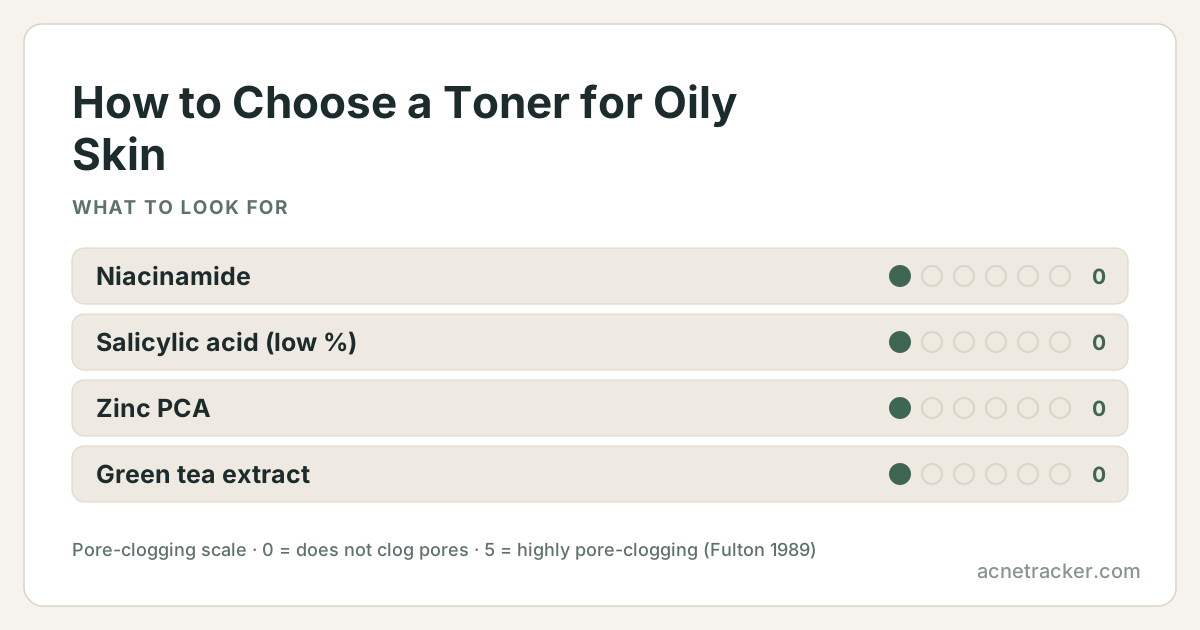
Ingredients to look for
| Ingredient | Why it matters |
|---|---|
| Niacinamide | Helps moderate visible oil over time and supports the barrier, so skin is less inclined to overproduce sebum in a rebound cycle. |
| Salicylic acid (low %) | Oil-soluble, so a leave-on toner concentration keeps pores clearer between deeper treatments — use a few evenings a week, not twice daily. |
| Zinc PCA | A mild sebum-regulating and soothing agent well matched to shiny, congestion-prone skin without the stripping of alcohol. |
| Green tea extract | An antioxidant with calming properties that suits oily, reactive skin looking for balance rather than aggression. |
| Glycerin | Light humectant hydration; well-hydrated oily skin has less reason to pump out compensatory oil. |
Ingredients to avoid
| Ingredient | Why it matters |
|---|---|
| Denatured alcohol (alcohol denat., SD alcohol) high on the list | The classic astringent trap: instant matte feel, then rebound shine, dehydration and stinging with repeated use. |
| Witch hazel distillates heavy on alcohol | Marketed as pore-tightening, but many drugstore versions are largely alcohol and dry the surface rather than balance it. |
| Menthol, camphor and peppermint | A cooling 'clean' tingle is irritation, not cleansing, and inflamed oily skin tends to look and behave worse. |
| Heavy fragrance loads | Fragrance is a common irritant that adds no benefit for oily skin and can trigger reactive breakouts. |
How to choose
Start by rejecting the premise that a toner should make oily skin feel tight. Read the first five ingredients: you want water, a humectant like glycerin, and balancing actives such as niacinamide or zinc PCA — not alcohol denat. near the top. Decide what job you want the toner to do. If it is light hydration and oil balance, an alcohol-free 'essence' style toner fits after cleansing. If it is congestion control, a low-strength salicylic acid toner used a few evenings a week earns its place, but do not layer it with other strong acids or retinoids on the same night. Treat words like 'purifying', 'mattifying' and 'pore-refining' as mood, not mechanism, and verify against the actual actives. The everyday test is simple: a good toner leaves oily skin comfortable and slightly hydrated, never squeaky or stinging.
How to apply
After cleansing, apply a few drops to damp skin with clean hands or a reusable pad, patting rather than rubbing. A hydrating toner goes on twice daily as the first watery layer before serum and moisturizer. Reserve any acid-containing toner for two or three evenings a week, alternating with your other actives rather than stacking them. If a toner stings on contact, that is a signal to stop, not to push through. Follow with a light gel moisturizer even on oily skin, and never skip daytime SPF if the toner contains exfoliating acids.
Frequently asked questions
Does oily skin even need a toner?
No — a toner is optional. Cleanser, moisturizer and sunscreen do the essential work. A well-chosen hydrating or lightly exfoliating toner can help balance oil, but a stripping astringent one often makes oily skin worse, so 'no toner' beats a harsh toner.
Why did my old astringent toner make my skin oilier?
Because dissolving surface oil with alcohol prompts the skin to replace it, often in excess, and the drying also triggers low-grade irritation. The matte feeling is temporary; the rebound shine is the lasting effect.
Is witch hazel good for oily skin?
It depends on the formula. Alcohol-free witch hazel extract can be mildly soothing, but many toners pair it with a lot of denatured alcohol, which does the stripping and drying. Check the ingredient list rather than the front-of-bottle claim.
Can I use a salicylic acid toner every day?
Usually not at leave-on strength. A few evenings a week is plenty for maintenance, and daily use alongside other actives often over-exfoliates oily skin into irritation, which paradoxically increases oil and breakouts.
Sources & further reading
There is no single study of this exact question. The guidance here is reasoned from the ingredient profiles below, each of which carries its own references:
- Niacinamide2 refs
- Salicylic Acid2 refs
- Zinc PCA3 refs
- Green Tea Extract3 refs
- Glycerin3 refs
Show every reference behind this page (10)
- Niacinamide: mechanisms of action and its topical use in dermatology (PubMed)cited by Niacinamide
- European Commission CosIng database — Niacinamidecited by Niacinamide, Zinc PCA, Green Tea Extract, Glycerin
- Salicylic acid as a peeling agent: a comprehensive review (PubMed)cited by Salicylic Acid
- FDA OTC monograph — acne drug products (salicylic acid 0.5–2%)cited by Salicylic Acid
- PubChem — Zinc PCA (zinc pyrrolidone carboxylate)cited by Zinc PCA
- Zinc l-pyrrolidone carboxylate inhibits the UVA-induced production of matrix metalloproteinase-1 by in vitro cultured skin fibroblasts, whereas it enhances their collagen synthesis (PubMed)cited by Zinc PCA
- PubChem — Epigallocatechin gallate (EGCG)cited by Green Tea Extract
- Green tea and the skin (PubMed)cited by Green Tea Extract
- PubChem — Glycerol compound summarycited by Glycerin
- DermNet — Moisturiserscited by Glycerin
Medical disclaimer
Ingredients mentioned on this page
Find your personal acne triggers
Our free Acne Tracker lets you log breakouts, sleep, stress and diet, and shows you which factors correlate with your flare-ups.