How to Choose a Toner for Combination Skin
Combination skin is the classic reason people reach for a toner: an oily, shiny T-zone alongside normal or dry cheeks, and the wish for one product to even it out. The old astringent toner handled this badly — it degreased the whole face to tame the forehead and nose, drying out cheeks that needed the opposite. A better toner for combination skin leans hydrating and balancing rather than stripping, with optional light exfoliation aimed only at the congested zone. This guide describes the ingredient profile that keeps both areas comfortable and explains why 'zone treating' often beats a single aggressive product applied everywhere.
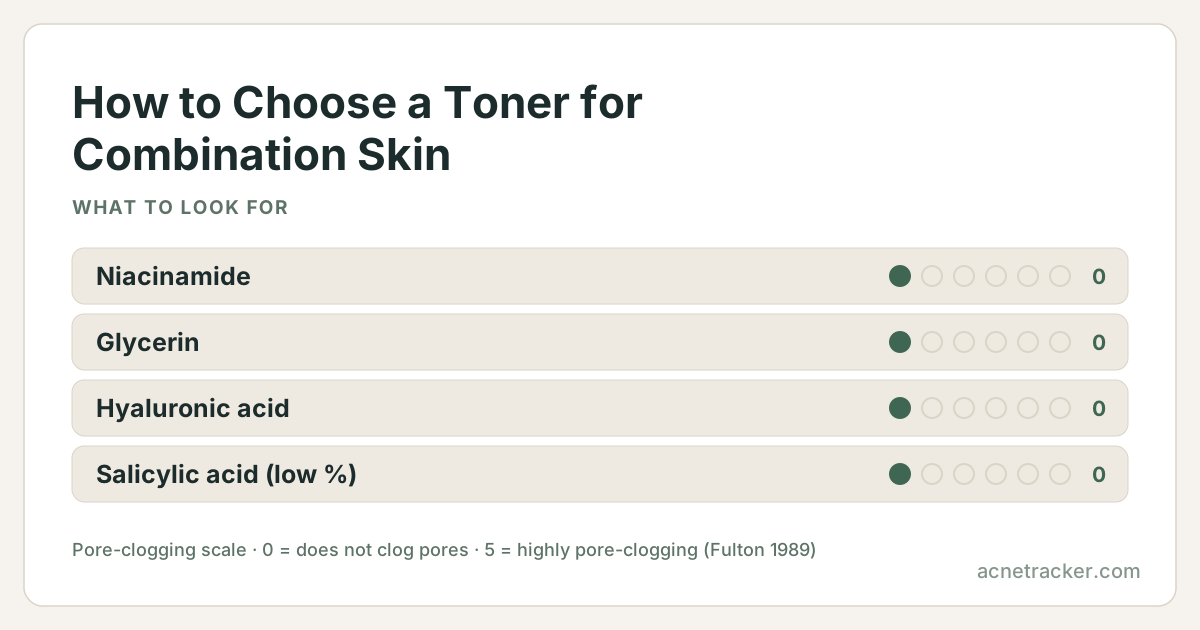
Ingredients to look for
| Ingredient | Why it matters |
|---|---|
| Niacinamide | A balancing all-rounder: helps moderate oil in the T-zone while supporting the barrier on drier cheeks, suiting mixed skin well. |
| Glycerin | Light humectant hydration that comforts dry areas without greasing up the oily zone. |
| Hyaluronic acid | Adds water-binding hydration that both zones tolerate, plumping cheeks without heaviness on the T-zone. |
| Salicylic acid (low %) | Useful applied to the congested T-zone a few evenings a week, clearing pores where oil collects without over-drying the cheeks. |
| Green tea extract | A calming antioxidant that suits the reactive, uneven behaviour of combination skin. |
Ingredients to avoid
| Ingredient | Why it matters |
|---|---|
| Whole-face astringents high in alcohol | Degreasing everything to control the T-zone strips the cheeks, driving dryness on one side and rebound oil on the other. |
| Rich, heavy toner textures | Occlusive-feeling formulas can overwhelm the oily zone and encourage congestion where you least want it. |
| Daily strong acids over the entire face | The dry areas of combination skin over-exfoliate quickly, so blanket acid use causes patchy irritation. |
| Fragrance and menthol | Irritation risk with no balancing benefit for mixed skin that is already behaving unevenly. |
How to choose
Stop looking for one toner to fix two opposite problems at once, and think in zones. A light, alcohol-free hydrating toner built on niacinamide and glycerin is a sound base for the whole face, comfortable on cheeks and non-greasy on the T-zone. If congestion in the T-zone bothers you, add a low-strength salicylic acid toner used only on that area a few evenings a week, rather than an acid splash everywhere. Avoid rich textures that suit dry skin but clog the oily zone, and avoid stripping astringents that suit the T-zone but parch the cheeks. Read past 'balancing' and 'combination skin' claims to the actual ingredients and texture. The realistic aim is a formula neutral enough to please both areas, with targeted exfoliation reserved for where oil actually collects.
How to apply
After cleansing, apply a hydrating toner across the whole face with light pressing motions, damp skin first. If you use an exfoliating toner for congestion, sweep it only over the T-zone — forehead, nose and chin — and keep it to a few evenings a week, off the drier cheeks. Follow with a light moisturizer everywhere, adding a slightly richer layer on dry areas if needed. This zoned approach treats each part of combination skin on its own terms. Wear SPF daily, and especially so on any evening you use an exfoliating toner.
Frequently asked questions
What kind of toner is best for combination skin?
A light, alcohol-free hydrating toner as an all-over base, optionally paired with a low-strength exfoliating toner used only on the oily T-zone. Avoid stripping astringents, which help the forehead but dry out the cheeks.
Can I use different products on my T-zone and cheeks?
Yes, and for combination skin it often works best. Applying an exfoliating toner only to the congested T-zone while hydrating the whole face treats each area on its own terms instead of compromising with one aggressive product.
Why does my whole face feel dry after toner but my nose is still oily?
A high-alcohol astringent is stripping the cheeks while the T-zone rebounds with more oil. Switch to a hydrating base toner and treat the T-zone separately with a gentle acid if needed.
Do I still need moisturizer with a hydrating toner?
Yes. A toner adds a thin layer of water-binding humectants, but combination skin still needs a moisturizer to seal that in — lighter on the T-zone, richer on the cheeks if they run dry.
Sources & further reading
There is no single study of this exact question. The guidance here is reasoned from the ingredient profiles below, each of which carries its own references:
- Niacinamide2 refs
- Glycerin3 refs
- Hyaluronic Acid3 refs
- Salicylic Acid2 refs
- Green Tea Extract3 refs
Show every reference behind this page (9)
- Niacinamide: mechanisms of action and its topical use in dermatology (PubMed)cited by Niacinamide
- European Commission CosIng database — Niacinamidecited by Niacinamide, Glycerin, Hyaluronic Acid, Green Tea Extract
- PubChem — Glycerol compound summarycited by Glycerin
- DermNet — Moisturiserscited by Glycerin, Hyaluronic Acid
- PubChem — Hyaluronic acid compound summarycited by Hyaluronic Acid
- Salicylic acid as a peeling agent: a comprehensive review (PubMed)cited by Salicylic Acid
- FDA OTC monograph — acne drug products (salicylic acid 0.5–2%)cited by Salicylic Acid
- PubChem — Epigallocatechin gallate (EGCG)cited by Green Tea Extract
- Green tea and the skin (PubMed)cited by Green Tea Extract
Medical disclaimer
Ingredients mentioned on this page
Find your personal acne triggers
Our free Acne Tracker lets you log breakouts, sleep, stress and diet, and shows you which factors correlate with your flare-ups.