How to Choose a Serum for Redness
Facial redness has several causes — a compromised barrier, general sensitivity, flushing, and rosacea — and a serum helps most when it calms inflammation and strengthens the skin rather than adding anything active or stimulating. The guiding principle is subtraction: fewer irritants, a stronger barrier, and gentle anti-inflammatory ingredients. This guide describes the soothing actives worth seeking on any label and the common triggers that keep redness going, from fragrance to over-exfoliation. It also notes when redness is likely rosacea, which is a medical condition that a doctor can treat far more effectively than any over-the-counter serum.
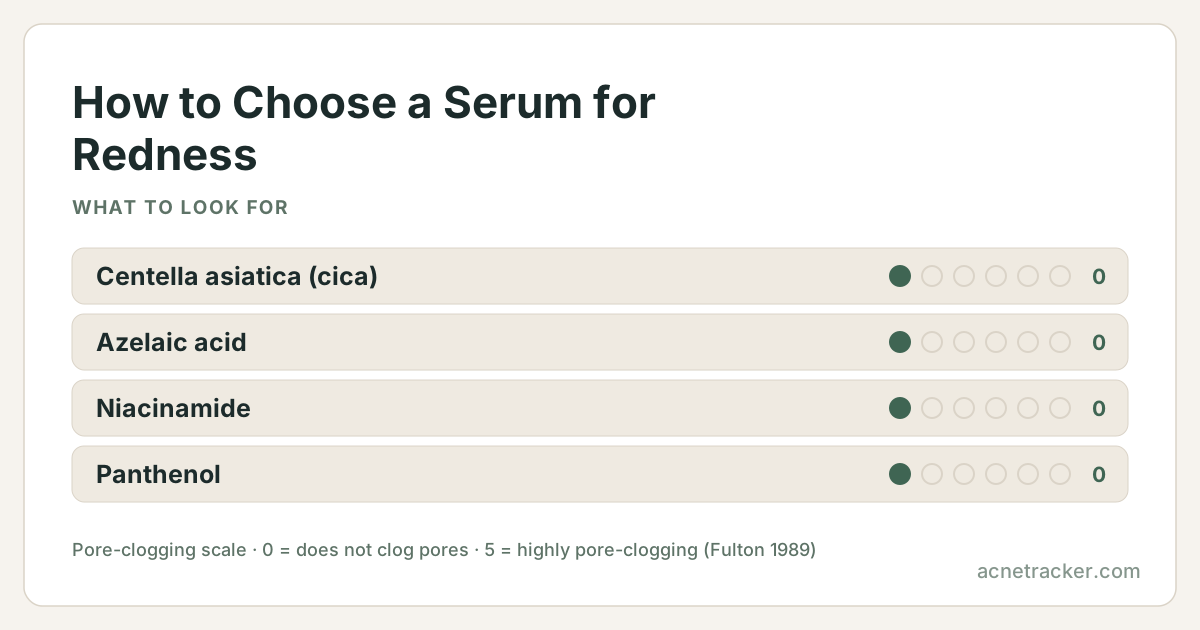
Ingredients to look for
| Ingredient | Why it matters |
|---|---|
| Centella asiatica (cica) | A well-loved soothing botanical that calms visible redness and supports barrier repair on reactive, easily-flushed skin. |
| Azelaic acid | One of the few actives that reduces the redness and bumps of rosacea-type skin while being gentle enough to tolerate. |
| Niacinamide | Calms inflammation and strengthens the barrier, reducing the reactivity that lets redness flare in the first place. |
| Panthenol | Soothes and supports healing, easing the tight, inflamed feeling that accompanies a red, compromised barrier. |
| Ceramides | Rebuild the barrier lipids, so the skin lets in fewer irritants and reacts with less redness over time. |
Ingredients to avoid
| Ingredient | Why it matters |
|---|---|
| Fragrance and essential oils | Among the most common triggers of redness and stinging on reactive skin; even natural scents can inflame. |
| Denatured alcohol high on the list | It dries and disrupts an already-fragile barrier, provoking more flushing and sensitivity. |
| Strong exfoliating acids and scrubs | Aggressive exfoliation inflames red-prone skin; if you exfoliate at all, keep it gentle and infrequent. |
| Physical triggers like very hot water and harsh rubbing | Heat and friction dilate vessels and worsen flushing, undoing a soothing serum's work. |
How to choose
Lead with calming, not correcting. The best serums for redness are short, fragrance-free and built around soothing and barrier ingredients — centella, niacinamide, panthenol and ceramides — rather than potent actives. If your redness comes with persistent bumps, visible vessels or flushing after triggers like heat, spice or alcohol, it may be rosacea, and azelaic acid is a useful over-the-counter option while a doctor can offer prescription treatments that work better. Patch-test anything new on reactive skin, and add one product at a time so you can identify triggers. Favour gentle, cushioning textures and simple formulas; long ingredient lists raise the odds of hitting something your skin dislikes. Treat 'soothing' and 'calming' as claims to verify against the actual list, and remember that with redness, the most effective move is often removing an irritant rather than adding a new active.
How to apply
Apply a soothing serum to clean skin before a barrier-supporting moisturiser, morning and evening. Use lukewarm, never hot, water when cleansing, and pat rather than rub. Daily broad-spectrum sunscreen is essential, since sun is a major redness and rosacea trigger; mineral filters suit some sensitive skin better. Introduce anything new slowly and one at a time. If a product stings on application, that is a signal to stop — with redness-prone skin, tolerability matters more than how active a serum claims to be.
Frequently asked questions
What ingredients reduce facial redness?
Soothing, barrier-supporting ingredients help most: centella asiatica, niacinamide, panthenol and ceramides calm inflammation and strengthen the skin. Azelaic acid is useful when redness comes with rosacea-type bumps. Strong actives and fragrance tend to make redness worse.
How do I know if my redness is rosacea?
Rosacea often involves persistent central-face redness, visible vessels, flushing after triggers, and sometimes small bumps. It is a medical condition, so if this sounds familiar, a doctor can diagnose it and offer treatments more effective than any serum.
Can a serum make redness worse?
Yes, if it contains fragrance, high alcohol or strong exfoliating acids, all of which irritate reactive skin. With redness, simpler and gentler is usually better, and adding one product at a time helps you spot anything that provokes a flare.
Does niacinamide help with redness?
Yes — niacinamide calms inflammation and strengthens the barrier, which reduces the reactivity behind redness over several weeks. Start at a moderate concentration, since very high levels can cause flushing in a minority of people.
Sources & further reading
There is no single study of this exact question. The guidance here is reasoned from the ingredient profiles below, each of which carries its own references:
- Centella Asiatica2 refs
- Azelaic Acid3 refs
- Niacinamide2 refs
- Panthenol3 refs
- Ceramides3 refs
Show every reference behind this page (9)
- Bylka W et al. Centella asiatica in dermatology: an overview. Phytother Res 2014 Aug (PubMed)cited by Centella Asiatica
- European Commission CosIng database — Centella Asiatica Extractcited by Centella Asiatica, Azelaic Acid, Niacinamide, Panthenol, Ceramides
- PubChem — Azelaic acid compound summarycited by Azelaic Acid
- DermNet — Azelaic acidcited by Azelaic Acid
- Niacinamide: mechanisms of action and its topical use in dermatology (PubMed)cited by Niacinamide
- PubChem — Panthenol compound summarycited by Panthenol
- Safety Assessment of Panthenol, Pantothenic Acid, and Derivatives as Used in Cosmetics (PubMed)cited by Panthenol
- DermNet — Skin barrier functioncited by Ceramides
- PubChem — Ceramide compound summarycited by Ceramides
Medical disclaimer
Ingredients mentioned on this page
Find your personal acne triggers
Our free Acne Tracker lets you log breakouts, sleep, stress and diet, and shows you which factors correlate with your flare-ups.