How to Choose a Serum for Oily Skin
Oily skin does not need a serum that promises to strip oil away — that approach backfires into rebound shine. It needs a lightweight, water-based treatment that regulates sebum over time and keeps pores clear, while leaving the barrier intact enough that the skin stops overcompensating. The paradox worth remembering is that dehydrated oily skin makes more oil, so a good serum for this skin type often hydrates as much as it treats. This guide sets out the ingredients and textures to look for on any label, and the rich, occlusive formulas that add shine without adding benefit.
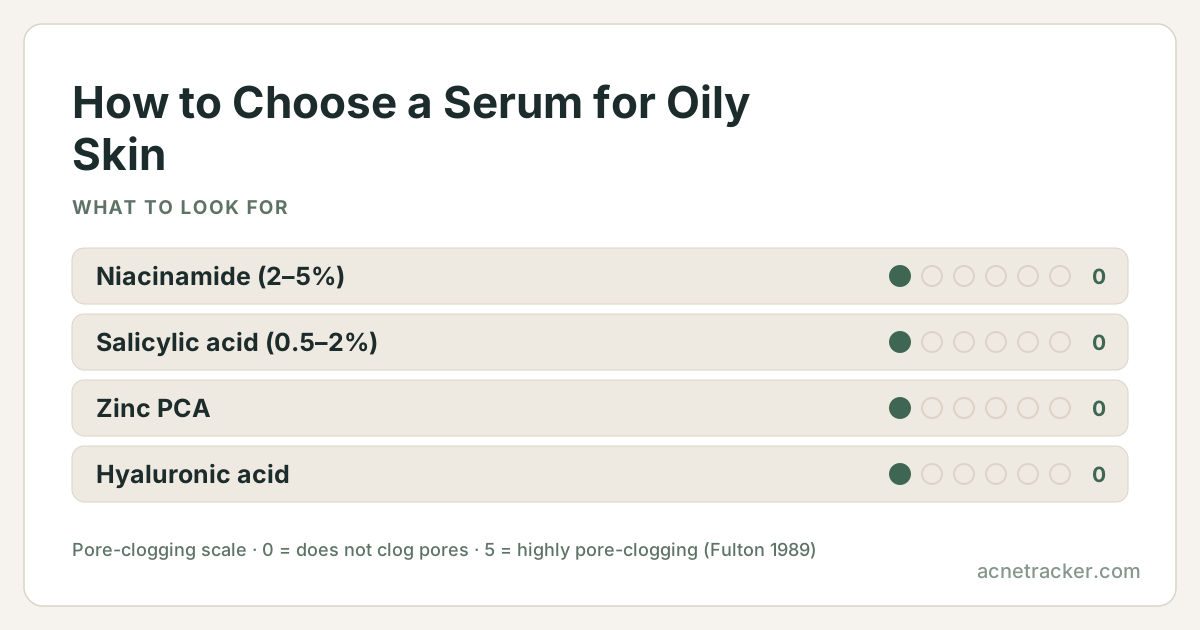
Ingredients to look for
| Ingredient | Why it matters |
|---|---|
| Niacinamide (2–5%) | The standout active for oily skin: it visibly regulates sebum over weeks and refines the look of enlarged pores without irritation. |
| Salicylic acid (0.5–2%) | Oil-soluble, so it clears the congestion that oily skin is prone to before it becomes a blackhead or bump. |
| Zinc PCA | A gentle sebum-balancing ingredient that suits shine-prone skin and pairs comfortably with niacinamide. |
| Hyaluronic acid | Lightweight hydration that stops oily skin from overproducing oil to compensate for a dehydrated surface. |
| Azelaic acid | Helps with the congestion and uneven tone that often accompany oily, breakout-prone skin, without heaviness. |
Ingredients to avoid
| Ingredient | Why it matters |
|---|---|
| Heavy oils and butters high on the list | Rich emollients sit on oily skin, add unwanted shine and can clog pores that are already congestion-prone. |
| Denatured alcohol as a top ingredient | It degreases instantly but triggers rebound oil and barrier damage on repeated use — the opposite of regulation. |
| Silicone-heavy 'blurring' serums as your only treatment | They mattify cosmetically for a few hours but do nothing to regulate the sebum underneath. |
| Overly strong acid blends daily | Aggressive exfoliation strips the barrier, and a stripped barrier signals the skin to produce even more oil. |
How to choose
Prioritise texture first: a serum for oily skin should feel like water or a thin gel and absorb without residue. If it leaves a film, it is too rich, regardless of the claim on the bottle. Next, look for niacinamide as the workhorse — around 4% is a sensible, well-tolerated level, and higher is not automatically better. If congestion is part of your picture, a salicylic acid serum a few nights a week adds pore-clearing without daily harshness. Treat 'oil-control', 'mattifying' and 'shine-free' as marketing language rather than proof of anything, and read the actual list. Fragrance-free is a reasonable filter, since irritation drives oil. Finally, resist the urge to layer three treatment serums; oily skin still has a barrier, and overloading it is the fastest route to the dehydrated-yet-greasy state that feels impossible to fix.
How to apply
Apply a few drops to clean skin before a light gel moisturiser — yes, oily skin still needs moisturiser, or it produces more oil. Use niacinamide morning or evening; keep salicylic acid and other acids to the evening. Do not skip sunscreen in the morning, and choose a fluid or gel SPF so it does not undo the lightweight feel. Give niacinamide at least eight weeks to visibly regulate sebum, and resist washing more often to speed things up, which only strips the barrier.
Frequently asked questions
Does oily skin actually need a serum?
It is optional, but a well-chosen serum targets the specific issues oily skin faces — excess sebum, congestion, visible pores — more precisely than a moisturiser can. Niacinamide is the most broadly useful starting point.
Will a hydrating serum make oily skin greasier?
No — water-based hydration does not add oil. Dehydrated skin overproduces oil to compensate, so a lightweight hyaluronic acid serum can actually help skin settle into producing less.
What percentage of niacinamide is best for oily skin?
Around 4–5% is effective and well tolerated. Very high concentrations offer no proven extra benefit and can cause flushing in some people, so a moderate, comfortable level used consistently wins.
Can I use a salicylic acid serum every day?
Some oily skin tolerates daily low-strength salicylic acid, but starting two or three evenings a week and building up avoids over-exfoliation. Watch for tightness or flaking, which signal you are using it too often.
Sources & further reading
There is no single study of this exact question. The guidance here is reasoned from the ingredient profiles below, each of which carries its own references:
- Niacinamide2 refs
- Salicylic Acid2 refs
- Zinc PCA3 refs
- Hyaluronic Acid3 refs
- Azelaic Acid3 refs
Show every reference behind this page (10)
- Niacinamide: mechanisms of action and its topical use in dermatology (PubMed)cited by Niacinamide
- European Commission CosIng database — Niacinamidecited by Niacinamide, Zinc PCA, Hyaluronic Acid, Azelaic Acid
- Salicylic acid as a peeling agent: a comprehensive review (PubMed)cited by Salicylic Acid
- FDA OTC monograph — acne drug products (salicylic acid 0.5–2%)cited by Salicylic Acid
- PubChem — Zinc PCA (zinc pyrrolidone carboxylate)cited by Zinc PCA
- Zinc l-pyrrolidone carboxylate inhibits the UVA-induced production of matrix metalloproteinase-1 by in vitro cultured skin fibroblasts, whereas it enhances their collagen synthesis (PubMed)cited by Zinc PCA
- PubChem — Hyaluronic acid compound summarycited by Hyaluronic Acid
- DermNet — Moisturisers and humectantscited by Hyaluronic Acid
- PubChem — Azelaic acid compound summarycited by Azelaic Acid
- DermNet — Azelaic acidcited by Azelaic Acid
Medical disclaimer
Ingredients mentioned on this page
Find your personal acne triggers
Our free Acne Tracker lets you log breakouts, sleep, stress and diet, and shows you which factors correlate with your flare-ups.