Bentonite: Comedogenic Rating & Ingredient Analysis
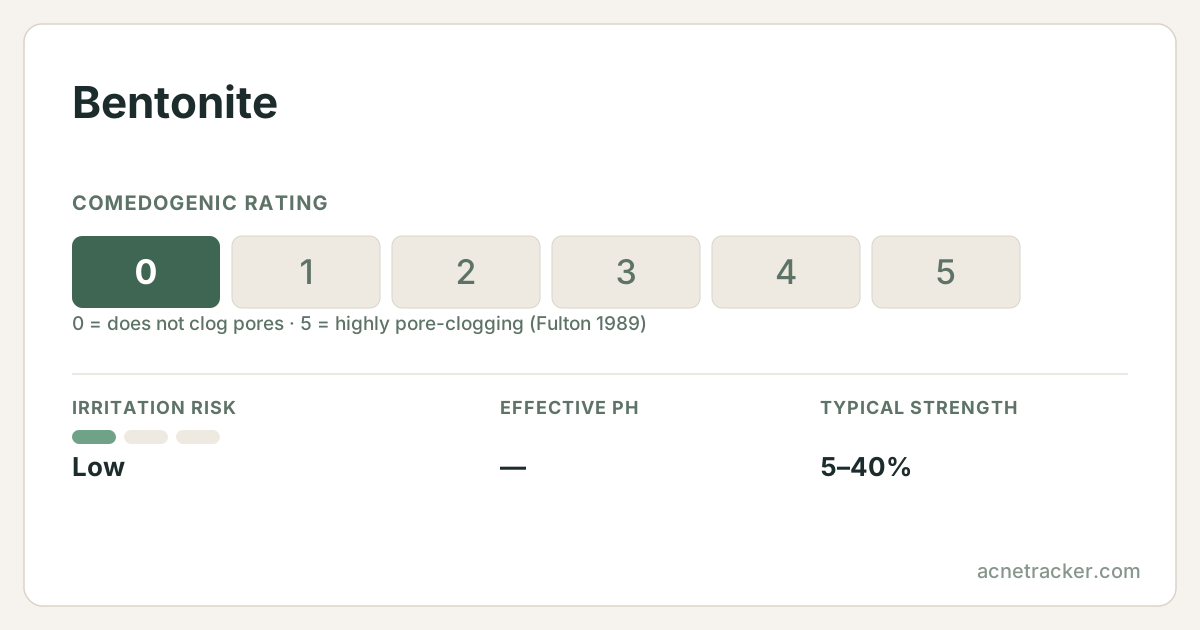
Bentonite is a highly absorbent clay formed from weathered volcanic ash, and one of the most powerful oil-drawing ingredients in mask form. Where kaolin is gentle, bentonite is strong: it swells when mixed with water and has a marked ability to bind and pull excess oil and debris from the skin's surface, which is why it is a favourite for very oily and congested skin. That strength is also its main caution, because overzealous use can leave skin uncomfortably tight and dry. Used sensibly as an occasional mask, it can noticeably reduce shine and give a deep-cleaned feel.
Quick facts
- Comedogenic rating
- measured (Fulton 1989)
- Irritation risk
- Low
- Effective pH
- —
- Typical strength
- 5–40%
- Pregnancy
- Considered safe
- Suits skin types
- oilycombinationacne-prone
Where this number comes from
Read directly from Table I of Fulton's 1989 paper — the primary source, not one of the copied tables that circulate online.
Fulton read his own scale as 0-1 not significant, 2-3 borderline, 4-5 positive. The assay is the rabbit ear at 10% dilution, which the paper itself calls extremely sensitive and not fully predictive of human skin. Ratings describe the raw ingredient; concentration and formulation change real-world behaviour.
Caution profile
The four published fields on this page, on one 0–5 scale. Further from the centre means more care is needed — never that the ingredient is worse.
Derived, not measured: pore-clogging is the published comedogenic rating; irritation maps low/moderate/high to 1/3/5; pregnancy maps safe/caution/avoid to 0/3/5; skin-type limits is how many of the seven skin types this entry does NOT list. Every input is printed in words in the quick-facts card above.
Show the numbers
| Metric | 0–5 | Published field |
|---|---|---|
| Pore-clogging | 0 | 0/5 |
| Irritation | 1 | Low |
| Skin-type limits | 2.9 | 3/7 |
| Pregnancy | 0 | Considered safe |
Working pH and typical strength
Where this ingredient is formulated to sit, and at what concentration.
Both bars come from the fields above: the pH window and the typical strength range published for this ingredient. The tinted column is healthy skin's surface pH (about 4.7–5.75).
Show the numbers
| Metric | 0–5 |
|---|---|
| Typical strength | 5–40% |
What is it?
Bentonite is made mostly of montmorillonite, a clay mineral with a layered structure that swells and develops a slight electrical charge when wet. This charge is thought to help it bind oils and particles on the skin, and its high surface area gives it strong absorbency. When applied as a paste and allowed to sit, it soaks up sebum and loose debris, which are rinsed away. Because it sits on and cleanses the surface rather than penetrating, its effects are physical and temporary. Its absorbency is considerably greater than kaolin's, so a little goes a long way and it is better suited to skin that produces a lot of oil.
Benefits
Strong oil absorption
Bentonite's swelling, charged structure binds and draws excess sebum from the surface effectively, making it well suited to very oily and congested skin that wants a deep-clean feel.
Reduces shine and congestion
By soaking up surface oil, a bentonite mask leaves skin looking matte and feeling less clogged, at least temporarily, which many oily-skinned people find satisfying.
Deep-cleansing sensation
Its powerful absorbency contributes to a thorough clean feeling as it lifts away built-up oil, sweat and debris during a wash-off treatment.
Multipurpose mask base
Bentonite is often the active clay in oil-control masks, sometimes mixed with kaolin or charcoal to balance strength with a smoother, more comfortable finish.
How to use
Use bentonite in a wash-off mask, applied to clean skin once a week or so. Mix to a smooth paste if using powder, apply a reasonable layer, and rinse before it fully hardens and cracks — letting a strong clay dry completely can leave skin tight and irritated. Always follow with a moisturiser. Because it is potent, dry and sensitive skin should use it sparingly or choose gentler kaolin instead. Avoid metal bowls and utensils if a product specifies, as some formulas advise it.
Side effects
The chief risk with bentonite is over-drying: its strong absorbency can leave skin tight, flaky and even more prone to producing oil if used too often. Letting a bentonite mask harden fully on the face intensifies this and can cause redness. It is otherwise inert and low in irritation potential. If your skin feels stripped or looks red after a mask, cut back to occasional use and prioritise hydration.
Who should avoid it
Dry, dehydrated or sensitive skin should be cautious with bentonite and may do better with milder kaolin. Anyone with a compromised barrier should avoid strongly absorbent masks until it recovers. Even oily skin should not use bentonite masks too frequently, as overuse can backfire by triggering more oil production.
Pairs well with
Frequently asked questions
Is bentonite stronger than kaolin?
Yes. Bentonite is a much more absorbent clay that swells and draws oil aggressively, while kaolin is gentle. Bentonite suits very oily skin; kaolin is better for sensitive or drier skin.
How often should I use a bentonite mask?
About once a week is enough for most people, because it is so absorbent. Overusing it can over-dry the skin and paradoxically prompt more oil, so it is best kept occasional.
Why shouldn't I let a bentonite mask dry completely?
Letting a strong clay dry and crack on the skin can pull at moisture and leave skin tight, red and irritated. Rinse while it is still slightly damp for a gentler result.
Is bentonite good for acne?
It can help oily, congested skin feel cleaner and look less shiny, which may support a clearer complexion, but it does not treat acne directly the way an acid or retinoid does.
Does bentonite clog pores?
No, it is essentially non-comedogenic and rinses away. The main issue is over-drying from too-frequent use, not pore-clogging, so balance masks with good hydration.
Where this ingredient shows up here
Counted across this database, not the web — these are the pages on this site that reason about this ingredient.
Sources & further reading
Medical disclaimer
Find your personal acne triggers
Our free Acne Tracker lets you log breakouts, sleep, stress and diet, and shows you which factors correlate with your flare-ups.