Ghassoul Clay: Comedogenic Rating & Ingredient Analysis
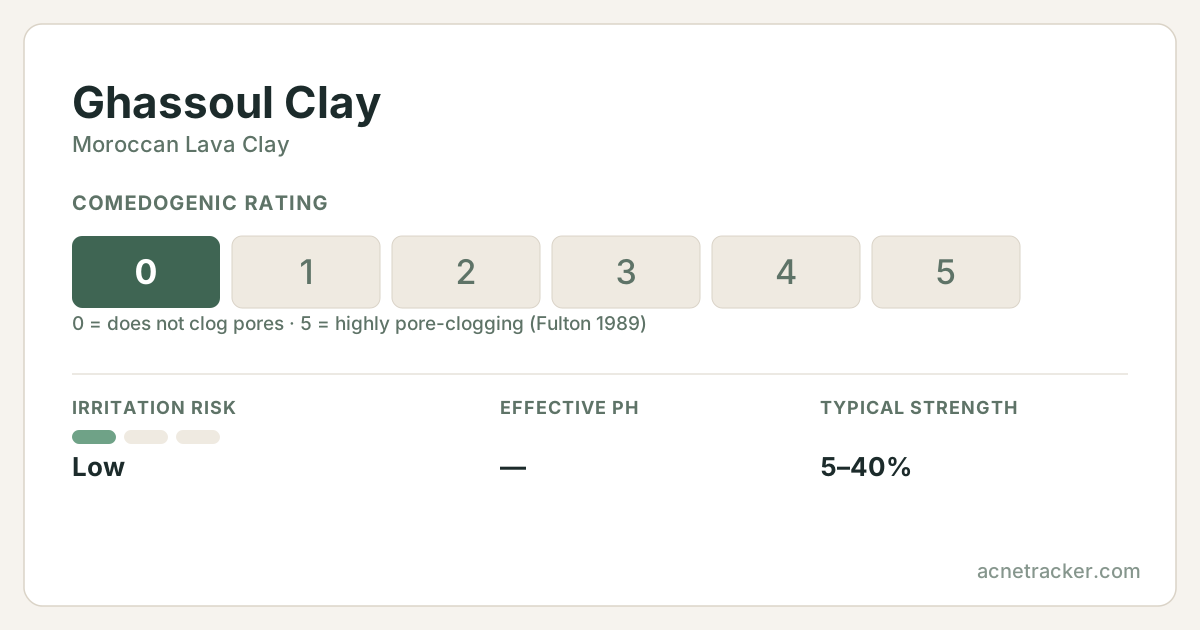
Ghassoul clay, also spelled rhassoul, is a mineral-rich clay mined in the Atlas Mountains of Morocco and used for centuries in bathing and grooming rituals. It is a form of stevensite, a smectite clay, and it is prized for cleansing and absorbing oil while remaining comparatively gentle and even conditioning. Unlike harsher clays, ghassoul is often said to leave skin and hair feeling soft rather than stripped, which is part of its traditional appeal. It appears in face masks, cleansers and hair treatments, and it is popular with people who want a clay experience without excessive dryness.
Quick facts
- Comedogenic rating
- our estimate — not measured
- Irritation risk
- Low
- Effective pH
- —
- Typical strength
- 5–40%
- Pregnancy
- Considered safe
- Suits skin types
- oilycombinationsensitivenormal
Where this number comes from
No one has published a comedogenic rating for this ingredient. Fulton's 1989 table tested about 250 raw materials and this was not among them, and we found no later study measuring it. The figure shown is our own reasoning from the ingredient's chemistry and how it is used — treat it as an estimate, not a measurement.
Fulton read his own scale as 0-1 not significant, 2-3 borderline, 4-5 positive. The assay is the rabbit ear at 10% dilution, which the paper itself calls extremely sensitive and not fully predictive of human skin. Ratings describe the raw ingredient; concentration and formulation change real-world behaviour.
Caution profile
The four published fields on this page, on one 0–5 scale. Further from the centre means more care is needed — never that the ingredient is worse.
Derived, not measured: pore-clogging is the published comedogenic rating; irritation maps low/moderate/high to 1/3/5; pregnancy maps safe/caution/avoid to 0/3/5; skin-type limits is how many of the seven skin types this entry does NOT list. Every input is printed in words in the quick-facts card above.
Show the numbers
| Metric | 0–5 | Published field |
|---|---|---|
| Pore-clogging | 0 | 0/5 |
| Irritation | 1 | Low |
| Skin-type limits | 2.1 | 4/7 |
| Pregnancy | 0 | Considered safe |
Working pH and typical strength
Where this ingredient is formulated to sit, and at what concentration.
Both bars come from the fields above: the pH window and the typical strength range published for this ingredient. The tinted column is healthy skin's surface pH (about 4.7–5.75).
Show the numbers
| Metric | 0–5 |
|---|---|
| Typical strength | 5–40% |
What is it?
Ghassoul is composed mainly of the clay mineral stevensite, along with silica, magnesium, potassium and other minerals. Like other smectite clays it can absorb oil and swell in water, and it carries a surface charge that helps it bind debris. What distinguishes it in tradition and marketing is a reputation for gentle, almost conditioning cleansing: it cleans and mattifies while being kinder to the skin's moisture than strongly drawing clays. Its mineral content is part of its appeal, though as with any wash-off clay the contact is brief and the effect largely physical. It is used on both skin and hair, where it can cleanse without the harshness of some surfactants.
Benefits
Gentle oil absorption
Ghassoul absorbs excess surface oil and cleanses congested skin, but with a reputation for being kinder and less stripping than stronger clays like bentonite.
Conditioning cleanse
Traditionally valued for leaving skin and hair feeling soft rather than tight, ghassoul offers a clay cleanse that many find more comfortable than harsher options.
Suits sensitive skin
Its comparatively mild nature makes ghassoul a reasonable clay choice for people whose skin is oily but also reacts to more aggressive absorbent masks.
Versatile for skin and hair
Ghassoul is used in face masks, cleansers and hair treatments alike, cleansing gently across uses thanks to its mineral-rich, oil-binding structure.
How to use
Use ghassoul in a wash-off mask or cleanser. Mix the powder with water (or a hydrosol) into a smooth paste, apply to clean skin, and rinse before it fully dries and tightens, then moisturise. As a gentler clay it is usually well tolerated once or twice a week, and sometimes more for oily skin, but even mild clay benefits from being followed with hydration. For hair, it is used as a cleansing mask. Patch test if your skin is reactive.
Side effects
Ghassoul is generally mild and well tolerated, but like any clay it can be drying if a mask is overused or left on until it cracks, leaving skin tight. Its effects are surface-level and physical. Any notable irritation is more likely from other ingredients in a formula than from the clay. If your skin feels dry after masking, reduce frequency and prioritise moisturiser.
Who should avoid it
There are few strict reasons to avoid ghassoul, and it is often chosen for its gentleness. Very dry skin should still use clay masks sparingly, since even a mild clay can accentuate dryness with overuse. If a specific ghassoul product irritates, review its other ingredients rather than the clay itself.
Pairs well with
Frequently asked questions
What is ghassoul clay?
Ghassoul, or rhassoul, is a mineral-rich clay mined in Morocco, made mainly of stevensite. It cleanses and absorbs oil while being comparatively gentle, and is used on both skin and hair.
Is ghassoul gentler than bentonite?
It has a reputation for being gentler and more conditioning than strongly drawing clays like bentonite, leaving skin feeling softer rather than stripped, though any clay can dry the skin if overused.
Can I use ghassoul on my hair?
Yes. Ghassoul is traditionally used as a cleansing hair mask as well as a facial clay, cleansing the scalp and hair more gently than some surfactant-based products.
How often can I use a ghassoul mask?
Once or twice a week suits most people, and oily skin may tolerate a little more. Follow each mask with moisturiser, since even a gentle clay can dry the skin if overused.
Is ghassoul clay good for sensitive skin?
Often, yes. Its comparatively mild, conditioning character makes it a reasonable clay choice for skin that is oily but also easily irritated, used in moderation.
Where this ingredient shows up here
Counted across this database, not the web — these are the pages on this site that reason about this ingredient.
Buying guides 1
Sources & further reading
Medical disclaimer
Find your personal acne triggers
Our free Acne Tracker lets you log breakouts, sleep, stress and diet, and shows you which factors correlate with your flare-ups.