How to Choose a Face Mask for Blackheads
Two beliefs make this category unusually misleading, and both are worth dismantling before you spend money. The first is that a peel-off mask extracts blackheads. The second is that heat opens pores so a mask can get in, and cold closes them afterwards. Neither is true, and once they go, the honest picture is refreshingly small: a blackhead is a follicle packed with keratin and sebum whose surface has oxidised and darkened, and shifting it requires either an ingredient that loosens the plug over weeks, or a physical extraction. A ten-minute mask can contribute to the first of those. It cannot do the second, no matter how satisfying the removal video looks.
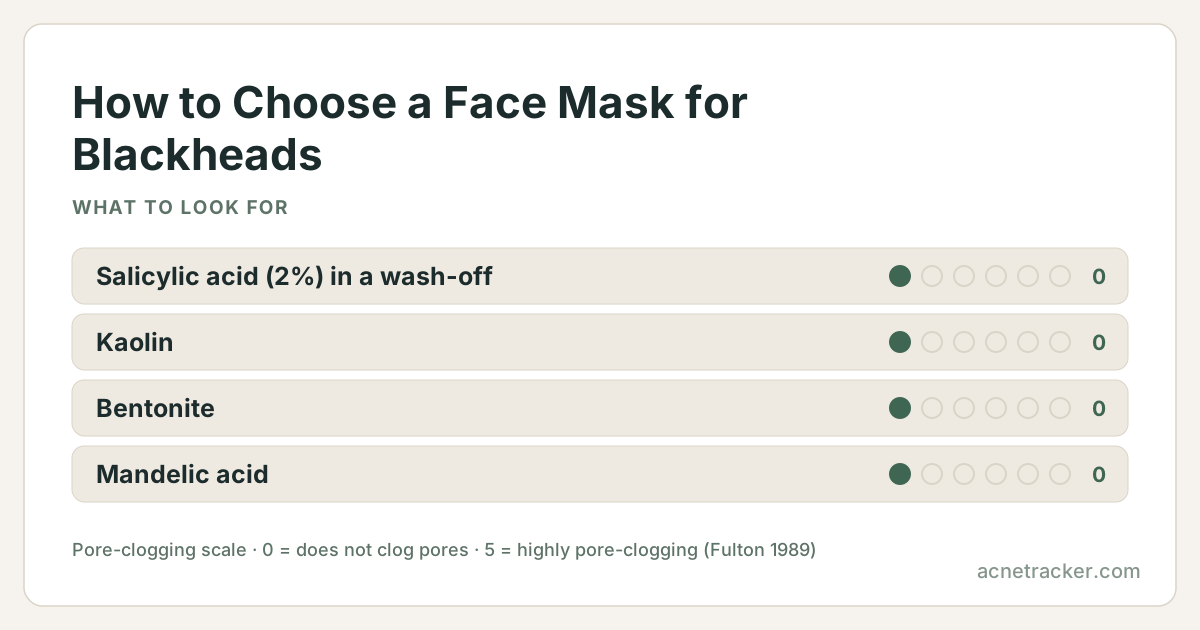
Ingredients to look for
| Ingredient | Why it matters |
|---|---|
| Salicylic acid (2%) in a wash-off mask | The one active whose lipid solubility lets it into an oil-filled follicle. It softens the plug rather than removing it — expect weeks, not one session. |
| Kaolin | Absorbs surface oil, which makes follicular openings less visibly dark for a while. Cosmetic and temporary, but honest about what it is. |
| Bentonite | The same job with more absorbency. Rinse before it cracks; congested skin is not helped by being dried out on top of everything else. |
| Mandelic acid | A large AHA that penetrates slowly and evenly. A reasonable choice in a wash-off exfoliating mask if salicylic acid stings you. |
| Niacinamide | Included for tolerance rather than for the blackheads themselves. It keeps an acid mask from leaving skin raw. |
Ingredients to avoid
| Ingredient | Why it matters |
|---|---|
| Peel-off and charcoal 'nose strip' masks | What comes away on the film is polyvinyl alcohol, vellus hair and corneocytes — occasionally the very top of a sebaceous filament. The plug's body stays put, and the skin is left inflamed. |
| Steaming to 'open' the pores first | Pores are follicular openings, not valves. Heat softens keratin and hydrates the surface, which is not nothing, but nothing opens or shuts. |
| Cold masks and ice to 'close' pores afterwards | The same misconception in reverse. Cold causes brief vasoconstriction and mild swelling of surrounding skin; the follicle is unchanged. |
| Baking soda or lemon juice DIY masks | Baking soda is around pH 9 and strips the acid mantle; citrus juice carries furocoumarins that can cause phototoxic burns. Both are common blackhead 'hacks' and both cause damage without touching the plug. |
How to choose
Start by identifying what you are actually looking at, because the most common blackhead complaint is not blackheads. Sebaceous filaments — the uniform grey-tan dots covering the nose, refilling within days of any extraction — are normal follicular lining, present on everyone with visible pores, and no product removes them permanently. True blackheads are fewer, darker, sit slightly proud of the skin and can be extracted individually. If your nose is evenly stippled, you are looking at filaments and the honest goal is management, not eradication. For either, the useful mask is a wash-off salicylic acid formula used once or twice a week, ideally alongside a leave-on BHA that does the real work on the other evenings. Clay is a legitimate cosmetic adjunct: less surface oil means less light absorbed at the follicular opening, so the dots read fainter in the mirror. Charcoal deserves a specific note — it is added to clay masks as a visual and a story, and there is no evidence it outperforms the clay it is suspended in. You are buying black clay.
How to apply
Use on clean, dry skin, focused on the congested zones rather than everywhere. If the mask contains an acid, follow the stated time exactly; longer does not loosen more plug, it just irritates. Rinse thoroughly and moisturise. Do not follow a mask with squeezing — softened skin bruises and marks easily, and forcing a plug through a follicular opening is how a blackhead becomes an inflamed papule and then a mark that outlasts it by months. Persistent congestion that does not respond over eight to twelve weeks is worth a professional extraction rather than a stronger mask.
Frequently asked questions
Do peel-off masks remove blackheads?
Essentially no. The film pulls off dead surface cells, fine facial hair, and sometimes the oxidised tip of a sebaceous filament. The plug inside the follicle is not removed, and the filament refills within days.
Does steam open your pores before a mask?
No — pores have no mechanism to open or close. Steam hydrates keratin and makes a plug marginally softer, which is why professionals steam before extractions, but nothing is opening.
Is a charcoal mask better than a clay mask for blackheads?
There is no evidence that it is. Charcoal is added to a clay base, and the clay is what absorbs the oil. The colour is doing the marketing, and it makes the mask look like it removed something dark.
What is the difference between a blackhead and a sebaceous filament?
Blackheads are discrete, darker, slightly raised and extractable. Sebaceous filaments are the uniform dots that carpet the nose, are grey rather than black, and are normal anatomy — they refill within a few days whatever you do.
How long until a salicylic acid mask shows results?
Six to eight weeks of consistent use, and even then it is a supporting role. Loosening a keratin plug is a gradual process, and a twice-weekly product contributes far less than a nightly leave-on one.
Sources & further reading
There is no single study of this exact question. The guidance here is reasoned from the ingredient profiles below, each of which carries its own references:
- Salicylic Acid2 refs
- Kaolin3 refs
- Bentonite3 refs
- Mandelic Acid2 refs
- Niacinamide2 refs
Show every reference behind this page (9)
- Salicylic acid as a peeling agent: a comprehensive review (PubMed)cited by Salicylic Acid
- FDA OTC monograph — acne drug products (salicylic acid 0.5–2%)cited by Salicylic Acid
- European Commission CosIng database — Kaolincited by Kaolin, Bentonite, Niacinamide
- PubChem — Kaolincited by Kaolin
- Fulton JE. Comedogenicity and irritancy of commonly used ingredients in skin care products. J Soc Cosmet Chem 40:321–333 (1989) — Table I, pp. 324–326 (source of the comedogenic rating)cited by Kaolin, Bentonite
- PubChem — Bentonitecited by Bentonite
- Mandelic acid — PubChem compound summarycited by Mandelic Acid
- DermNet — Alpha hydroxy acidscited by Mandelic Acid
- Niacinamide: mechanisms of action and its topical use in dermatology (PubMed)cited by Niacinamide
Medical disclaimer
Ingredients mentioned on this page
Find your personal acne triggers
Our free Acne Tracker lets you log breakouts, sleep, stress and diet, and shows you which factors correlate with your flare-ups.