How to Choose a Sunscreen for Men
There is no biological men's sunscreen — filters protect the same skin regardless of who wears it — but a few practical preferences come up often: a fast, non-greasy finish that does not feel like a cosmetic, no white cast, and formats that work with a beard or a shaved or thinning scalp. Men also skip sunscreen more, despite spending plenty of time outdoors, which shows up later as sun damage and higher rates of certain skin cancers. This guide cuts through the marketing to the textures, filters and formats that make daily protection easy to actually wear.
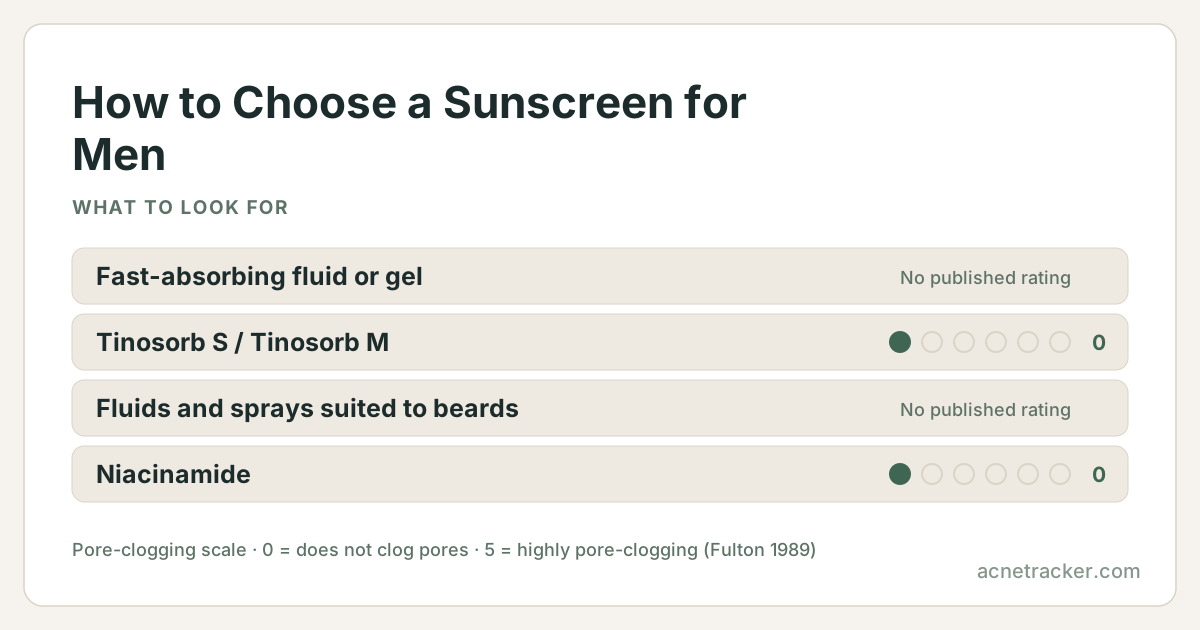
Ingredients to look for
| Ingredient | Why it matters |
|---|---|
| Fast-absorbing fluid or gel textures with a natural finish | A quick, non-greasy, non-shiny finish feels like nothing on the skin, which makes daily wear far more likely. |
| Tinosorb S / Tinosorb M | Modern broad-spectrum filters that formulate into light, invisible bases with no white cast, available outside the US. |
| Fluids and sprays suited to beards and scalps | Thin fluids reach skin through facial hair, and sprays or fluids cover a shaved or thinning scalp that burns easily. |
| Niacinamide | A low-fuss supporting ingredient that calms the skin and suits razor-irritated areas under daily SPF. |
| Panthenol | Soothes and supports the barrier, useful on skin that gets irritated from regular shaving. |
Ingredients to avoid
| Ingredient | Why it matters |
|---|---|
| Heavy, greasy creams that sit on the surface | A shiny, sticky finish is the main reason many men abandon sunscreen; a light fluid solves it. |
| Untinted mineral formulas that leave a white cast | A visible white or grey film puts people off daily use; chemical or well-formulated tints avoid it. |
| Fragrance-heavy formulas on freshly shaved skin | Shaving compromises the barrier, so strong fragrance is more likely to sting and irritate afterwards. |
| Skipping the ears, neck and scalp | These commonly missed, sun-exposed areas are frequent sites of sun damage, especially with short or thinning hair. |
How to choose
The filters are identical to any other sunscreen, so ignore 'for men' branding and judge the formula. For most men the priority is finish: a fast-absorbing fluid or gel with a natural, non-greasy look is the one that actually gets worn daily, and modern chemical or hybrid filters (Tinosorb, Uvinul outside the US) deliver that without a white cast. If you have a beard, a thin fluid or spray reaches the skin beneath better than a thick cream. For a shaved or thinning scalp, a spray or fluid plus a hat covers an area that burns quickly and is easy to forget. Soothing ingredients like niacinamide and panthenol suit razor-irritated skin. Aim for at least SPF 30, broad-spectrum, and remember the ears and back of the neck, which are frequently missed.
How to apply
Apply a full two fingers' length to the face, ears and neck every morning, working thin fluids down to the skin if you have a beard. For a shaved or thinning scalp, use a spray or fluid and reapply outdoors, or wear a hat. Sunscreen goes on after any aftershave balm has absorbed. Reapply every two hours outdoors, especially during sport, driving or working outside. Do not skip it in winter or on cloudy days, since UVA that drives ageing and damage passes through cloud and car windows year-round.
Frequently asked questions
Is men's sunscreen different from women's?
Not chemically. UV filters protect the same skin regardless of who wears it, so 'for men' is mostly branding. Choose by texture and finish, not the label, and any well-formulated broad-spectrum sunscreen works.
How do I apply sunscreen with a beard?
Use a thin fluid or spray rather than a thick cream, and work it down to the skin beneath the hair with your fingertips. Sprays reach the scalp and denser beards more easily and are simple to reapply outdoors.
Do I need sunscreen on my scalp?
If your hair is short, shaved or thinning, yes. The scalp is highly sun-exposed and burns easily. Use a spray or fluid SPF on exposed areas, or wear a hat, since it is a common site of sun damage.
Why do men need to worry about sunscreen?
Men skip sunscreen more often yet spend plenty of time outdoors, which shows up as sun damage and higher rates of some skin cancers later. Daily broad-spectrum SPF reduces UV damage and that long-term risk.
Sources & further reading
There is no single study of this exact question. The guidance here is reasoned from the ingredient profiles below, each of which carries its own references:
- Tinosorb S2 refs
- Niacinamide2 refs
- Panthenol3 refs
Show every reference behind this page (5)
- European Commission CosIng — Bis-Ethylhexyloxyphenol Methoxyphenyl Triazinecited by Tinosorb S, Niacinamide, Panthenol
- SCCS opinions on organic UV filterscited by Tinosorb S
- Niacinamide: mechanisms of action and its topical use in dermatology (PubMed)cited by Niacinamide
- PubChem — Panthenol compound summarycited by Panthenol
- Safety Assessment of Panthenol, Pantothenic Acid, and Derivatives as Used in Cosmetics (PubMed)cited by Panthenol
Medical disclaimer
Ingredients mentioned on this page
Find your personal acne triggers
Our free Acne Tracker lets you log breakouts, sleep, stress and diet, and shows you which factors correlate with your flare-ups.