Beeswax: Comedogenic Rating & Ingredient Analysis
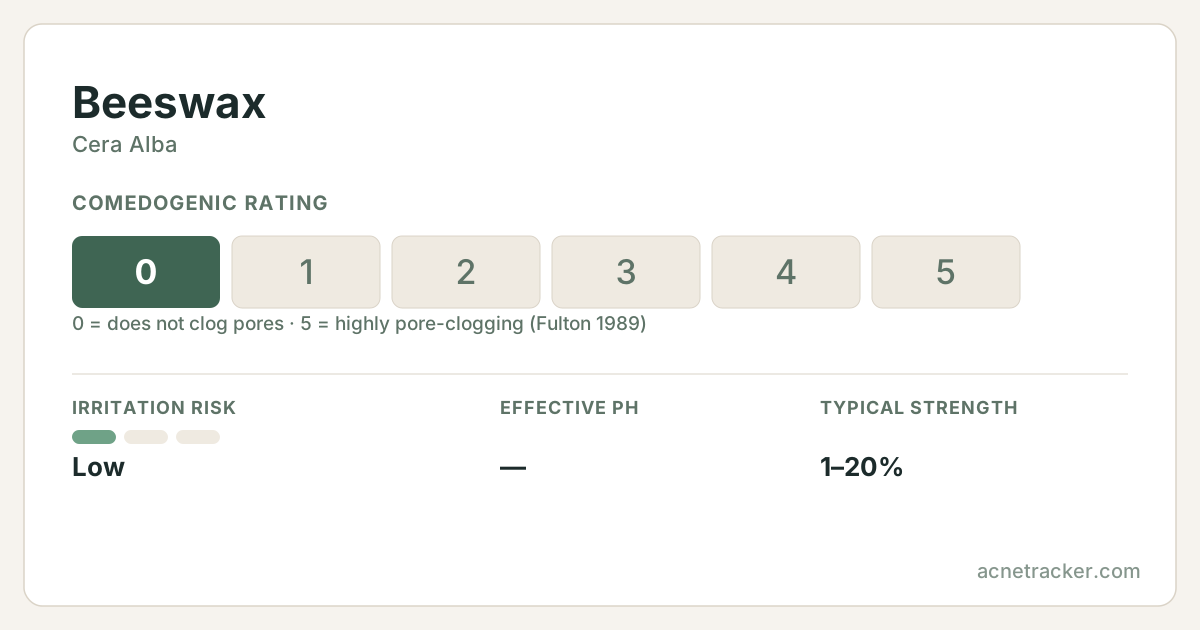
Beeswax, listed on labels as Cera Alba, is the natural wax that honeybees produce to build their honeycomb, and it has been used in skin salves for thousands of years. In modern formulations it plays a dual role: it is a protective emollient that softens and shields the skin, and it is a structural ingredient that gives balms, lip products and thick creams their firm, stable texture. It forms a breathable protective film on the surface that helps guard against moisture loss and environmental exposure without being as heavily occlusive as petrolatum. Generally well tolerated, it is a mainstay of natural and minimalist skincare.
Quick facts
- Comedogenic rating
- measured (Fulton 1989)
- Irritation risk
- Low
- Effective pH
- —
- Typical strength
- 1–20%
- Pregnancy
- Considered safe
- Suits skin types
- drynormalsensitivemature
Where this number comes from
Read directly from Table I of Fulton's 1989 paper — the primary source, not one of the copied tables that circulate online.
Fulton printed a RANGE for this ingredient (0-2), marked to show that the result depends on the source of the raw material. We publish the low end, because variability between batches is not evidence that a finished product clogs pores — flagging it at the high end would warn people off an ingredient the assay did not consistently condemn.
Fulton read his own scale as 0-1 not significant, 2-3 borderline, 4-5 positive. The assay is the rabbit ear at 10% dilution, which the paper itself calls extremely sensitive and not fully predictive of human skin. Ratings describe the raw ingredient; concentration and formulation change real-world behaviour.
Caution profile
The four published fields on this page, on one 0–5 scale. Further from the centre means more care is needed — never that the ingredient is worse.
Derived, not measured: pore-clogging is the published comedogenic rating; irritation maps low/moderate/high to 1/3/5; pregnancy maps safe/caution/avoid to 0/3/5; skin-type limits is how many of the seven skin types this entry does NOT list. Every input is printed in words in the quick-facts card above.
Show the numbers
| Metric | 0–5 | Published field |
|---|---|---|
| Pore-clogging | 0 | 0/5 |
| Irritation | 1 | Low |
| Skin-type limits | 2.1 | 4/7 |
| Pregnancy | 0 | Considered safe |
Working pH and typical strength
Where this ingredient is formulated to sit, and at what concentration.
Both bars come from the fields above: the pH window and the typical strength range published for this ingredient. The tinted column is healthy skin's surface pH (about 4.7–5.75).
Show the numbers
| Metric | 0–5 |
|---|---|
| Typical strength | 1–20% |
What is it?
Beeswax is a complex natural mixture of fatty acid esters, long-chain alcohols and hydrocarbons secreted by worker bees. In products it is prized both for what it does on skin, forming a soft, protective, breathable layer, and for its formulating function as a thickener and emulsion stabiliser that holds balms and creams together and keeps oils and waters blended. It creates a surface film that reduces water loss and shields skin from wind and cold, while allowing the skin to breathe more than a fully occlusive grease. Its moderate comedogenic rating means it is well tolerated by most, though very acne-prone skin should use it thoughtfully.
Benefits
Protective breathable film
Beeswax forms a soft layer on the skin that guards against moisture loss and environmental exposure while remaining more breathable than heavy, fully occlusive ingredients.
Softens and conditions
As an emollient it smooths and comforts dry skin and lips, giving balms and creams their nourishing, cushioning feel without a greasy slick.
Structures balms and creams
Its wax structure thickens and stabilises formulations, which is why it is a backbone of lip balms, salves and rich creams, holding oils and butters in a firm, usable form.
Natural and well tolerated
A traditional, minimally processed ingredient, beeswax is gentle and rarely irritating, making it popular in natural skincare for sensitive and dry skin.
How to use
You will usually encounter beeswax already blended into lip balms, salves, ointments and rich moisturisers rather than using it on its own. Apply these products to dry areas, lips, hands and rough patches as a protective, softening step, ideally over hydrated skin so the wax helps hold moisture in. Because beeswax gives products their firm texture, warming a balm slightly with body heat helps it spread thinly and evenly. If your skin is very acne-prone, use beeswax-rich products lightly on the face and watch how your skin responds.
Side effects
Beeswax is gentle and irritation is uncommon, though people with a known bee-product allergy, such as to propolis or honey, should be cautious and patch test. Its moderate comedogenic rating means it can, in a minority of very congestion-prone users, contribute to clogged pores if used heavily on the face. For most people it is comfortable and low-risk, particularly on the body and lips.
Who should avoid it
Those with a known allergy to bee products should avoid or carefully patch test beeswax. Very oily and highly acne-prone skin may prefer lighter emollients on the face, given its moderate comedogenic rating. Otherwise it suits dry, normal and sensitive skin, and is regarded as safe for topical use in pregnancy.
Pairs well with
Frequently asked questions
Does beeswax clog pores?
It has a moderate comedogenic rating, so for most people it does not, but those very prone to congestion could react to heavy facial use. It is generally more comfortable on the body and lips than on oily facial skin.
Is beeswax good for dry skin?
Yes. It forms a protective, breathable film that guards against moisture loss and softens dry skin and lips, which is why it is a backbone of nourishing balms, salves and rich creams.
Is beeswax safe for sensitive skin?
Generally yes, as it is gentle and rarely irritating, but people with a known allergy to bee products like honey or propolis should patch test first, as cross-reactions are possible.
Why is beeswax used in lip balms?
Beeswax gives balms their firm, stable structure and forms a protective, softening layer on the lips that helps guard against moisture loss, making it a natural backbone of lip and salve formulations.
Sources & further reading
Medical disclaimer
Find your personal acne triggers
Our free Acne Tracker lets you log breakouts, sleep, stress and diet, and shows you which factors correlate with your flare-ups.