Gamma-Linolenic Acid: Comedogenic Rating & Ingredient Analysis
Gamma-linolenic acid, usually shortened to GLA, is the reason evening primrose and borage oils are so often recommended for irritated, eczema-prone and reactive skin. It is an omega-6 fatty acid, but a special one: the body uses it to make anti-inflammatory signalling molecules, and topically it helps calm redness while reinforcing the skin barrier. Borage oil is the richest natural source, followed by evening primrose and blackcurrant seed oils. Because GLA is non-comedogenic and soothing rather than heavy, it suits dry and sensitive skin and can even be a good fit for acne-prone skin that also struggles with inflammation.
Quick facts
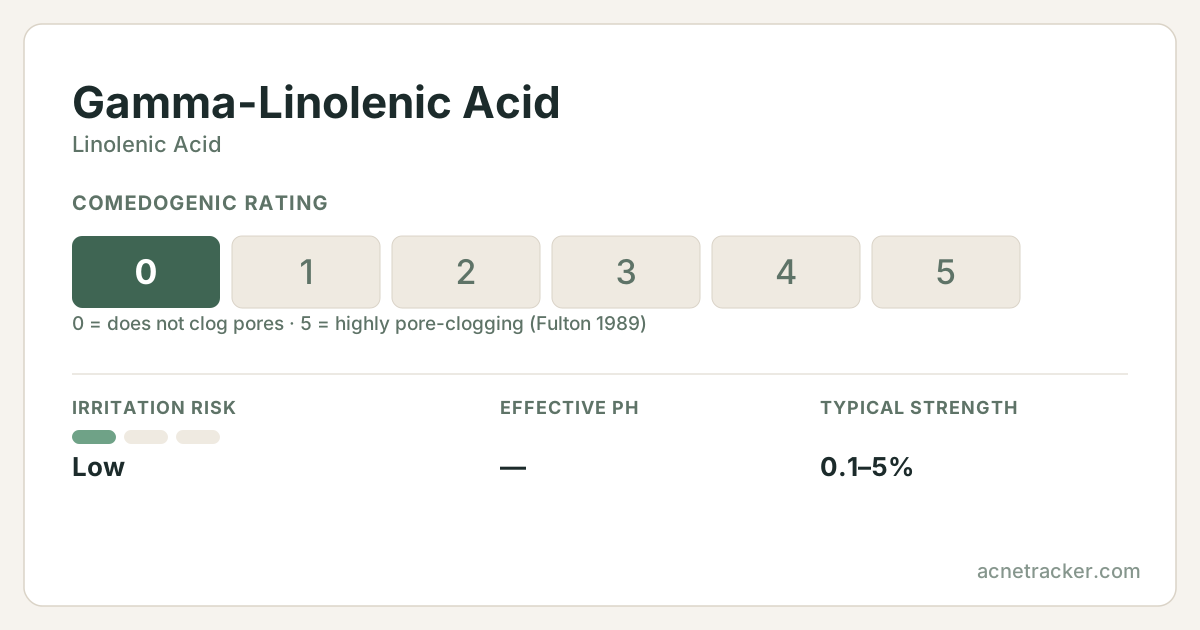
- Comedogenic rating
- our estimate — not measured
- Irritation risk
- Low
- Effective pH
- —
- Typical strength
- 0.1–5%
- Pregnancy
- Considered safe
- Suits skin types
- drysensitivematureacne-pronenormal
Where this number comes from
No one has published a comedogenic rating for this ingredient. Fulton's 1989 table tested about 250 raw materials and this was not among them, and we found no later study measuring it. The figure shown is our own reasoning from the ingredient's chemistry and how it is used — treat it as an estimate, not a measurement.
Fulton read his own scale as 0-1 not significant, 2-3 borderline, 4-5 positive. The assay is the rabbit ear at 10% dilution, which the paper itself calls extremely sensitive and not fully predictive of human skin. Ratings describe the raw ingredient; concentration and formulation change real-world behaviour.
Caution profile
The four published fields on this page, on one 0–5 scale. Further from the centre means more care is needed — never that the ingredient is worse.
Derived, not measured: pore-clogging is the published comedogenic rating; irritation maps low/moderate/high to 1/3/5; pregnancy maps safe/caution/avoid to 0/3/5; skin-type limits is how many of the seven skin types this entry does NOT list. Every input is printed in words in the quick-facts card above.
Show the numbers
| Metric | 0–5 | Published field |
|---|---|---|
| Pore-clogging | 0 | 0/5 |
| Irritation | 1 | Low |
| Skin-type limits | 1.4 | 5/7 |
| Pregnancy | 0 | Considered safe |
Working pH and typical strength
Where this ingredient is formulated to sit, and at what concentration.
Both bars come from the fields above: the pH window and the typical strength range published for this ingredient. The tinted column is healthy skin's surface pH (about 4.7–5.75).
Show the numbers
| Metric | 0–5 |
|---|---|
| Typical strength | 0.1–5% |
What is it?
Gamma-linolenic acid is a polyunsaturated omega-6 fatty acid with eighteen carbons and three double bonds. Unlike common linoleic acid, GLA is metabolised into dihomo-gamma-linolenic acid and then into anti-inflammatory prostaglandins, which is the basis of its calming reputation. In the skin it contributes to the lipid barrier, and it has long been valued in oils aimed at dry, reactive skin. On INCI lists it may simply appear as Linolenic Acid, or you will recognise it through its plant carriers: borage (Borago officinalis), evening primrose (Oenothera biennis) and blackcurrant seed oils. Like other polyunsaturated fatty acids it is prone to oxidation, so freshness matters.
Benefits
Calms inflammation
GLA is converted into anti-inflammatory messengers in the skin, which helps soothe the redness and irritation seen in eczema-prone, sensitive and reactive complexions.
Reinforces the barrier
As an essential fatty acid, GLA supports the skin's lipid barrier and reduces water loss, easing the dryness and tightness that accompany a compromised barrier.
Soothes without heaviness
GLA-rich oils are comforting yet non-comedogenic, so they calm and nourish reactive skin without the pore-clogging risk of heavier fatty acids.
Supports dry, mature skin
By replenishing essential fatty acids and cushioning the surface, GLA helps dry and mature skin feel more supple, comfortable and resilient over time.
How to use
The easiest way to use GLA is through a facial oil or serum built on borage, evening primrose or blackcurrant seed oil, applied as the last step at night on slightly damp skin. A few drops are enough, and it layers well over water-based serums and under or in place of a moisturiser. It combines nicely with linoleic-rich oils and with barrier ingredients like ceramides and niacinamide. Because GLA oxidises readily, choose fresh products in opaque or dark packaging, store them away from heat and light, and replace them once they smell off. Patch test any new oil for a few nights first.
Side effects
GLA-rich oils are generally very well tolerated and are often chosen specifically for sensitive and reactive skin. The main practical concern is oxidation: rancid oil loses its soothing benefit and can itself irritate, so keep products fresh. A minority of very oily individuals may find any facial oil too rich, but GLA itself is non-comedogenic, so it is a relatively low-risk choice among oils.
Who should avoid it
There is no group that must strictly avoid topical GLA. People with a known allergy to a specific source plant, such as borage or evening primrose, should choose a different carrier or a purified ingredient. Those who dislike any oil texture can look for GLA within a lightweight serum rather than a straight facial oil.
Frequently asked questions
What is gamma-linolenic acid good for?
GLA is prized for calming inflammation and supporting the skin barrier, which makes it useful for dry, sensitive and eczema-prone skin. It comes mainly from borage, evening primrose and blackcurrant seed oils.
Is GLA good for acne-prone skin?
It can be, because it is non-comedogenic and anti-inflammatory. Acne-prone skin that also struggles with redness may benefit, though GLA is not a substitute for dedicated acne actives.
Which oils are high in GLA?
Borage seed oil is the richest source, followed by evening primrose and blackcurrant seed oils. These are the carriers you will usually see recommended when GLA is the goal.
Does GLA clog pores?
No. Gamma-linolenic acid is non-comedogenic, so GLA-rich oils are a lower-risk choice for congestion-prone skin than heavier, oleic-rich or lauric-rich oils.
How should I store GLA oils?
Keep them fresh, in opaque or dark packaging, away from heat and light. GLA is polyunsaturated and oxidises easily, so replace any oil that develops a rancid smell.
Sources & further reading
GLA's anti-inflammatory role is documented mainly through oral supplementation research, and the opinion cited here assesses dietary health claims. Topical GLA-rich oils do supply barrier lipids, but we found no strong trial establishing the soothing and anti-inflammatory effects for skin application.
- PubChem — gamma-Linolenic acid compound summary (CID 5280933)
- European Commission CosIng database — Linolenic Acid
- Scientific Opinion on the substantiation of health claims related to gamma linolenic acid (GLA) and maintenance of normal blood LDL cholesterol concentrations (ID 2661, 4452, 4453), maintenance of normal blood pressure (ID 2662), reduction of menstrual discomfort (ID 495, 640, 1773, 1775), contribution to normal cognitive function (ID 1770), maintenance of the barrier function of the skin (ID 499, 591, 639, 676, 1554, 2003, 2065), "function of the cell membrane" (ID 1769), maintenance of normal structure, elasticity and appearance of the skin (ID 2660, 4296), and "anti-inflammatory properties" (ID 4454) pursuant to Article 13(1) of Regulation (EC) No 1924/2006 (PubMed)oral intake, not topical
Medical disclaimer
Find your personal acne triggers
Our free Acne Tracker lets you log breakouts, sleep, stress and diet, and shows you which factors correlate with your flare-ups.