Calendula Extract: Comedogenic Rating & Ingredient Analysis
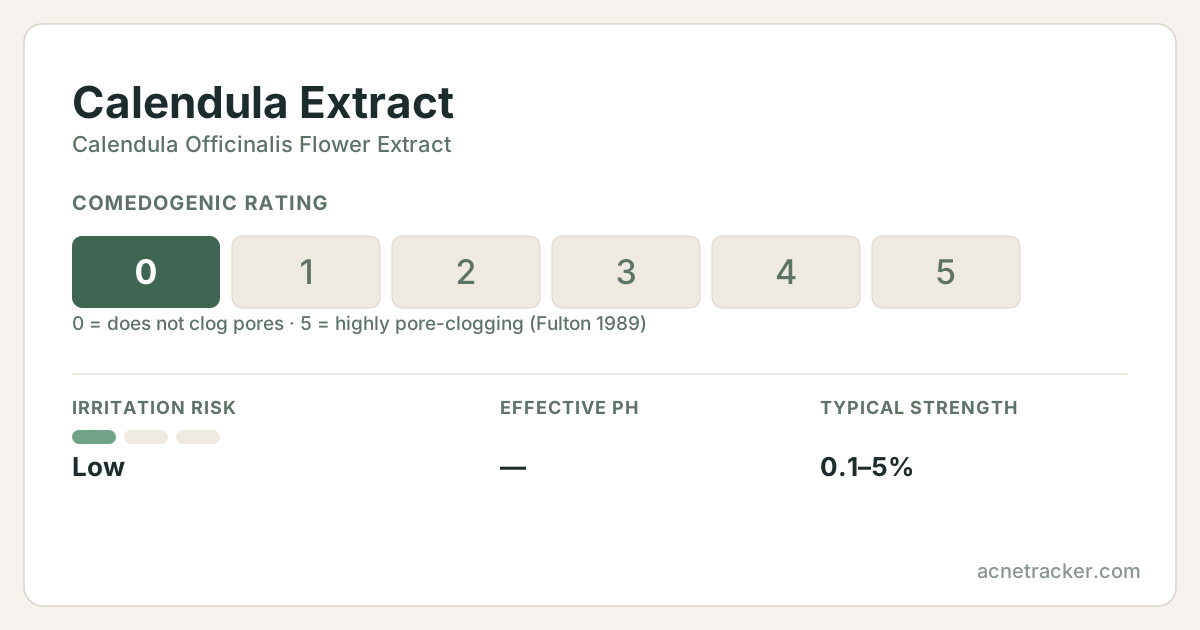
Calendula extract is drawn from the bright orange flowers of the pot marigold, a plant used in folk skincare across Europe for centuries. In modern products it turns up in creams, toners and balms sold for sensitive, reddened or freshly-shaved skin. Its appeal is comfort rather than fireworks: calendula does not exfoliate, bleach or resurface, but it helps skin feel calmer and less reactive. That makes it a popular companion to stronger acne actives, which can leave the skin barrier feeling raw. Because it is water-based and non-oily, calendula extract carries essentially no risk of clogging pores, which is why it appears so often in gentle, everyday formulas.
Quick facts
- Comedogenic rating
- our estimate — not measured
- Irritation risk
- Low
- Effective pH
- —
- Typical strength
- 0.1–5%
- Pregnancy
- Considered safe
- Suits skin types
- sensitivedrynormalcombinationacne-prone
Where this number comes from
No one has published a comedogenic rating for this ingredient. Fulton's 1989 table tested about 250 raw materials and this was not among them, and we found no later study measuring it. The figure shown is our own reasoning from the ingredient's chemistry and how it is used — treat it as an estimate, not a measurement.
Fulton read his own scale as 0-1 not significant, 2-3 borderline, 4-5 positive. The assay is the rabbit ear at 10% dilution, which the paper itself calls extremely sensitive and not fully predictive of human skin. Ratings describe the raw ingredient; concentration and formulation change real-world behaviour.
Caution profile
The four published fields on this page, on one 0–5 scale. Further from the centre means more care is needed — never that the ingredient is worse.
Derived, not measured: pore-clogging is the published comedogenic rating; irritation maps low/moderate/high to 1/3/5; pregnancy maps safe/caution/avoid to 0/3/5; skin-type limits is how many of the seven skin types this entry does NOT list. Every input is printed in words in the quick-facts card above.
Show the numbers
| Metric | 0–5 | Published field |
|---|---|---|
| Pore-clogging | 0 | 0/5 |
| Irritation | 1 | Low |
| Skin-type limits | 1.4 | 5/7 |
| Pregnancy | 0 | Considered safe |
Working pH and typical strength
Where this ingredient is formulated to sit, and at what concentration.
Both bars come from the fields above: the pH window and the typical strength range published for this ingredient. The tinted column is healthy skin's surface pH (about 4.7–5.75).
Show the numbers
| Metric | 0–5 |
|---|---|
| Typical strength | 0.1–5% |
What is it?
Calendula extract is a botanical preparation made by steeping marigold flowers in water, glycerin or another solvent to pull out their active compounds. Those include triterpenoid saponins, flavonoids and carotenoids — the pigments that give the petals their colour and contribute antioxidant activity. Traditional herbalism has long used calendula on minor grazes and chapped skin, and small laboratory and animal studies point to anti-inflammatory and wound-supportive effects. It is important to be honest here: robust, large human trials in cosmetic use are limited, so calendula is best understood as a well-tolerated soothing botanical with a long history of traditional use rather than a proven acne treatment. As a flower-water extract it has a comedogenic rating of 0 and a very low irritation risk.
Benefits
Calms visible redness
Calendula's flavonoids and triterpenoids help settle the look of irritation, making it a gentle choice for skin left red and reactive by acne treatment or over-exfoliation.
Supports skin comfort after breakouts
Traditionally applied to grazed and chapped skin, calendula keeps healing areas feeling supple and comfortable while post-blemish marks fade on their own.
Adds light antioxidant protection
The carotenoid pigments carry antioxidant activity that helps defend against everyday environmental stress, complementing dedicated antioxidants like vitamin-c.
Suits fragile, sensitive skin
As a non-oily, non-comedogenic extract with a low irritation profile, calendula fits into routines for reactive, easily-flushed and barrier-compromised skin.
How to use
Calendula extract is easy to slot into any routine. Look for it in a toner, essence, gel or moisturiser and apply after cleansing, morning and night. It layers happily under sunscreen and over acne actives such as niacinamide or centella-asiatica, and it needs no adjustment period. If you use potent exfoliants or retinoids, a calendula-rich moisturiser can help offset the tight, stinging feeling they sometimes cause. As with any botanical, patch test on the inner forearm for a few days if your skin is very reactive, since plant extracts are a more common source of allergy than synthetic soothers.
Side effects
Calendula is generally very well tolerated. The main concern is allergy: calendula belongs to the daisy (Asteraceae) family, so people allergic to ragweed, chrysanthemums, arnica or other daisy relatives may react with itching or rash. True reactions are uncommon but worth a patch test in sensitive users. Because cosmetic extracts are dilute and water-based, stinging is rare and usually traced to other ingredients such as fragrance or alcohol in the same formula.
Who should avoid it
Anyone with a known allergy to plants in the daisy family — ragweed, marigolds, chrysanthemums, arnica-extract — should avoid calendula or patch test carefully first. Everyone else, including most people with sensitive or acne-prone skin, can generally use it freely. Topical calendula is considered safe in pregnancy, though concentrated internal preparations are not; confirm with your doctor if you are unsure.
Pairs well with
Frequently asked questions
Does calendula extract clog pores?
No. Calendula extract is a water-based flower preparation with a comedogenic rating of 0, so it will not clog pores. This is different from calendula-infused oils, whose pore-clogging potential depends on the carrier oil used.
Is calendula good for acne-prone skin?
It can be a useful soothing addition. Calendula does not treat acne directly, but it calms the redness and discomfort that acne and its treatments cause, and it pairs safely with actives like niacinamide and salicylic-acid.
Can calendula fade acne scars?
Not in the sense of erasing indented scars. Its antioxidants and soothing compounds keep skin comfortable while post-blemish marks fade naturally, but the clinical evidence for scar-fading is limited, so keep expectations realistic.
Who should not use calendula?
People allergic to daisy-family plants (ragweed, chrysanthemums, marigold, arnica) should avoid it or patch test first. For everyone else it is one of the gentlest botanicals available.
Sources & further reading
Medical disclaimer
Find your personal acne triggers
Our free Acne Tracker lets you log breakouts, sleep, stress and diet, and shows you which factors correlate with your flare-ups.