How to Choose a Cleanser for Teen Skin
Teenage skin changes fast: hormones ramp up oil production, pores clog more easily, and breakouts arrive. The instinct — often encouraged by aggressive marketing aimed at teens — is to scrub hard and wash often with the strongest products available. That usually backfires, stripping the barrier, causing irritation and driving even more oil. The better plan is a simple, gentle routine that controls oil without damage. This guide describes the ingredient profile that suits younger, oil-prone skin, the harsh products to skip, and how to keep things simple enough to actually stick to. A cleanser supports clearer skin; it does not need to be punishing to work.
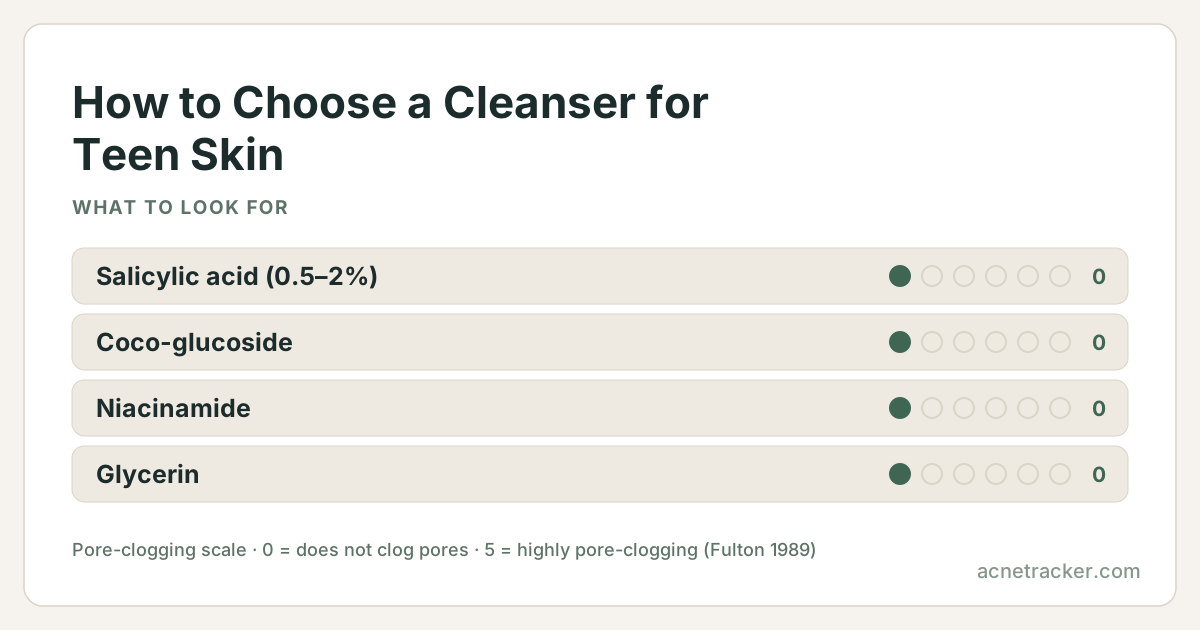
Ingredients to look for
| Ingredient | Why it matters |
|---|---|
| Salicylic acid (0.5–2%) | Oil-soluble, so it helps keep congestion-prone teen pores clearer even in a rinse-off wash. |
| Coco-glucoside | A gentle surfactant that clears excess oil without the stripping that provokes more of it. |
| Niacinamide | A barrier-friendly signal ingredient that suits oil-prone skin and helps keep it balanced. |
| Glycerin | Keeps the wash from over-drying, so skin does not overcompensate with extra oil. |
| Zinc PCA | A mild sebum-regulating addition well suited to shiny, breakout-prone young skin. |
Ingredients to avoid
| Ingredient | Why it matters |
|---|---|
| Harsh scrubs and cleansing brushes marketed to teens | Friction inflames breakouts and spreads oil without cleaning inside the pore. |
| Very strong or high-pH foaming soaps | Strip the barrier and trigger rebound oil, making shine and breakouts worse. |
| Denatured alcohol high on the list | Feels matte for a moment, then dries and irritates young skin into producing more oil. |
| Piling on many strong actives at once | Overwhelms the barrier; a simple routine is easier to keep up and gentler on the skin. |
How to choose
Keep it simple and gentle. A basic gel cleanser with a mild surfactant and glycerin covers most teenage skin; a version with 0.5–2% salicylic acid is a reasonable choice if breakouts and congestion are a feature. Avoid the harsh scrubs, brushes and strong foaming soaps often marketed to teenagers, and do not stack multiple strong actives. Ignore 'deep-cleansing', 'oil-blasting' and similar claims — the gentle ingredient list matters more than the promise. Cost is not a measure of quality here; an affordable, well-formulated wash works as well as an expensive one. The real test is that skin feels clean but comfortable after rinsing, never tight or stinging, and that the routine is simple enough to keep doing twice a day without giving up.
How to apply
Wash twice a day, morning and evening, plus after sport — not more, since over-washing worsens oil and irritation. Use lukewarm water and fingertips, massaging gently for about 30–60 seconds, then rinse. Resist scrubbing or picking at spots, which prolongs healing and can scar. Always follow with a light, oil-free moisturiser, even on oily skin, so the barrier stays balanced. Keep the whole routine short: a gentle cleanser, a moisturiser and, in the daytime, sunscreen is genuinely enough for most teenage skin.
Frequently asked questions
Do teenagers need a special cleanser?
Not a special one, just a gentle, appropriate one. Teen skin is often oilier and more breakout-prone, so a mild gel cleanser, optionally with salicylic acid, suits it well. The harsh scrubs marketed to teens usually do more harm than good.
How often should a teenager wash their face?
Twice a day, morning and evening, plus after heavy sweating or sport. Washing more often strips the barrier and can increase oil and irritation, so more is not better even when skin feels greasy.
Should teens with oily skin skip moisturiser?
No. Even oily teenage skin needs a light, oil-free moisturiser, because stripping it of moisture triggers more oil. Skipping moisturiser tends to make shine and breakouts worse, not better.
Is expensive skincare better for teenage acne?
Not necessarily. A simple, affordable gentle cleanser and moisturiser work as well as pricey ones. If acne is persistent or upsetting, seeing a doctor is more valuable than expensive products, since effective treatments are available.
Sources & further reading
There is no single study of this exact question. The guidance here is reasoned from the ingredient profiles below, each of which carries its own references:
- Salicylic Acid2 refs
- Coco-Glucoside2 refs
- Niacinamide2 refs
- Glycerin3 refs
- Zinc PCA3 refs
Show every reference behind this page (9)
- Salicylic acid as a peeling agent: a comprehensive review (PubMed)cited by Salicylic Acid
- FDA OTC monograph — acne drug products (salicylic acid 0.5–2%)cited by Salicylic Acid
- European Commission CosIng — Coco-Glucosidecited by Coco-Glucoside, Niacinamide, Glycerin, Zinc PCA
- Cosmetic Ingredient Review — safety of alkyl glucosidescited by Coco-Glucoside
- Niacinamide: mechanisms of action and its topical use in dermatology (PubMed)cited by Niacinamide
- PubChem — Glycerol compound summarycited by Glycerin
- DermNet — Moisturiserscited by Glycerin
- PubChem — Zinc PCA (zinc pyrrolidone carboxylate)cited by Zinc PCA
- Zinc l-pyrrolidone carboxylate inhibits the UVA-induced production of matrix metalloproteinase-1 by in vitro cultured skin fibroblasts, whereas it enhances their collagen synthesis (PubMed)cited by Zinc PCA
Medical disclaimer
Ingredients mentioned on this page
Find your personal acne triggers
Our free Acne Tracker lets you log breakouts, sleep, stress and diet, and shows you which factors correlate with your flare-ups.