Hormonal Acne on the Back
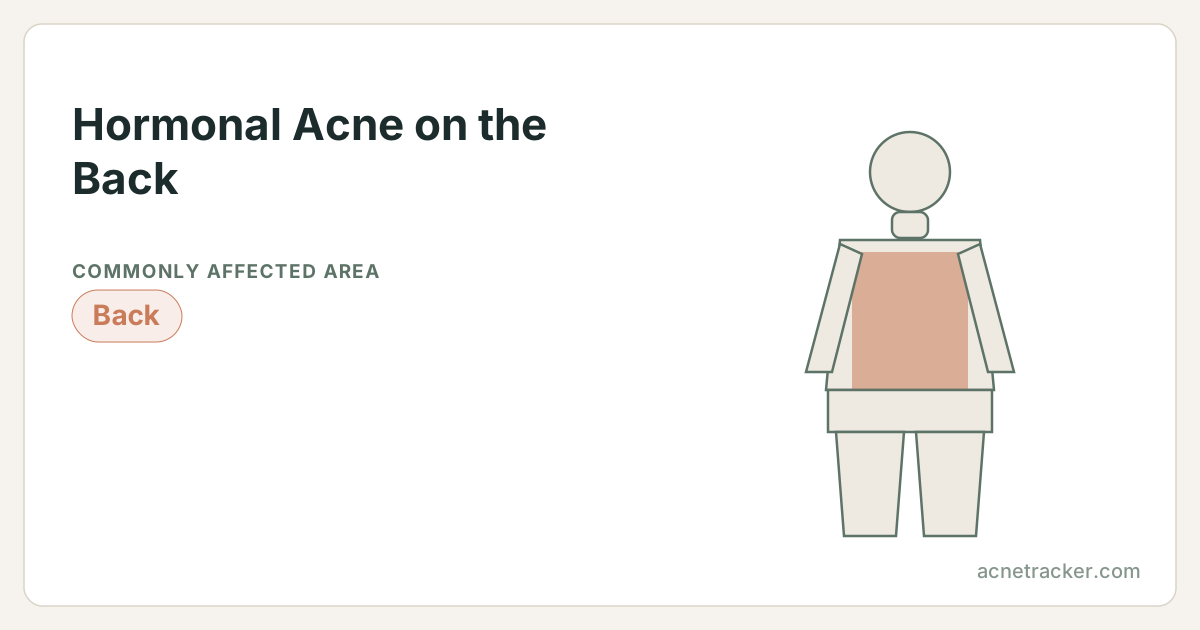
Back acne is not only a matter of sweat and friction; for many people hormones are a major driver. Androgens stimulate the back's large oil glands to overproduce sebum, and when hormone levels shift — around the menstrual cycle, during puberty, in times of stress, or with conditions like PCOS — that surge can trigger deeper, sorer breakouts across the shoulders and upper back. Hormonally driven back acne tends to be more stubborn and cyclical than the surface congestion of ordinary bacne, and it often needs a combination of consistent topical care and, in persistent cases, medical treatment aimed at the hormonal root.
How to recognize it
Hormonally influenced back acne tends toward deeper, tender papules and nodules rather than just surface blackheads, often clustering on the upper back and shoulders and recurring in the same areas. A telling feature is timing: flares that track the menstrual cycle, appear under stress, or worsen through puberty point to a hormonal component. It frequently accompanies hormonal acne on the jawline and chin. If instead the bumps are small, uniform and itchy, fungal folliculitis is more likely; visible blood vessels and flushing suggest a different condition entirely.
What causes it
Androgen-driven oil production
Androgens enlarge the back's oil glands and push them to overproduce sebum. Because these glands are large to begin with, hormonal surges produce deep, stubborn blockages that inflame into papules and nodules.
Menstrual cycle fluctuations
In the week before a period, the shift in the estrogen-to-progesterone balance raises relative androgen activity, so many people notice their back breaks out on a predictable monthly rhythm.
Puberty and adolescence
The rise in androgens during puberty commonly triggers truncal acne, and the back and shoulders are among the first and most affected areas, often alongside the face.
PCOS and endocrine factors
Persistent, severe back acne with irregular periods, excess body hair or scalp thinning can signal polycystic ovary syndrome or another hormonal condition, which deserves medical assessment rather than skincare alone.
Ingredients with evidence
| Ingredient | Role |
|---|---|
| Salicylic acid (BHA) | Clears the deep follicular blockages hormonal oil creates; a leave-on 2% body spray used a few evenings a week reaches the back. |
| Benzoyl peroxide wash | Reduces the bacteria that turn hormonal clogs into inflamed lumps; a 4–5% wash a few times a week. |
| Azelaic acid | Anti-inflammatory and helps fade marks, a good tolerated option across the body while other treatments take effect. |
| Adapalene | A retinoid that normalizes cell turnover so deep clogs form less readily; apply thinly at night to reachable areas. |
| Hormonal therapy (doctor-led) | Combined contraceptives or spironolactone can address the hormonal driver of persistent truncal acne; prescribed and monitored only by a doctor, never self-started. |
Building the routine
Treat consistently rather than reactively, and time it to your pattern if you can. Use a benzoyl-peroxide body wash a few times a week and a leave-on salicylic-acid spray on alternate evenings to keep the back's deep clogs clear, with azelaic acid or a thin layer of adapalene to calm inflammation and slow new lesions. Moisturise lightly and use SPF on any exposed back skin, since acids and retinoids raise sun sensitivity. If your back flares before periods, starting active treatment a week ahead often works better than reacting once lumps appear. Persistent hormonal back acne, though, usually needs medical treatment aimed at the hormones themselves.
When to see a doctor
Frequently asked questions
Can back acne be hormonal?
Yes. Androgens drive the back's large oil glands, so hormonal shifts around the cycle, puberty, stress or conditions like PCOS can trigger deep back breakouts. Hormonal bacne tends to be sorer, more cyclical and more stubborn than surface congestion.
How do I know if my back acne is hormonal?
Clues include deep, tender lumps rather than just blackheads, flares that track your menstrual cycle or stress, recurrence in the same spots, and acne appearing alongside jawline breakouts. A doctor can assess for an underlying hormonal cause.
Does the pill help hormonal back acne?
For some people combined contraceptives reduce androgen-driven acne, including on the back, but they are a prescription decision made with a doctor who weighs the benefits and risks for you. They are not something to start on your own for skin.
Why does my back break out before my period?
In the week before a period, relative androgen activity rises, stimulating the back's oil glands and triggering deeper breakouts. Starting a consistent topical routine ahead of that window often manages the monthly flare better than reacting to it.
Sources & further reading
What this page cites about the condition itself:
There is no single study of this exact question. The guidance here is reasoned from the ingredient profiles below, each of which carries its own references:
- Salicylic Acid2 refs
- Benzoyl Peroxide3 refs
- Azelaic Acid3 refs
- Adapalene3 refs
Show every reference behind this page (9)
- Salicylic acid as a peeling agent: a comprehensive review (PubMed)cited by Salicylic Acid
- FDA OTC monograph — acne drug products (salicylic acid 0.5–2%)cited by Salicylic Acid, Benzoyl Peroxide, Adapalene
- PubChem — Benzoyl peroxide compound summarycited by Benzoyl Peroxide
- DermNet — Benzoyl peroxidecited by Benzoyl Peroxide
- PubChem — Azelaic acid compound summarycited by Azelaic Acid
- DermNet — Azelaic acidcited by Azelaic Acid
- European Commission CosIng database — Azelaic Acidcited by Azelaic Acid
- PubChem — Adapalene compound summarycited by Adapalene
- DermNet — Adapalenecited by Adapalene
Medical disclaimer
Ingredients mentioned on this page
Find your personal acne triggers
Our free Acne Tracker lets you log breakouts, sleep, stress and diet, and shows you which factors correlate with your flare-ups.