Back Acne in Men
Back acne is especially common in men, and it often runs more severe than on the face. Higher androgen levels drive the back's large oil glands hard, so men tend to produce more sebum and develop deeper, more widespread truncal breakouts, particularly through the teens and twenties. Add the sweat and friction of sport and manual work, body hair that can trap oil, and a tendency to skip skincare, and bacne becomes one of the most common skin complaints men bring to a doctor. The reassuring part is that it responds well to a straightforward, no-fuss routine built around body-appropriate ingredients and habits.
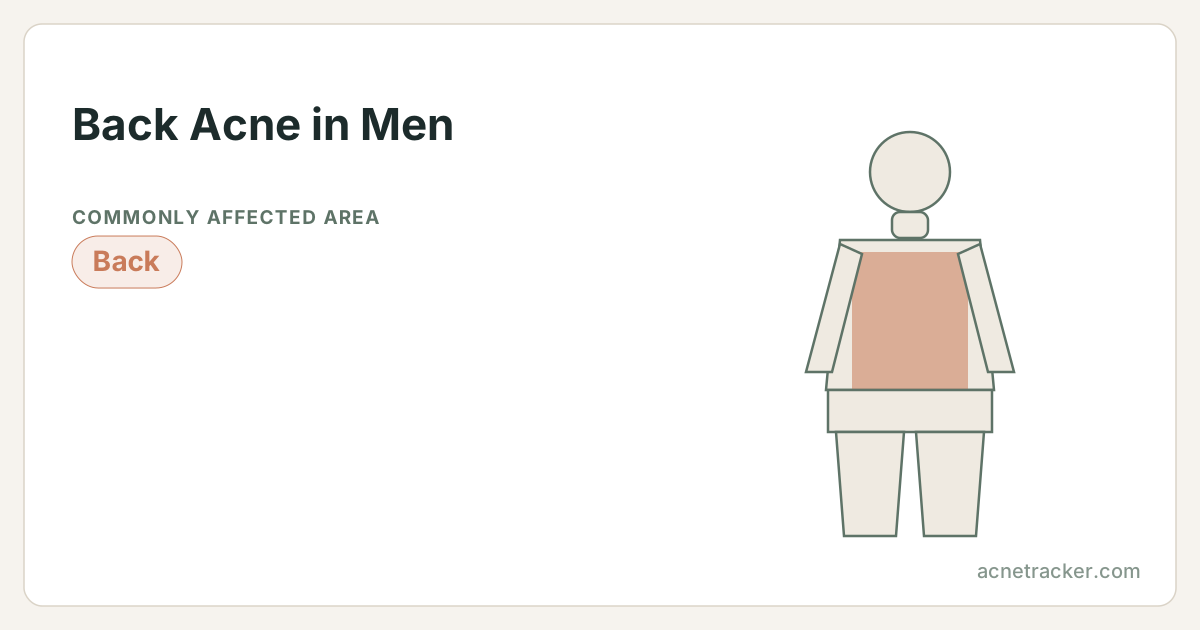
How to recognize it
In men, back acne often covers a broad area of the upper back and shoulders with a mix of blackheads, inflamed papules and pustules, and in more severe cases deep nodules and cysts that can scar. It tends to be denser and more persistent than the odd facial spot, and body hair can make individual lesions harder to see and treat. If breakouts are uniform, itchy bumps that flare after training, fungal folliculitis may be involved; deep, recurring lumps that scar suggest severe acne needing medical care.
What causes it
Higher androgen levels
Men's naturally higher testosterone drives the large oil glands of the back to produce more sebum, creating the deeper, more widespread blockages behind more severe truncal acne, especially in the teens and twenties.
Sport, sweat and manual work
Training, physical jobs and heavy sweating leave the back warm, damp and rubbed by kit and clothing, plugging follicles and tipping congestion into inflamed spots.
Body hair and trapped oil
Coarser, denser back hair in many men can trap sweat and oil against the skin around follicles, adding to congestion and making thorough cleansing and product contact harder.
Skipping skincare
Men are statistically less likely to follow a consistent routine, so the back often goes untreated until acne is well established, allowing widespread and sometimes scarring breakouts to develop.
Ingredients with evidence
| Ingredient | Role |
|---|---|
| Benzoyl peroxide wash | The simplest effective step for men's bacne; a 4–5% body wash a few times a week reduces bacteria over the whole back. |
| Salicylic acid (BHA) | A leave-on 2% spray clears blackheads and congestion, and reaches areas hard to cover by hand. |
| Adapalene | A retinoid that steadily reduces new clogs and spots; apply thinly at night to reachable areas. |
| Azelaic acid | Calms inflammation and fades marks, well tolerated over the large surface of a man's back. |
| Prescription oral therapy (doctor-led) | Severe, scarring truncal acne in men is a common reason dermatologists consider oral antibiotics or isotretinoin; decided and supervised only by a doctor. |
Building the routine
Keep it minimal so it actually gets done. In the shower, use a benzoyl-peroxide body wash on the back three or four times a week, letting it sit a couple of minutes; on other days a plain gentle wash is fine. After showering, mist a leave-on salicylic-acid spray over the back, and add a thin layer of adapalene at night a few times a week. Finish with a light moisturiser. The habits matter as much as the products: shower right after training or sweaty work, change out of damp clothes, wear breathable tops, and wash gym gear and sheets regularly. Give it eight to twelve weeks of consistency before judging results.
When to see a doctor
Frequently asked questions
Why do men get back acne more than women?
Men's higher testosterone drives the back's oil glands harder, producing more sebum and more severe, widespread truncal acne. Combined with heavy sweating from sport and work, this makes bacne both more common and often more severe in men.
What is the easiest routine for men's back acne?
A benzoyl-peroxide body wash in the shower a few times a week, a leave-on salicylic-acid spray afterwards, and showering promptly after sweating covers most cases. It is low-effort and effective; deep or scarring acne needs a doctor.
Does body hair make back acne worse?
It can, by trapping sweat and oil against the skin and making cleansing and product contact harder. Keeping the area clean and using a spray that reaches through hair helps; there is no need to remove hair specifically for acne.
Should men consider isotretinoin for back acne?
Only through a dermatologist. Severe, scarring truncal acne is a recognised reason to consider isotretinoin, but it is a prescription treatment with monitoring requirements. A doctor decides whether it is appropriate and supervises it; it is never self-started.
Sources & further reading
What this page cites about the condition itself:
There is no single study of this exact question. The guidance here is reasoned from the ingredient profiles below, each of which carries its own references:
- Benzoyl Peroxide3 refs
- Salicylic Acid2 refs
- Adapalene3 refs
- Azelaic Acid3 refs
Show every reference behind this page (9)
- PubChem — Benzoyl peroxide compound summarycited by Benzoyl Peroxide
- DermNet — Benzoyl peroxidecited by Benzoyl Peroxide
- FDA — Drugs (OTC acne products)cited by Benzoyl Peroxide, Salicylic Acid, Adapalene
- Salicylic acid as a peeling agent: a comprehensive review (PubMed)cited by Salicylic Acid
- PubChem — Adapalene compound summarycited by Adapalene
- DermNet — Adapalenecited by Adapalene
- PubChem — Azelaic acid compound summarycited by Azelaic Acid
- DermNet — Azelaic acidcited by Azelaic Acid
- European Commission CosIng database — Azelaic Acidcited by Azelaic Acid
Medical disclaimer
Ingredients mentioned on this page
Find your personal acne triggers
Our free Acne Tracker lets you log breakouts, sleep, stress and diet, and shows you which factors correlate with your flare-ups.