Razor Bumps on the Legs
Razor bumps are the price of a shaving technique that the skin disagrees with, and legs get them more than anywhere else simply because legs get shaved more than anywhere else. Two separate things hide under the name. The first is irritation — the razor scraped the surface, and the skin responded with redness and small bumps within hours. The second is pseudofolliculitis, where a cut hair re-enters the skin and provokes a genuine inflammatory reaction over the following days. They need different fixes, and the giveaway is timing: irritation arrives almost immediately and fades fast, while pseudofolliculitis takes a day or two to build and lasts a week or more.
How to recognize it
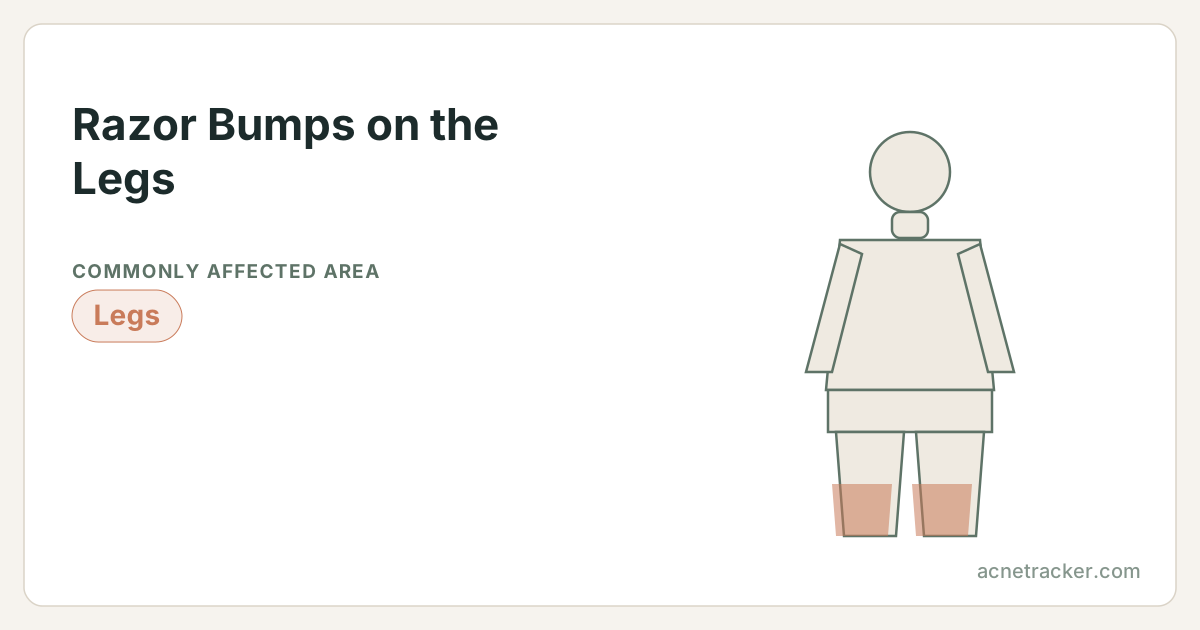
Immediate razor burn is a diffuse pink flush with fine bumps over the whole shaved area, stinging rather than sore, and it settles within a day. Pseudofolliculitis is different: discrete firm bumps, one per follicle, appearing forty-eight hours later, each sometimes with a dark hair looped visibly beneath the surface. These concentrate where the hair grows at an angle and where you shaved most aggressively — shins, ankles and the back of the knee. On medium and deeper skin tones both leave brown marks as they resolve, and it is usually the marks rather than the bumps that people are really unhappy about, since they outlast the bump by months.
What causes it
A blade that has stopped cutting
A dull blade does not cut hair, it tugs it and then scrapes skin. Most people use a cartridge far past the point where it drags. If you feel pulling rather than gliding, the blade became a source of trauma several shaves ago and no shaving cream will compensate for it.
Shaving against the grain
Going against the direction of growth cuts the hair below the surface level. It gives a closer shave for a day, and the price is that the sharp tip is now positioned to grow into the follicle wall rather than out of it — which is precisely the mechanism of pseudofolliculitis.
Dry shaving or shaving too fast
Hair that has not been softened in warm water for a few minutes is tough, and the blade needs more force to cut it. More force means more surface removed alongside the hair. The shower-at-the-end rather than shower-at-the-start ordering matters more than most people think.
Repeated passes over the same strip
Going back over an area two or three times to chase a missed hair removes the surface layer repeatedly. The legs are large and this happens without noticing, which is why bumps often cluster in the specific patches you always re-do rather than spreading evenly.
Coarse or curly leg hair
The curlier and coarser the hair, the more strongly it curves back toward the skin after cutting, and the higher the risk of it re-entering. This is a structural matter rather than a technique failure, and it is why some people get bumps from a shave that leaves others untouched.
Ingredients with evidence
| Ingredient | Role |
|---|---|
| Salicylic acid (BHA) | Used on non-shaving days, it keeps the follicle opening clear so a curling hair is less likely to be trapped under a layer of dead surface skin. |
| Glycolic acid (AHA) | Smooths the surface and, over months, works on the brown marks left behind. Do not use it on the same day you shave — the skin is already stripped. |
| Azelaic acid | Calms the inflammatory bump and addresses the pigment mark at once, which suits legs where the mark is the longer-lasting complaint. |
| Niacinamide | Barrier support for skin scraped weekly, plus some reduction in the redness phase. Gentle enough for the day after a shave. |
| Allantoin | Soothing and well tolerated on freshly shaved skin, which is exactly when most actives sting and should be left in the cupboard. |
Building the routine
The fix is the shave, not the shelf. Shave at the end of a warm shower, never at the start, so the hair has had several minutes to soften. Use a blade you replace before it drags, go with the direction of growth even though the result is slightly less smooth, and accept one pass. Rinse, pat dry, and moisturise while the skin is still damp. On the days between, use a chemical exfoliant rather than a scrub — a loofah on legs that shave weekly is a reliable way to keep them inflamed. Never shave over an active bump. If bumps persist despite a genuinely corrected technique, the honest answer is that your hair may simply be too curly for a blade, and switching method beats optimising the shave.
When to see a doctor
Frequently asked questions
Should I shave with or against the grain on my legs?
With the grain, if you get bumps. Against the grain cuts the hair below the surface so the tip is aimed at the follicle wall rather than out of it. You lose a small amount of smoothness for a day and avoid the mechanism that causes the bumps entirely.
How often should I change my razor blade?
Before it drags rather than on a schedule, because hair coarseness and shaving area vary hugely. The test is feel: gliding means it is cutting, tugging means it is scraping. Most people who get razor bumps are several shaves past that point.
Why do I get razor bumps on my legs but my friend does not?
Largely hair structure. Curlier, coarser hair curves back toward the skin after cutting and is far more likely to re-enter the follicle. That is not something technique fully overrides, which is why the same shave produces bumps on one person and nothing on another.
Does exfoliating before shaving prevent razor bumps?
Chemical exfoliation between shaves helps, because it stops hairs being trapped under dead surface skin. Physical scrubbing right before you shave does the opposite: you have then stripped the surface twice in five minutes, and the skin is more reactive, not less.
Sources & further reading
What this page cites about the condition itself:
There is no single study of this exact question. The guidance here is reasoned from the ingredient profiles below, each of which carries its own references:
- Salicylic Acid2 refs
- Glycolic Acid3 refs
- Azelaic Acid3 refs
- Niacinamide2 refs
- Allantoin3 refs
Show every reference behind this page (10)
- Salicylic acid as a peeling agent: a comprehensive review (PubMed)cited by Salicylic Acid
- FDA OTC monograph — acne drug products (salicylic acid 0.5–2%)cited by Salicylic Acid
- PubChem — Glycolic acid compound summarycited by Glycolic Acid
- DermNet — Alpha hydroxy acidscited by Glycolic Acid
- European Commission CosIng database — Glycolic Acidcited by Glycolic Acid, Azelaic Acid, Niacinamide, Allantoin
- PubChem — Azelaic acid compound summarycited by Azelaic Acid
- DermNet — Azelaic acidcited by Azelaic Acid
- Niacinamide: mechanisms of action and its topical use in dermatology (PubMed)cited by Niacinamide
- PubChem — Allantoin compound summarycited by Allantoin
- Final report of the safety assessment of allantoin and its related complexes (PubMed)cited by Allantoin
Medical disclaimer
Ingredients mentioned on this page
Find your personal acne triggers
Our free Acne Tracker lets you log breakouts, sleep, stress and diet, and shows you which factors correlate with your flare-ups.