Pustules on the Back
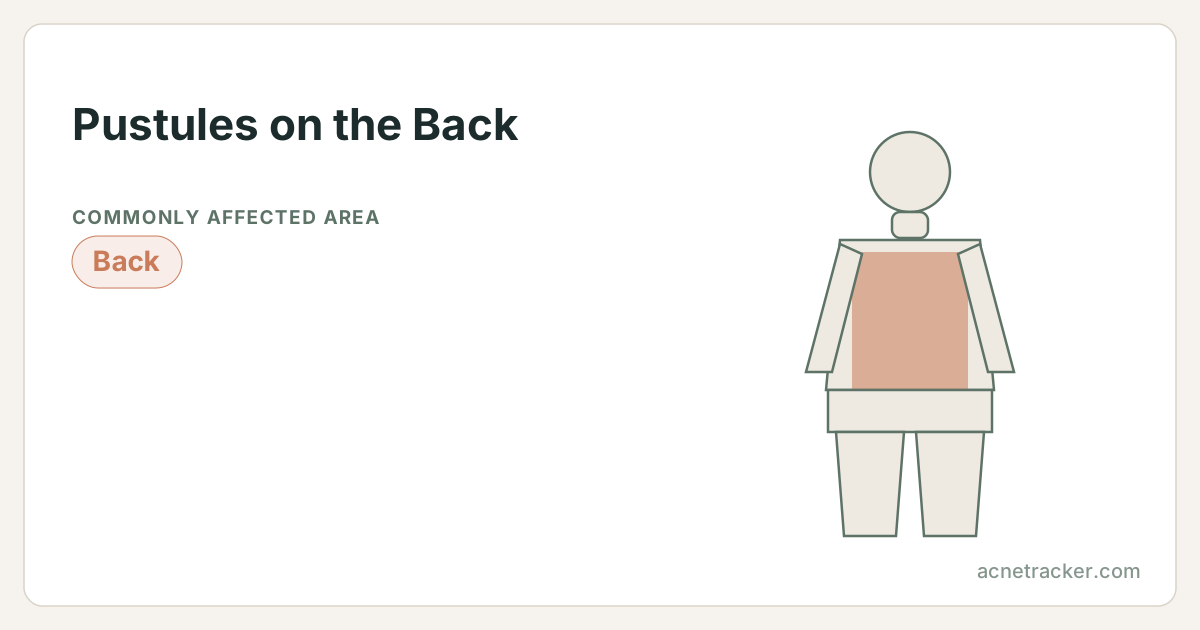
Pustules are the classic pus-filled spots of back acne: red, inflamed bumps topped with a visible white or yellow head. They form when an inflamed follicle fills with dead cells, oil and the debris of the immune response, and on the back they cluster across the shoulders and upper back wherever oil, sweat and friction combine. Tempting as the white heads are to squeeze, doing so on the back tends to spread bacteria and leave marks. Pustules respond well to antibacterial washes and pore-clearing actives, and most cases clear with a steady, body-appropriate routine rather than aggressive intervention.
How to recognize it
A back pustule is a raised, red-based spot with a defined white or yellow centre of pus, usually a few millimetres across and tender. Pustules sit on the surface, unlike the deep, headless lumps of cystic acne, and often appear in crops mixed with red papules across the upper back. If the spots are tiny, uniform, itchy and all the same size, especially after sweating, suspect fungal folliculitis instead, which can look pustular but needs anti-fungal rather than antibacterial treatment.
What causes it
Inflammation with pus formation
When acne bacteria multiply inside a blocked follicle, immune cells rush in and the mix of dead cells and fluid forms visible pus. The back's large follicles make this a common outcome of inflamed breakouts there.
Sweat, heat and bacteria
Warm, damp skin under clothing is ideal for bacteria to flourish around clogged pores, tipping papules into pus-filled pustules, which is why they often flare after workouts and in hot weather.
Friction from clothing and gear
Backpacks, tight tops and sports equipment rub inflamed follicles and spread bacteria across the shoulders and upper back, encouraging more pustules to form nearby.
Squeezing and picking
Bursting pustules on the back pushes bacteria and pus into surrounding skin and onto other follicles, often multiplying the breakout and raising the risk of marks and scars.
Ingredients with evidence
| Ingredient | Role |
|---|---|
| Benzoyl peroxide wash | The most useful ingredient for pustular back acne; a 4–5% wash kills the bacteria driving pus formation across the whole back. |
| Salicylic acid (BHA) | Clears the clogged follicle beneath the pustule; a 2% body spray reaches areas a hand cannot. |
| Azelaic acid | Anti-bacterial and anti-inflammatory, and helps fade the marks pustules leave once they heal. |
| Adapalene | A retinoid that reduces the formation of new inflamed lesions over weeks; apply thinly at night to reachable areas. |
| Niacinamide | Calms the surrounding redness and supports the barrier during antibacterial treatment over a large area. |
Building the routine
Lead with benzoyl peroxide. Use a 4–5% benzoyl-peroxide body wash on the back two or three times a week, lathering and leaving it a couple of minutes before rinsing, to cut the bacteria behind the pus. On other evenings, a leave-on 2% salicylic-acid spray clears the follicle blockage, and azelaic acid helps calm inflammation and marks. Add a thin layer of adapalene at night to slow new spots. Always moisturise lightly, shower promptly after sweating, and choose loose, breathable clothing. Do not squeeze the white heads on your back — it spreads bacteria you cannot see and worsens the breakout. Expect steady improvement over six to eight weeks.
When to see a doctor
Frequently asked questions
Should I pop pustules on my back?
No. Even though pustules have a head, squeezing them on the back spreads bacteria and pus to nearby skin, worsens the breakout and can cause marks or scars. Antibacterial washes and pore-clearing actives resolve them more safely.
What is the fastest way to treat pustules on the back?
A benzoyl-peroxide body wash used consistently is the most effective over-the-counter step, since it targets the bacteria causing the pus. Pair it with salicylic acid and prompt showering after sweat, and give it a few weeks.
Why do I get pus-filled spots on my back after the gym?
Exercise creates warm, sweaty, occluded skin where bacteria thrive around clogged follicles, tipping them into pustules. Showering soon after training, changing out of damp kit and using a benzoyl-peroxide wash reduces post-workout flares.
Could my back pustules be fungal rather than bacterial?
Possibly. Fungal folliculitis can look pustular but appears as many uniform, itchy bumps that flare with sweat and do not respond to antibacterial products. If benzoyl peroxide is not helping, ask a doctor to check for yeast.
Sources & further reading
What this page cites about the condition itself:
There is no single study of this exact question. The guidance here is reasoned from the ingredient profiles below, each of which carries its own references:
- Benzoyl Peroxide3 refs
- Salicylic Acid2 refs
- Azelaic Acid3 refs
- Adapalene3 refs
- Niacinamide2 refs
Show every reference behind this page (10)
- PubChem — Benzoyl peroxide compound summarycited by Benzoyl Peroxide
- DermNet — Benzoyl peroxidecited by Benzoyl Peroxide
- FDA — Drugs (OTC acne products)cited by Benzoyl Peroxide, Salicylic Acid, Adapalene
- Salicylic acid as a peeling agent: a comprehensive review (PubMed)cited by Salicylic Acid
- PubChem — Azelaic acid compound summarycited by Azelaic Acid
- DermNet — Azelaic acidcited by Azelaic Acid
- European Commission CosIng database — Azelaic Acidcited by Azelaic Acid, Niacinamide
- PubChem — Adapalene compound summarycited by Adapalene
- DermNet — Adapalenecited by Adapalene
- Niacinamide: mechanisms of action and its topical use in dermatology (PubMed)cited by Niacinamide
Medical disclaimer
Ingredients mentioned on this page
Find your personal acne triggers
Our free Acne Tracker lets you log breakouts, sleep, stress and diet, and shows you which factors correlate with your flare-ups.