Hormonal Acne on the Chin
The chin sits at the very centre of the lower face, the zone where oil glands respond most strongly to androgen hormones. That is why so many people find their breakouts drift downward toward the chin over their twenties and thirties, even when the rest of the face behaves. Hormonal chin acne is rarely about being dirty; it reflects how sensitive the follicles here are to normal hormonal shifts across the month. Because the trigger comes from inside, aggressive scrubbing and drying spot treatments tend to backfire, leaving the surface raw while the deeper bump keeps building. A steady routine that regulates oil and turnover usually does far more than any single quick fix.
How to recognize it
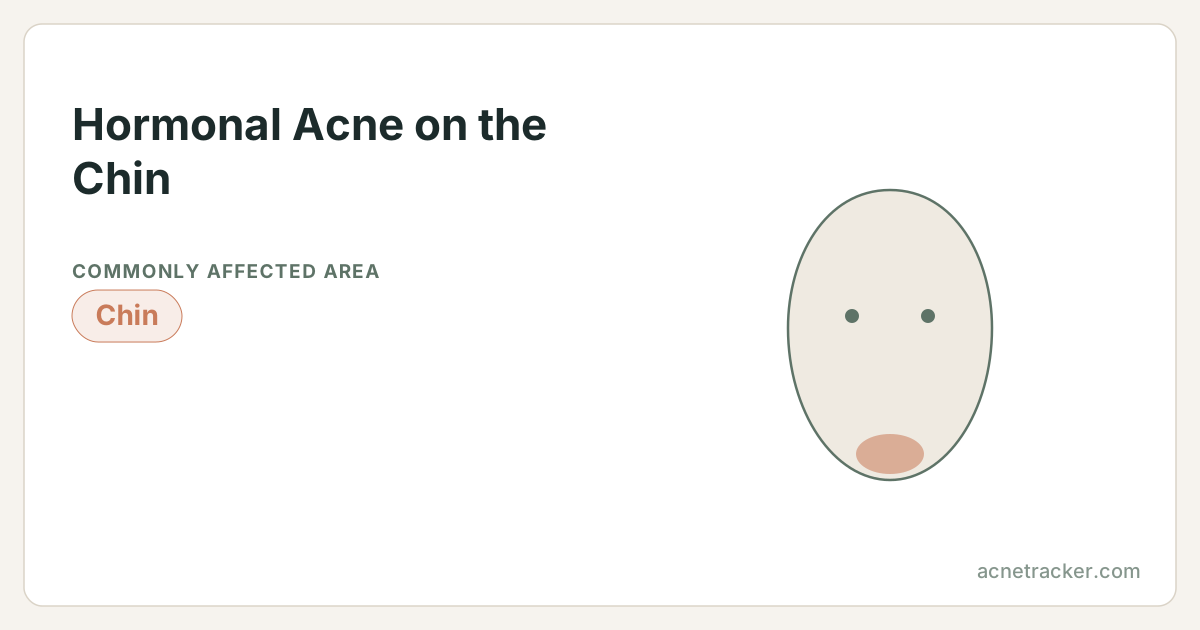
Hormonal acne on the chin typically shows up as a small cluster of deep, tender bumps that sit low and central, sometimes spilling slightly toward the corners of the mouth. The spots feel sore before anything is visible and often lack a clear white head, because the congestion is buried rather than surface level. They tend to reappear in roughly the same patch month after month. If instead you see fine, evenly scattered tiny bumps that itch, or persistent redness with flushing, a fungal or rosacea-type pattern is more likely and needs a different approach.
What causes it
Androgen-sensitive glands
The chin carries a high density of oil glands richly supplied with androgen receptors. Ordinary monthly hormone swings can tip these glands into overproduction, seeding the deep plugs that become tender bumps here rather than elsewhere.
Monthly cycle shifts
In the days before a period the balance of reproductive hormones changes and relative androgen activity climbs, so many people notice a predictable chin flare that lands in the same lower-face patch each cycle.
Chin-resting and touching
The chin is the spot people prop on a hand while reading or at a desk. Hours of that pressure, plus oil and bacteria from fingers, push congestion into follicles that are already primed to react.
Coming off or changing contraception
Starting, switching or stopping hormonal birth control shifts the hormonal balance abruptly, and the chin is often where the resulting breakout concentrates for several months until things settle.
Ingredients with evidence
| Ingredient | Role |
|---|---|
| Retinol / retinoids | The long-term backbone: it normalizes shedding inside the follicle so the deep chin plugs form less readily. Build up slowly and judge results at 10–12 weeks. |
| Niacinamide | A daily 4–5% serum lowers oil output and quiets the redness of sore chin bumps while helping the skin tolerate stronger actives. |
| Salicylic acid (BHA) | Used a couple of evenings a week over the chin, it keeps follicles clear as prevention around your usual flare window rather than only during a breakout. |
| Azelaic acid | A gentle anti-inflammatory that also fades the dark marks left behind on the chin, and a sensible choice for reactive skin. |
Building the routine
Aim for consistency over intensity. Cleanse morning and night with something gentle, apply a niacinamide serum daily, and introduce a retinoid two or three evenings a week, spacing it out if the chin gets flaky. On one or two other nights use salicylic acid across the area. Moisturize after every active, because a stripped chin simply makes more oil, and finish each morning with SPF 30 or higher since these ingredients raise sun sensitivity. Resist the urge to squeeze or dab neat spot gels onto deep bumps; the congestion sits too far down to reach and picking almost always leaves a mark. Starting your actives about a week before your usual flare tends to help more than reacting once bumps appear.
When to see a doctor
Frequently asked questions
Why does my hormonal acne always land on my chin?
The chin has a high concentration of oil glands that react strongly to androgen hormones. Normal monthly hormone shifts stimulate exactly these glands, so breakouts settle low and central on the chin even when the rest of your face stays clear.
Is chin acne always hormonal?
Not always, but a hormonal pattern is likely when the bumps are deep and tender, recur in the same lower-face patch, and track your cycle or stress. Surface clogs scattered across the T-zone, or itchy uniform bumps, point to other causes instead.
How long before treatment clears hormonal chin acne?
With a steady topical routine, expect visible improvement over 10–12 weeks. Hormonal acne is managed rather than cured, so maintenance matters, and prescription hormonal therapy usually shows its full effect after three to six months.
Does squeezing chin bumps make them worse?
Usually yes. Deep hormonal bumps have no reachable head, so pressing them mainly pushes inflammation deeper and risks a lasting dark mark or scar. Treating the whole area and leaving individual spots alone gives a far better result.
Sources & further reading
What this page cites about the condition itself:
There is no single study of this exact question. The guidance here is reasoned from the ingredient profiles below, each of which carries its own references:
- Retinol2 refs
- Niacinamide2 refs
- Salicylic Acid2 refs
- Azelaic Acid3 refs
Show every reference behind this page (8)
- Improvement of naturally aged skin with vitamin A (retinol) (PubMed)cited by Retinol
- European Commission SCCS opinion on vitamin A in cosmeticscited by Retinol
- Niacinamide: mechanisms of action and its topical use in dermatology (PubMed)cited by Niacinamide
- European Commission CosIng database — Niacinamidecited by Niacinamide, Azelaic Acid
- Salicylic acid as a peeling agent: a comprehensive review (PubMed)cited by Salicylic Acid
- FDA OTC monograph — acne drug products (salicylic acid 0.5–2%)cited by Salicylic Acid
- PubChem — Azelaic acid compound summarycited by Azelaic Acid
- DermNet — Azelaic acidcited by Azelaic Acid
Medical disclaimer
Ingredients mentioned on this page
Find your personal acne triggers
Our free Acne Tracker lets you log breakouts, sleep, stress and diet, and shows you which factors correlate with your flare-ups.