Hormonal Acne Around the Mouth
The lower third of the face, taking in the chin and the skin around the mouth, is the classic territory of hormonal acne. Oil glands here carry more androgen receptors than elsewhere, so the normal hormonal shifts of the menstrual cycle, stress, and starting or stopping contraception drive them into overproduction. The result is deep, tender, cyclical breakouts that flare on a predictable timetable and sit lower on the face than surface T-zone congestion. Because this pattern is driven from the inside, it responds better to a steady, oil-regulating routine — and sometimes hormonal treatment from a doctor — than to scrubbing or drying the skin around the mouth.
How to recognize it
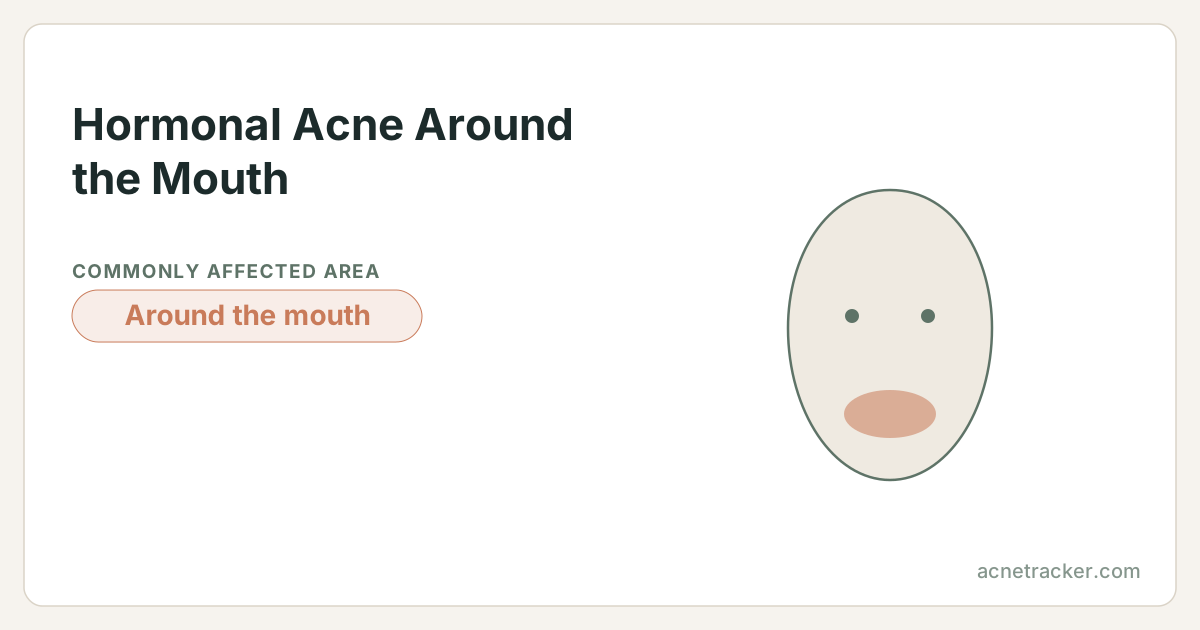
Hormonal acne around the mouth shows as deep, sore papules and occasional cysts under the skin rather than surface whiteheads, clustering on the chin and lower cheeks near the mouth and often recurring in the same spots. The tell is timing: flares track the week before a period or periods of high stress. Compared with a random pimple, these are cyclical and predictable. It is worth separating from perioral dermatitis, a scaly rash that spares the lip rim and worsens with creams, and from friction-driven spots — the hormonal pattern is deep, tender and rhythmic with the cycle.
What causes it
Androgen-sensitive glands
The oil glands around the mouth and chin respond strongly to androgens. Normal hormonal fluctuations, not necessarily abnormal levels, push them to overproduce oil and form the deep clogs behind hormonal acne here.
The menstrual cycle
In the week before a period the balance of hormones shifts and relative androgen activity rises, which is why many people can predict a lower-face flare around the mouth almost to the day.
Stress and cortisol
Cortisol raises oil production and inflammation, so sustained stress drives breakouts around the mouth and chin even outside the usual premenstrual window.
PCOS and endocrine factors
Persistent, severe hormonal acne with irregular cycles, excess hair or hair thinning can point to polycystic ovary syndrome and deserves a medical work-up rather than more skincare.
Ingredients with evidence
| Ingredient | Role |
|---|---|
| Adapalene | A topical retinoid and the core long-term treatment: it normalizes shedding inside the follicle so deep clogs around the mouth stop forming. Give it 8 to 12 weeks and keep it off the lip margin. |
| Niacinamide | Lowers oil output and calms the redness of deep papules while supporting the barrier against stronger actives. |
| Azelaic acid | Anti-inflammatory and well tolerated on the delicate skin near the mouth, and a good option for the marks hormonal spots leave behind. |
| Salicylic acid (BHA) | Keeps pores clear as prevention in the flare zone; use a few evenings a week rather than only during breakouts. |
| Hormonal therapy (prescription) | For cyclical hormonal acne, options such as combined oral contraceptives or spironolactone can be very effective — ask your doctor whether they suit you. |
Building the routine
Keep it steady and preventive rather than reactive. Cleanse gently morning and night, apply niacinamide daily, and build a retinoid to two or three nights a week with slow ramp-up, using salicylic acid on one or two other evenings and keeping actives back from the lips. Azelaic acid helps redness and marks. Moisturize every time and wear SPF each morning, since retinoids and acids raise sun sensitivity. Track your cycle and start actives before your usual flare window rather than after cysts appear. Avoid drying spot hacks on deep lesions. If breakouts stay cystic or scarring, hormonal treatment from a doctor often outperforms topicals.
When to see a doctor
Frequently asked questions
How do I know my acne around the mouth is hormonal?
The strongest clues are depth and timing: deep, tender bumps rather than surface whiteheads, recurring in the same lower-face spots, and flaring in the week before a period or under stress. Cyclical, predictable breakouts around the mouth and chin point to a hormonal pattern.
Why does hormonal acne concentrate around the mouth and chin?
The oil glands on the lower face carry more androgen receptors than elsewhere, so hormonal fluctuations stimulate exactly this zone. That is why breakouts settle around the mouth and chin even when the rest of the face stays clear.
How long does hormonal acne around the mouth take to improve?
With a consistent topical routine expect visible improvement over 8 to 12 weeks, since retinoids work slowly. Hormonal acne is managed rather than cured, so maintenance matters, and prescription hormonal therapy typically shows full effect after three to six months.
Can diet change hormonal breakouts around my mouth?
Evidence is strongest for high-glycemic diets and, in some people, large amounts of skim milk, both of which can nudge the hormone signalling that drives oil. Diet nudges the picture rather than causing it, so treat it as a supporting lever, not the whole answer.
Sources & further reading
What this page cites about the condition itself:
There is no single study of this exact question. The guidance here is reasoned from the ingredient profiles below, each of which carries its own references:
- Adapalene3 refs
- Niacinamide2 refs
- Azelaic Acid3 refs
- Salicylic Acid2 refs
Show every reference behind this page (8)
- PubChem — Adapalene compound summarycited by Adapalene
- DermNet — Adapalenecited by Adapalene
- FDA — Drugs (over-the-counter acne products)cited by Adapalene, Salicylic Acid
- Niacinamide: mechanisms of action and its topical use in dermatology (PubMed)cited by Niacinamide
- European Commission CosIng database — Niacinamidecited by Niacinamide, Azelaic Acid
- PubChem — Azelaic acid compound summarycited by Azelaic Acid
- DermNet — Azelaic acidcited by Azelaic Acid
- Salicylic acid as a peeling agent: a comprehensive review (PubMed)cited by Salicylic Acid
Medical disclaimer
Ingredients mentioned on this page
Find your personal acne triggers
Our free Acne Tracker lets you log breakouts, sleep, stress and diet, and shows you which factors correlate with your flare-ups.