Tea Tree Oil: Comedogenic Rating & Ingredient Analysis
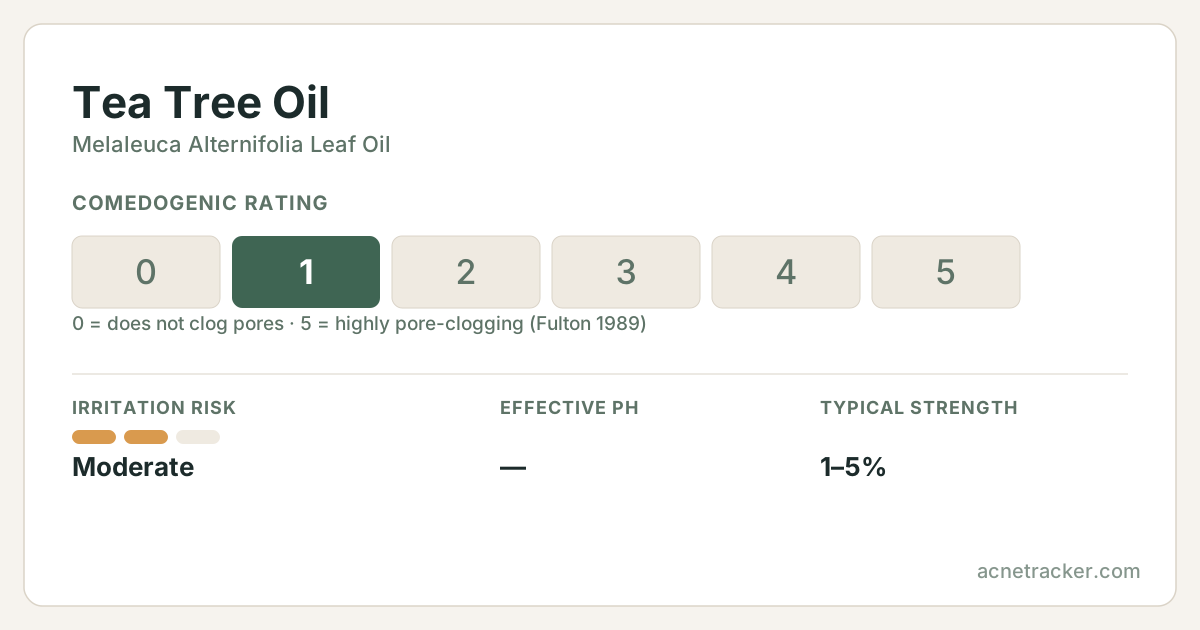
Tea tree oil is an essential oil steam-distilled from the leaves of the Australian Melaleuca alternifolia plant, and it is the best-studied natural ingredient for spot-treating acne. Its appeal is simple: a small clinical evidence base shows that a 5% tea tree gel can reduce mild to moderate acne, working more slowly than benzoyl peroxide but with fewer people reporting dryness and peeling. That gentleness is relative, though — as a concentrated essential oil, tea tree is also a well-known cause of allergic contact reactions and must always be diluted. In cosmetic products it typically appears at 1% to 5%, and it should never be applied neat to the skin straight from the bottle.
Quick facts
- Comedogenic rating
- our estimate — not measured
- Irritation risk
- Moderate
- Effective pH
- —
- Typical strength
- 1–5%
- Pregnancy
- Ask your doctor
- Suits skin types
- oilycombinationacne-prone
Where this number comes from
No one has published a comedogenic rating for this ingredient. Fulton's 1989 table tested about 250 raw materials and this was not among them, and we found no later study measuring it. The figure shown is our own reasoning from the ingredient's chemistry and how it is used — treat it as an estimate, not a measurement.
Fulton read his own scale as 0-1 not significant, 2-3 borderline, 4-5 positive. The assay is the rabbit ear at 10% dilution, which the paper itself calls extremely sensitive and not fully predictive of human skin. Ratings describe the raw ingredient; concentration and formulation change real-world behaviour.
Caution profile
The four published fields on this page, on one 0–5 scale. Further from the centre means more care is needed — never that the ingredient is worse.
Derived, not measured: pore-clogging is the published comedogenic rating; irritation maps low/moderate/high to 1/3/5; pregnancy maps safe/caution/avoid to 0/3/5; skin-type limits is how many of the seven skin types this entry does NOT list. Every input is printed in words in the quick-facts card above.
Show the numbers
| Metric | 0–5 | Published field |
|---|---|---|
| Pore-clogging | 1 | 1/5 |
| Irritation | 3 | Moderate |
| Skin-type limits | 2.9 | 3/7 |
| Pregnancy | 3 | Ask your doctor |
Working pH and typical strength
Where this ingredient is formulated to sit, and at what concentration.
Both bars come from the fields above: the pH window and the typical strength range published for this ingredient. The tinted column is healthy skin's surface pH (about 4.7–5.75).
Show the numbers
| Metric | 0–5 |
|---|---|
| Typical strength | 1–5% |
What is it?
Chemically, tea tree oil is a complex mixture of dozens of terpene compounds, with terpinen-4-ol being the main active thought to drive its antibacterial and anti-inflammatory effects. It works against acne on two fronts: it helps reduce the bacteria involved in inflamed breakouts, and it calms the redness and swelling of an active blemish. Because it is a volatile oil rather than a water-based active, it has no meaningful pH and behaves more like a botanical extract than an acid or vitamin. The same terpenes that make it useful also make it reactive — oxidized, old tea tree oil is considerably more likely to cause irritation and sensitization than fresh, properly stored oil.
Benefits
Targets acne-causing bacteria
Terpinen-4-ol, the main component, has documented antibacterial activity against the microbes involved in inflamed acne, which is the basis for its use as a natural spot treatment.
Calms inflamed blemishes
Its anti-inflammatory action reduces the redness and swelling of active pimples, so a diluted product can visibly settle an angry spot over a few days.
A gentler alternative for some
In direct comparison, a 5% tea tree gel worked more slowly than benzoyl peroxide but caused fewer reports of dryness, scaling and stinging, making it an option for people who cannot tolerate stronger actives.
Helps control excess shine
Used in toners and cleansers at low concentrations, tea tree oil is popular in oily-skin routines for its fresh feel and mild degreasing effect on the skin surface.
How to use
Never apply undiluted tea tree oil to the skin. Use a ready-made product formulated at 1–5%, or if diluting a pure oil yourself, keep it to a few drops in a carrier such as squalane and patch test first. It works best as a targeted spot treatment dabbed on individual blemishes at night rather than spread across the whole face. Introduce it slowly and stop if you notice increasing redness, itch or dryness. Avoid layering it in the same routine as benzoyl peroxide or retinol, since combining several drying, potentially irritating actives compounds the risk of a reaction. Buy small bottles and store away from heat and light, as oxidized oil is much harsher.
Side effects
The main concern with tea tree oil is allergic contact dermatitis — redness, itching, swelling and sometimes blistering — which becomes more likely as the oil ages and oxidizes. Even without a true allergy, undiluted use commonly causes stinging, dryness and irritation. Because reactions build with repeated exposure, a product that seemed fine at first can start to sting weeks later. A patch test on the inner arm for several days before facial use is strongly advised.
Who should avoid it
Anyone with sensitive or reactive skin, eczema or a known essential-oil allergy should be cautious or avoid it entirely. During pregnancy, caution is warranted and a doctor's input is sensible before regular use. Keep tea tree oil well away from the eyes and never swallow it — ingested essential oil is toxic. It should also be kept out of reach of children and pets.
Pairs well with
Avoid combining with
Frequently asked questions
Can I put tea tree oil directly on a pimple?
Not undiluted. Neat essential oil frequently causes stinging, dryness and allergic reactions. Use a product formulated at 1–5%, or dilute a few drops in a carrier oil, and dab it only on the blemish.
How long does tea tree oil take to work on acne?
In studies it worked more slowly than benzoyl peroxide, with improvement typically seen over several weeks of consistent use rather than overnight. It suits mild to moderate acne, not severe cystic acne.
Is tea tree oil better than benzoyl peroxide?
Not stronger — a 5% tea tree gel acted more slowly than benzoyl peroxide, but caused fewer side effects like dryness and peeling. It is a gentler, slower option rather than a more powerful one.
Is tea tree oil a common skin allergen?
Yes. It is a recognised cause of allergic contact dermatitis, and the risk rises as the oil oxidizes with age. Patch test before facial use and replace old, poorly stored bottles.
Is tea tree oil safe during pregnancy?
As a concentrated essential oil, caution is advised. Diluted topical use in a finished product is generally considered low risk, but it is wise to confirm with your doctor and avoid any ingestion.
Where this ingredient shows up here
Counted across this database, not the web — these are the pages on this site that reason about this ingredient.
Combination guides 3
Condition pages 1
Buying guides 1
Sources & further reading
Medical disclaimer
Find your personal acne triggers
Our free Acne Tracker lets you log breakouts, sleep, stress and diet, and shows you which factors correlate with your flare-ups.