Succinic Acid: Comedogenic Rating & Ingredient Analysis
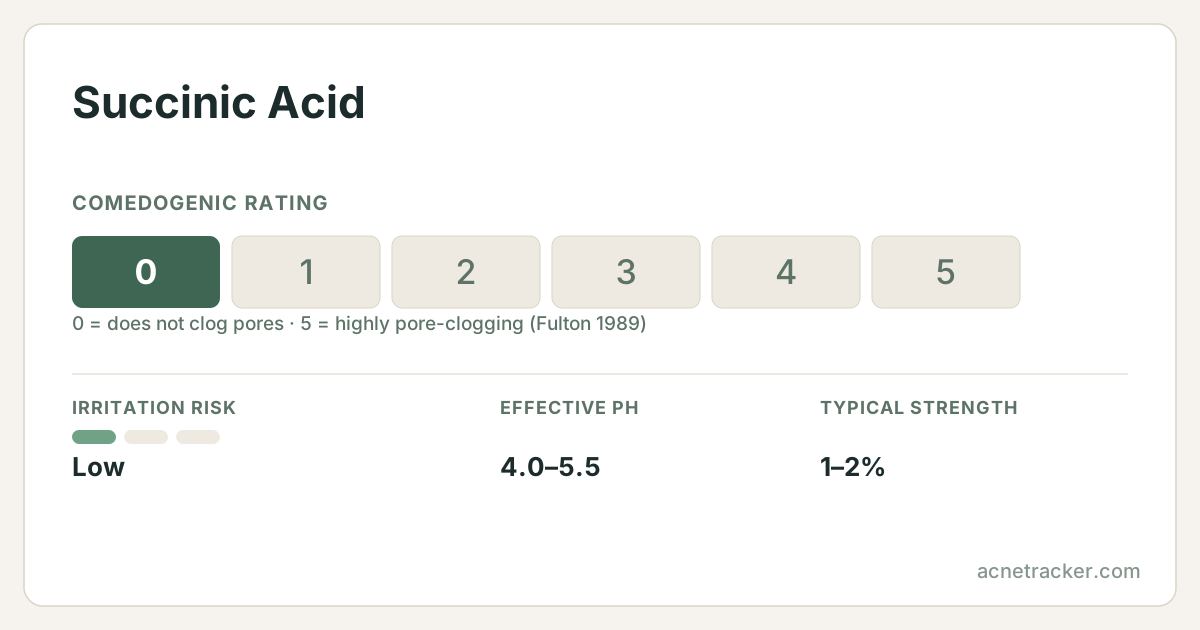
Succinic acid is a dicarboxylic acid, historically extracted from amber, that has become popular in spot treatments for breakouts. Unlike the exfoliating AHAs and BHAs, its appeal for acne-prone skin rests on a different mix of properties: laboratory work suggests it has antibacterial and anti-inflammatory activity, and it can help mop up excess surface oil. It is typically used at low concentrations in targeted blemish products, where it is valued for being gentle enough to dab on a spot without the strong sting or dryness that a traditional acne acid can bring.
Quick facts
- Comedogenic rating
- our estimate — not measured
- Irritation risk
- Low
- Effective pH
- 4.0–5.5
- Typical strength
- 1–2%
- Pregnancy
- Ask your doctor
- Suits skin types
- oilycombinationacne-pronesensitive
Where this number comes from
No one has published a comedogenic rating for this ingredient. Fulton's 1989 table tested about 250 raw materials and this was not among them, and we found no later study measuring it. The figure shown is our own reasoning from the ingredient's chemistry and how it is used — treat it as an estimate, not a measurement.
Fulton read his own scale as 0-1 not significant, 2-3 borderline, 4-5 positive. The assay is the rabbit ear at 10% dilution, which the paper itself calls extremely sensitive and not fully predictive of human skin. Ratings describe the raw ingredient; concentration and formulation change real-world behaviour.
Caution profile
The four published fields on this page, on one 0–5 scale. Further from the centre means more care is needed — never that the ingredient is worse.
Derived, not measured: pore-clogging is the published comedogenic rating; irritation maps low/moderate/high to 1/3/5; pregnancy maps safe/caution/avoid to 0/3/5; skin-type limits is how many of the seven skin types this entry does NOT list. Every input is printed in words in the quick-facts card above.
Show the numbers
| Metric | 0–5 | Published field |
|---|---|---|
| Pore-clogging | 0 | 0/5 |
| Irritation | 1 | Low |
| Skin-type limits | 2.1 | 4/7 |
| Pregnancy | 3 | Ask your doctor |
Working pH and typical strength
Where this ingredient is formulated to sit, and at what concentration.
Both bars come from the fields above: the pH window and the typical strength range published for this ingredient. The tinted column is healthy skin's surface pH (about 4.7–5.75).
Show the numbers
| Metric | 0–5 |
|---|---|
| Working pH | 4.0–5.5 |
| Typical strength | 1–2% |
What is it?
Succinic acid is a simple diacid found naturally in amber, plants and the body's own energy metabolism. In skincare it is not primarily an exfoliant; instead, studies point to antimicrobial effects against some of the bacteria implicated in acne, along with anti-inflammatory behaviour that could calm the redness and swelling of a blemish. It also has a mild astringent, oil-absorbing quality that suits congested, oily skin. Because most formulas use it at modest strength in leave-on spot products, it tends to be gentle and well tolerated, which is a large part of its appeal as a targeted breakout treatment.
Benefits
Targets individual blemishes
Its antibacterial and anti-inflammatory properties make succinic acid a popular choice for dabbing onto an emerging spot to help calm redness and support faster settling.
Helps control oil
Its mild astringent character can reduce excess surface oil, making it a sensible ingredient for congested, shiny areas prone to breakouts.
Soothes inflamed spots
By tempering inflammation, succinic acid can ease the swelling and redness around an active blemish, making the spot look and feel less angry.
Gentle enough for sensitive skin
Used at low strength, it is generally well tolerated and less drying than strong acne acids, so it suits people who react badly to benzoyl peroxide or high-percentage BHAs.
How to use
Succinic acid is most often found in spot treatments applied directly to a blemish, once or twice a day as needed. It can also appear at low levels in serums for oil-prone skin. Apply to clean skin, and if using it as a spot treatment, follow with moisturiser around the area. Niacinamide and hydrating serums can go on around it without trouble, since a succinic acid dab only ever covers the spot itself. As always, patch test a new product, and do not overload a single spot with multiple strong actives at once.
Side effects
Succinic acid is generally mild and well tolerated. Some people may notice slight dryness where they apply a spot treatment repeatedly, and any product can cause irritation in a sensitive individual. If a spot treatment causes stinging, redness spreading beyond the blemish, or peeling, reduce how often you use it and moisturise the area.
Who should avoid it
There are few strict contraindications, but anyone with very reactive skin should patch test first. During pregnancy, evidence for topical succinic acid is limited, so as with other actives it is best to check with your doctor. Do not combine several strong spot treatments on the same blemish, as that raises the risk of irritation.
Pairs well with
Avoid combining with
Frequently asked questions
Is succinic acid an exfoliant like AHAs?
Not primarily. Its main appeal for acne comes from antibacterial and anti-inflammatory properties plus mild oil control, rather than the surface exfoliation that defines AHAs and BHAs.
Is succinic acid good for spots?
It is popular as a gentle spot treatment. Its soothing, antibacterial and astringent qualities can help calm an individual blemish, and it tends to be less harsh than strong acne acids.
Can I use succinic acid with salicylic acid?
Yes, though be careful not to overload one spot. You might use salicylic acid across an oily area and succinic acid as a targeted dab, monitoring for dryness or irritation.
Does succinic acid dry out the skin?
It is milder than many acne actives, but repeated application to one spot can cause slight local dryness. Moisturising around the area and not overusing it keeps this in check.
Is succinic acid safe during pregnancy?
Evidence for its topical use in pregnancy is limited. As with any active ingredient, it is best to confirm with your doctor before using it while pregnant or breastfeeding.
Sources & further reading
- European Commission CosIng database — Succinic Acid
- PubChem — Succinic acid
- Staphylococcus epidermidis in the human skin microbiome mediates fermentation to inhibit the growth of Propionibacterium acnes: implications of probiotics in acne vulgaris (PubMed) — identifies succinic acid as the fermentation metabolite that suppresses P. acnes and its inflammation
Medical disclaimer
Find your personal acne triggers
Our free Acne Tracker lets you log breakouts, sleep, stress and diet, and shows you which factors correlate with your flare-ups.