Can You Mix Benzoyl Peroxide and Tea Tree Oil?
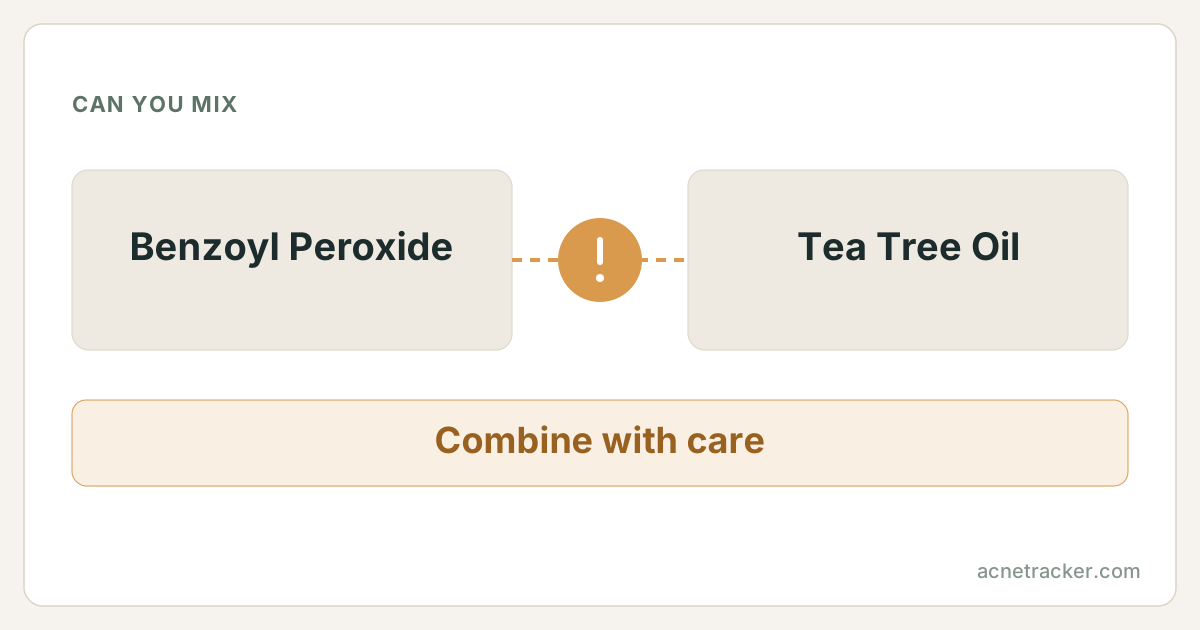
You can, but there is little reason to. Both are antibacterial spot treatments aimed at the same organism, so combining them mostly adds irritation rather than results. A 1990 Australian trial compared 5% tea tree oil gel with 5% benzoyl peroxide and found benzoyl peroxide worked faster while tea tree oil caused fewer side effects. Pick one; if you use both, keep them on different areas or different days.
How this pairing resolves
The two ingredients, their published numbers, and where they land together.
The numbers beside each ingredient are its published comedogenic rating and effective pH window, taken from its own profile page.
Show the numbers
| Ingredients | Metric | 0–5 |
|---|---|---|
| Benzoyl Peroxide | Comedogenic rating | 0/5 |
| Benzoyl Peroxide | Effective pH | no published pH |
| Tea Tree Oil | Comedogenic rating | 1/5 |
| Tea Tree Oil | Effective pH | no published pH |
Why
This is a redundancy problem more than a chemical one. Benzoyl peroxide decomposes on skin into benzoic acid and reactive oxygen, killing Cutibacterium acnes inside the follicle — an effect no bacterium has developed resistance to. Tea tree oil's activity comes mainly from terpinen-4-ol, which disrupts bacterial membranes. Both are antimicrobial, so the second one adds relatively little to a target the first is already hitting. Where the two do interact is worth knowing: tea tree oil's terpenes oxidise readily on exposure to air and light, and the oxidation products — not fresh oil — are the recognised contact allergens, which is why old bottles cause more reactions than new ones. Benzoyl peroxide is an oxidising agent. Nobody has usefully quantified what happens when you apply an oxidiser directly onto an oxidation-prone essential oil on skin, so this remains a theoretical concern rather than a documented one, but it is a sensible reason not to layer them wet-on-wet. The concrete reason for caution is simpler: tea tree oil is a common contact allergen and benzoyl peroxide is a common irritant, and stacking two spot treatments on one inflamed spot rarely ends well.
How to combine them
If you want both in your life, use them as alternatives rather than a layer. Benzoyl peroxide is the better-evidenced choice for inflamed spots and can go on those; tea tree oil, always diluted, suits the occasional bump or the back and chest where skin is tougher. Never apply undiluted tea tree oil to the face — the concentrations tested in trials were around 5%, in a gel, not neat oil from the bottle. If you use both on the same day, put one on in the morning and one in the evening, and keep them on different lesions rather than the same one. Buy tea tree oil in a small dark bottle and replace it once opened for six months; oxidised oil is the sensitising one. Patch test on the inner forearm for a few days before it goes anywhere near your face, because tea tree allergy is genuinely common.
Example routine
| When | Steps |
|---|---|
| Preferred approach | Choose one: benzoyl peroxide 2.5% for inflamed spots, evenings |
| If using both | AM: diluted tea tree (≈5%) on body spots · PM: benzoyl peroxide on face spots |
| Always | Moisturiser after either treatment; SPF 30+ every morning |
| Before first use | Patch test tea tree oil on the inner forearm for 3–5 days |
Warning signs
Frequently asked questions
Is tea tree oil as good as benzoyl peroxide for acne?
The 1990 Australian trial comparing 5% of each found benzoyl peroxide reduced lesions faster, while tea tree oil produced fewer side effects. It is a reasonable gentler option, not an equal substitute.
Can I put tea tree oil directly on a spot after benzoyl peroxide?
Layering two antibacterial treatments on one inflamed lesion adds irritation without much extra benefit. If you want tea tree oil, use it on a different spot or a different day — and always diluted.
Does benzoyl peroxide destroy tea tree oil?
There is no good published data either way. Tea tree terpenes are known to oxidise in air, and benzoyl peroxide is an oxidiser, so layering them wet-on-wet is best avoided — but treat that as caution, not established fact.
Why does tea tree oil cause allergies?
The oxidation products that form as the oil ages in contact with air and light are the recognised sensitisers. Fresh oil in a dark, well-sealed bottle is less likely to react; a half-used bottle from last year is the risky one.
Sources & further reading
There is no single study of this exact question. The guidance here is reasoned from the ingredient profiles below, each of which carries its own references:
- Benzoyl Peroxide3 refs
- Tea Tree Oil2 refs
Show every reference behind this page (5)
- PubChem — Benzoyl peroxide compound summarycited by Benzoyl Peroxide
- DermNet — Benzoyl peroxidecited by Benzoyl Peroxide
- FDA — Drugs (OTC acne products)cited by Benzoyl Peroxide
- PubChem — Tea tree oilcited by Tea Tree Oil
- DermNet — Tea tree oilcited by Tea Tree Oil
Medical disclaimer
Ingredients mentioned on this page
Find your personal acne triggers
Our free Acne Tracker lets you log breakouts, sleep, stress and diet, and shows you which factors correlate with your flare-ups.